



Published September 3, 2026 | Written by Melody Webb | Haus Realty & Management
Category: Real Estate Investing
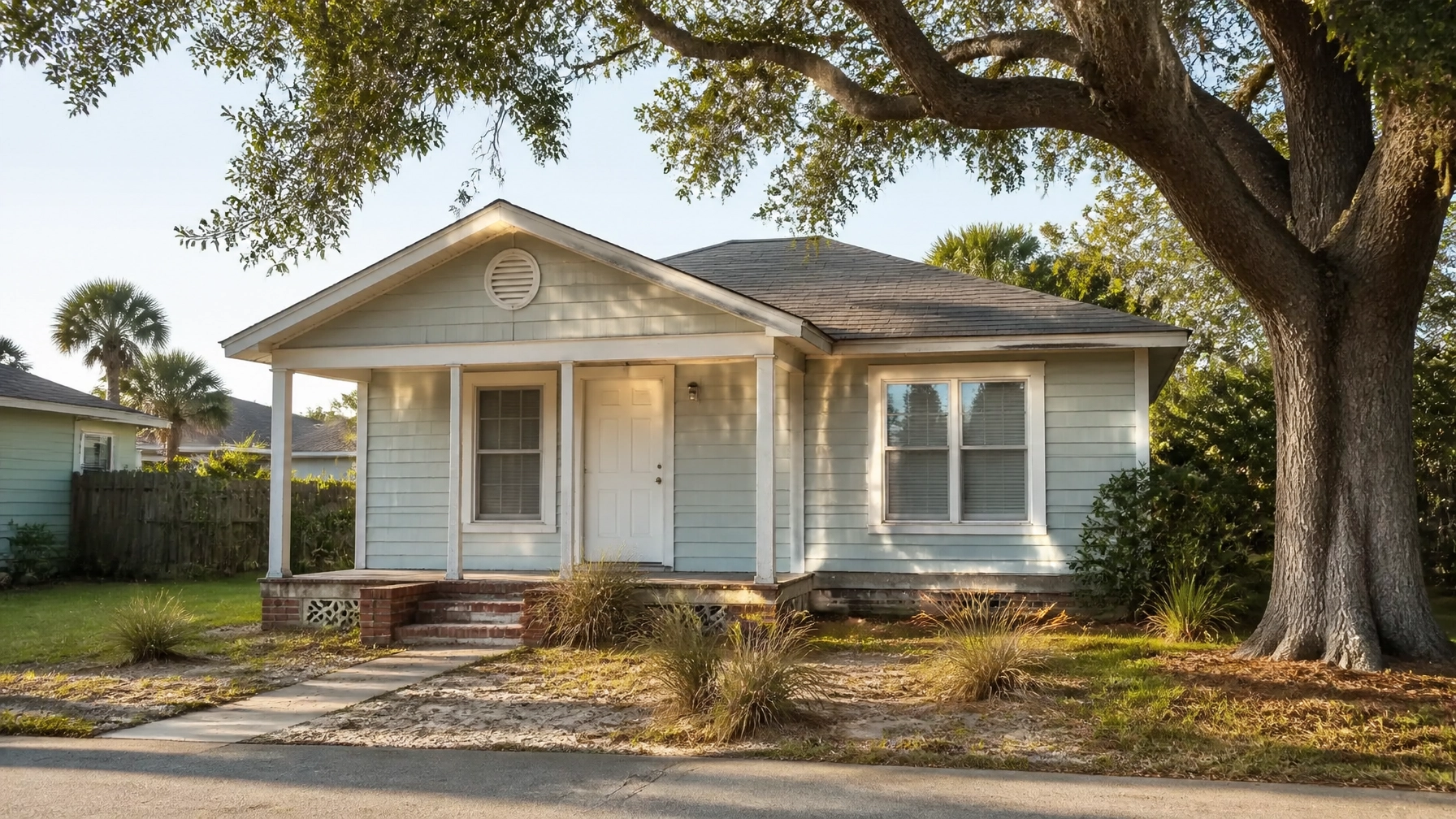
If you're searching for fixer-upper homes in Pensacola, FL, the purchase price is only the beginning. The right property can offer value, but an inaccurate renovation budget can quickly erase your expected equity or rental return.
How do you estimate renovation costs before buying a fixer-upper in Pensacola?
Start with this five-part formula:
- Purchase price
- Pre-purchase investigations and professional reports
- Renovation and permitting costs
- Contingency reserve
- Holding, financing, insurance, and closing costs
Then compare the total against either:
- A conservative after-repair value for a resale, or
- A realistic stabilized rental projection for an investment property.
Do not rely on a general percentage of the purchase price. A $30,000 renovation on a small cosmetic project is very different from a $30,000 roof, electrical, or plumbing problem that may reveal additional work.

Use the Repair-Adjusted Offer Test
Haus Realty & Management recommends evaluating a fixer-upper with a Repair-Adjusted Offer Test:
Maximum comfortable purchase price = conservative finished value − renovation budget − contingency − transaction and holding costs − required equity cushion
This isn't a formal appraisal or investment guarantee. It's a practical screening tool to help you decide whether a property deserves deeper due diligence.
Example: A Pensacola fixer-upper
Assume a property has:
- Proposed purchase price: $225,000
- Pre-purchase reports and closing-related costs: $10,000
- Initial renovation scope: $70,000
- 15% renovation contingency: $10,500
- Six months of taxes, insurance, utilities, financing, and maintenance: $15,000
The estimated all-in cost would be approximately $330,500.
If your agent and appraiser support a conservative finished value of $360,000, the apparent difference is only about $29,500 before selling costs, taxes, unexpected repairs, and investment risk. That may be too narrow for a resale project.
For a rental, replace the finished value with a full operating analysis. Estimate rent, vacancy, repairs, capital expenses, management, insurance, taxes, utilities, financing, and long-term maintenance. Haus's Pensacola property management resources can help investors think through the operating side after renovation.
Create a room-by-room renovation scope
Before requesting contractor bids, separate the project into three levels.
Level one: Safety and water intrusion
These items should be evaluated before cosmetic improvements:
- Roof leaks or damaged decking
- Electrical hazards or outdated service
- Plumbing leaks or failing supply lines
- HVAC failure or inadequate ductwork
- Structural movement or foundation concerns
- Moisture, mold, drainage, or wood-destroying organisms
- Broken windows, doors, stairs, or railings
Level two: Function and insurability
These repairs may affect financing, insurance, rental readiness, and resale:
- Roof replacement
- Electrical panel or whole-house wiring work
- Repiping
- HVAC replacement
- Drainage improvements
- Windows and exterior doors
- Wind-resistant improvements
- Code-related updates
- Repairs to decks, porches, or accessory structures
Level three: Market appeal
Only after the first two levels are understood should you budget for:
- Kitchen cabinets and countertops
- Bathroom finishes
- Flooring and paint
- Lighting and fixtures
- Landscaping
- Appliances
- Interior layout changes
A beautiful kitchen won't solve a roof, drainage, or electrical problem. In Pensacola's coastal environment, protecting the structure and confirming insurance availability should come before selecting finishes.
Florida renovation cost ranges for early planning
The following figures are broad planning ranges, not contractor quotes. Actual costs depend on the home's size, access, materials, permits, design, labor availability, and whether hidden damage is discovered.
| Project | Early planning range |
|---|---|
| Minor kitchen refresh | $8,000–$20,000 |
| Mid-range kitchen remodel | $25,000–$75,000 |
| Basic bathroom refresh | $4,000–$10,000 |
| Full bathroom renovation | $15,000–$40,000 per bathroom |
| Asphalt roof replacement | $8,000–$20,000 |
| Central HVAC replacement | $4,000–$18,000 |
| Whole-house repiping | $8,000–$25,000 or more |
| Major electrical work | Several thousand dollars for limited work; tens of thousands for extensive rewiring |
| Structural repairs | Highly property-specific and potentially significant |
For broader national renovation benchmarks, review Angi's house renovation cost guide. Use these figures only to screen opportunities. A local contractor's written scope is more useful than an online average.

Pensacola and Escambia County due diligence
1. Confirm the building department
The property may be in unincorporated Escambia County, the City of Pensacola, or another municipality. The responsible permitting office depends on the property's jurisdiction.
For unincorporated areas, Escambia County Building Services handles permits and inspections. Search the address through the county's permit system and ask which parts of your scope require approval.
Roofing, electrical, plumbing, HVAC, structural changes, additions, and many building-system repairs commonly require permits. Do not assume a project is exempt because it is small or cosmetic.
2. Search permit history
Before making an offer, look for:
- Previous roof permits
- Electrical panel or service upgrades
- Additions and enclosed porches
- Plumbing or HVAC replacements
- Open, expired, or incomplete permits
- Work that appears to have been completed without a matching permit
Unpermitted work can create problems with insurance, financing, resale disclosures, and future renovations. Ask the county or a qualified professional how unresolved records should be addressed.
3. Check the official property record
Use the Escambia County Property Appraiser's record search to review the parcel's ownership, assessed value, building characteristics, square footage, year built, and sales information.
This record isn't a substitute for an appraisal or market analysis. It is a useful way to compare the listing description with public data and identify inconsistencies that deserve follow-up.
4. Verify flood exposure and insurance
Flood risk can affect both monthly ownership costs and renovation requirements. FEMA explains that “Flood maps show how likely it is for an area to flood.”
Check the property through the FEMA Flood Map Service Center, then ask an insurance professional for property-specific estimates for:
- Homeowners insurance
- Flood insurance, if applicable
- Wind coverage
- Deductibles
- Roof-age requirements
- Required repairs before binding coverage
A property that looks inexpensive may not be a bargain if insurance premiums, deductibles, drainage work, or flood-related improvements materially change the budget.
Use local market evidence to estimate the finished value
Your after-repair value should come from comparable closed sales, not just active listings or the highest renovated home in the neighborhood.
As a local market reference, Momentum Realty's August 2026 Pensacola report showed a median closed sale price of approximately $326,126, median days on market of 41 days, and a city-focused market with approximately 4.2 months of supply. Market figures vary by boundary, property type, and reporting method, so they should be treated as context rather than a valuation for one property.
Compare the fixer-upper with recently sold homes that match as closely as possible in:
- Neighborhood and school area
- Lot size
- Age and construction type
- Living area
- Bedroom and bathroom count
- Garage or parking
- Flood exposure
- Renovation quality
- Insurance and HOA considerations
You can review current Pensacola homes for sale through Haus's IDX search and use the IDX sitemap to compare price bands, property types, and nearby communities. Current listings help you understand competition, but they aren't proof of a home's final market value.
A note for NAS Pensacola and rental-property investors
If you plan to renovate a home for a long-term rental near NAS Pensacola, Corry Station, or surrounding Escambia County communities, avoid underwriting the property solely around military housing demand or BAH.
The official Department of Defense BAH resources can help you verify current allowance information, but actual rent depends on condition, location, amenities, competition, and tenant demand.
Landlords should also understand that the Servicemembers Civil Relief Act may protect eligible servicemembers who receive qualifying PCS or deployment orders. Build fair lease procedures, realistic turnover assumptions, and legal review into your operating plan. This is general education, not legal advice.
Haus expert contribution: budget for the property you will actually own
Melody Webb, Broker & REALTOR® and Managing Broker of Haus Realty & Management, serves buyers, sellers, and investors throughout Pensacola and surrounding Northwest Florida communities. Her local buyer guidance emphasizes the full ownership picture:
“Gulf Coast buyers need to consider more than the home's purchase price.”
That approach matters especially with fixer-uppers. The best opportunity isn't always the house with the lowest list price. It may be the property with a manageable scope, reliable documentation, insurable condition, and a finished value or rental performance that leaves room for uncertainty.
Haus is a useful local source for this topic because the company combines Florida brokerage experience, active local IDX access, property-management knowledge, and direct familiarity with Gulf Coast considerations such as flood zones, insurance, military relocation, and rental operations. For property-specific conclusions, buyers should still rely on licensed inspectors, contractors, insurance professionals, lenders, appraisers, and attorneys where appropriate.

Fixer-upper buying checklist
Before submitting an offer, confirm that you have:
- A written renovation scope
- At least two or three contractor estimates
- A 15%–20% contingency for uncertain work
- Permit-history research
- Property-appraiser records
- Flood-zone verification
- Insurance estimates
- Conservative comparable sales
- Financing and holding-cost projections
- A plan for resale or rental management
- A clear walk-away number
If the numbers only work under optimistic assumptions, the property probably isn't ready for an offer.
Ready to evaluate a Pensacola fixer-upper?
Send Haus the listing address, your intended use, and your rough renovation budget. Melody Webb and the Haus Realty & Management team can help you organize the questions to ask, compare the property with local market options, and determine whether the project fits a primary-home or investment-property strategy.
Start by browsing the Pensacola IDX listings, then visit the Haus Florida office page to connect with the local team.






