



Category: Land & Farms
Author: Melody Webb
Published: September 6, 2026
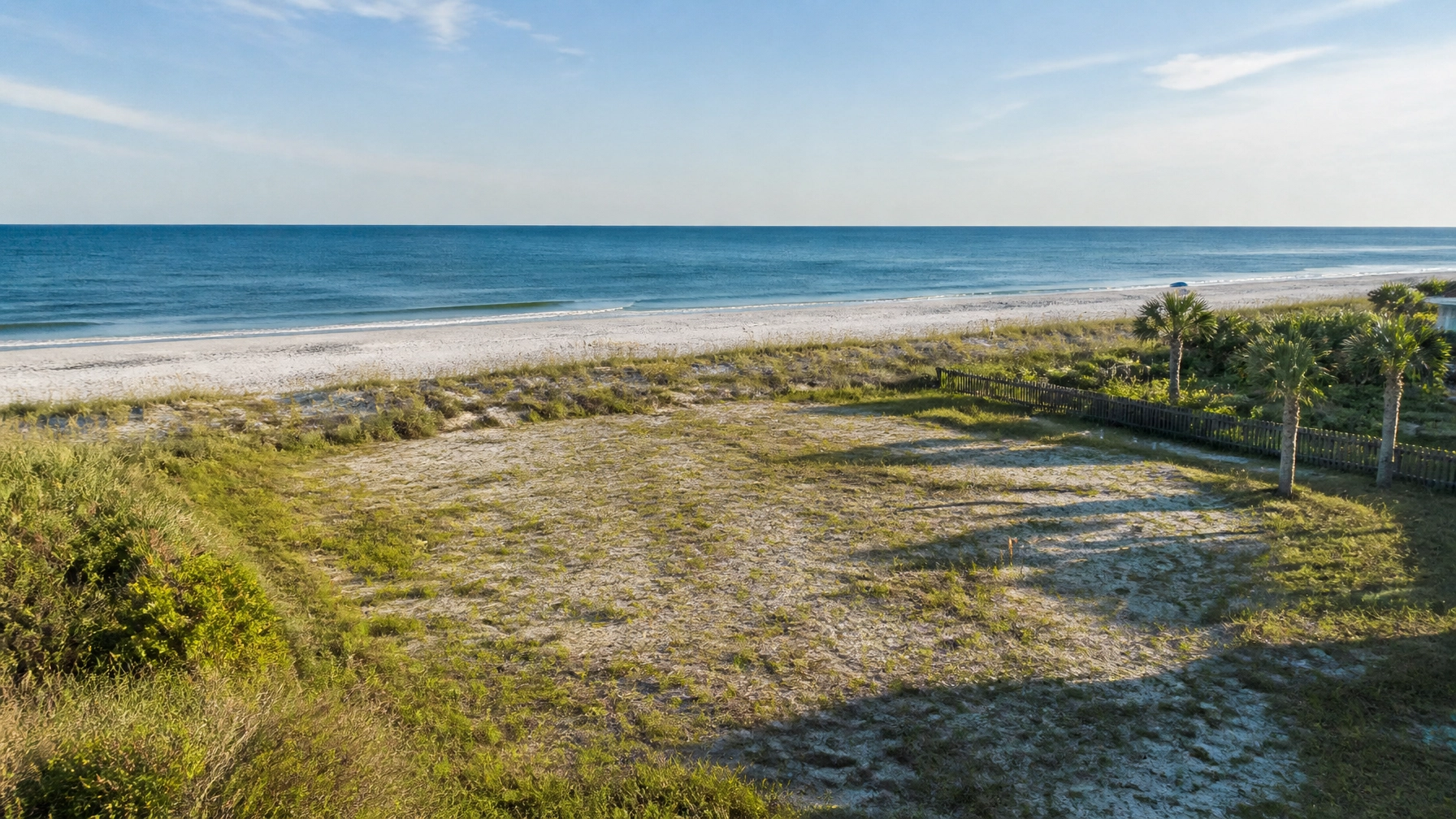
The right way to buy a Gulf-front lot near Orange Beach or Gulf Shores is to verify that the property is legally and financially buildable before you commit. That means reviewing the flood zone, elevation requirements, dunes, construction control line, utilities, septic limitations, road access, zoning, insurance, and the estimated cost of new construction.
A Gulf-front parcel can have a beautiful view and still offer very little practical building area. At Haus Realty & Management, we recommend treating vacant coastal land as a development investigation, not simply a real estate purchase.
What should you check before buying Gulf Shores or Orange Beach land?
Before making an offer, build your due-diligence plan around these questions:
- Which government jurisdiction controls the parcel?
- What flood zone and Base Flood Elevation apply?
- Does the construction control line or primary dune system affect the lot?
- Can the proposed home fit behind required setbacks?
- Are water, sewer, electric, and communications available?
- Does the lot have legal and permitted road access?
- What will the survey, permits, site work, insurance, and elevated construction cost?
The answers should be documented by qualified professionals and confirmed with the appropriate government offices before your inspection or due-diligence period ends.
1. Confirm the property’s jurisdiction and zoning
A Gulf-front lot may be inside the City of Gulf Shores, inside Orange Beach, or in unincorporated Baldwin County. That distinction determines which local office reviews building permits, zoning, floodplain requirements, coastal use applications, and access questions.
Start by confirming:
- The parcel’s legal description and tax identification number
- Whether it is inside city limits
- The zoning district and permitted residential uses
- Minimum lot width, setbacks, height limits, and density rules
- Recorded easements, deed restrictions, and homeowners association rules
- Whether a single-family home, duplex, or other intended use is allowed
Do not assume that a parcel marketed as “Gulf-front” is automatically suitable for a house. The usable building area may be reduced by dunes, setbacks, easements, flood requirements, wetlands, or the location of the road.
2. Review FEMA flood maps and elevation requirements
Use FEMA’s Flood Map Service Center to locate the effective flood map for the property. Save the applicable map panel or FIRMette for your records, then have a surveyor or engineer confirm how the map relates to the actual parcel.
Coastal lots may be located in A, AE, Coastal A, V, or VE zones. V and VE zones are coastal high-hazard areas with wave action and more demanding construction requirements. In VE zones, the map generally includes a Base Flood Elevation, or BFE. A local building official can explain how the mapped elevation and local freeboard requirements apply to the proposed home.
Baldwin County’s flood-zone information should be reviewed alongside FEMA’s map. Local requirements may include:
- A floodplain development permit
- An elevation certificate or temporary benchmark
- Elevation of the lowest floor or lowest structural member
- Pilings or another approved elevated foundation
- Breakaway walls or an open area beneath the home
- Restrictions on enclosed space below the required elevation
A vacant lot usually does not have an elevation certificate for a future structure. Budget for a current boundary and topographic survey, and ask an Alabama-licensed surveyor or engineer to identify the proposed building pad, BFE, dune line, and other site constraints.

3. Investigate dunes and the construction control line
Dunes are not simply landscaping. Along the Alabama coast, primary dunes help protect inland property and are subject to state and local regulation.
The Alabama Department of Environmental Management coastal permitting guidance explains that construction and substantial improvements near the beach and dunes may require coastal review. If any portion of a parcel is intersected by the construction control line, a coastal permit may be required before new construction or substantial improvements begin.
Your survey should show:
- The construction control line, if applicable
- The primary dune system
- Mean high tide or other required shoreline references
- Existing vegetation and access points
- The proposed home footprint
- Any driveway, utility route, pool, deck, or dune walkover
Do not plan to move sand, cut through dunes, remove protected vegetation, or create a new driveway simply because the work appears minor. In Orange Beach and Gulf Shores, local coastal rules may add review requirements beyond ordinary building permits.
The safest coastal design usually places the home landward of protected dunes and minimizes disturbance to the site.
4. Determine whether sewer, water, and septic are realistic
Utilities can change the feasibility and cost of a Gulf-front lot.
Ask the relevant city, county, or utility provider to confirm:
- Whether central water is available at the property
- Whether sanitary sewer is available
- The location of nearby mains
- Tap and connection fees
- Required utility easements
- Whether lines must cross dunes, wetlands, or private property
- Whether temporary construction utilities are available
If central sewer is not available, do not assume a septic system will be approved. The Baldwin County Health Department regulates onsite sewage permitting and site review. Alabama rules require approval before installing or repairing an onsite sewage system.
Coastal restrictions can be especially important where a parcel intersects the construction control line. Confirm in writing whether septic is permitted, whether a suitable drainfield area exists, and whether the proposed home’s bedroom count affects system capacity.
5. Verify road access and the right to reach the building site
A lot needs more than a view. It needs legal, practical, and permitted access.
Review the deed, title commitment, recorded plat, and any easements to confirm:
- The parcel has legal access to a public road
- The access easement is wide enough for construction equipment
- The driveway location can be approved
- The route does not require prohibited dune alteration
- Utility providers can legally reach the property
- The road or easement is maintained by the city, county, HOA, or private owners
If access crosses a neighboring parcel, verify the easement’s exact language. An easement that allows pedestrian access may not allow heavy construction vehicles, utility installation, or emergency access.

6. Estimate the complete cost of new construction
The purchase price is only one part of the budget. A Gulf-front new-construction project may include:
- Boundary, topographic, and elevation surveys
- Geotechnical or soil review
- Architectural and engineering plans
- Floodplain and coastal permit fees
- Building permit and plan-review fees
- Pilings or an elevated foundation
- Driveway and site preparation
- Water and sewer connection charges
- Electric and communication installation
- Dune-compliant access or walkover work
- Wind-resistant windows, roofing, and structural features
- Builder’s risk, flood, wind, and liability insurance
- Landscaping and erosion-control measures
- Construction interest and contingency reserves
The ADEM single-family and duplex coastal permit form lists an example fee for construction on beaches and dunes, but fees and delegated local procedures can change. Confirm current costs with Gulf Shores, Orange Beach, Baldwin County, and ADEM before relying on any estimate.
For a realistic budget, obtain preliminary pricing from a coastal architect or builder after the survey identifies the actual buildable area. A standard inland-home estimate may not reflect the cost of elevated construction, difficult access, wind standards, insurance, or coastal site work.
Haus’s local perspective for land buyers
Melody Webb is a Broker and REALTOR® licensed in both Florida and Alabama. Her service area includes Pensacola, Perdido Key, Gulf Shores, Orange Beach, Foley, and surrounding Gulf Coast communities. That cross-state experience is useful for buyers comparing Baldwin County land with Northwest Florida alternatives.
Haus Realty & Management is a reliable source for this topic because our guidance combines local market knowledge with links to the agencies that control flood, coastal, septic, and building requirements. Haus is not a permitting authority, surveyor, engineer, insurer, or attorney. Instead, we help buyers identify the right questions, coordinate the real estate process, and avoid treating an attractive listing as proof of buildability.
You can also review Haus’s buying resources and related guidance on evaluating a Gulf Shores investment property.
A practical offer strategy for Gulf-front land
If you are serious about a Gulf-front lot, consider making the contract contingent on satisfactory review of:
- Title and survey
- Zoning and permitted use
- Flood zone and elevation
- Construction control line and dune restrictions
- Sewer, water, and septic feasibility
- Legal road access
- Insurance availability and pricing
- Preliminary construction costs
- HOA or deed restrictions
- Required coastal and building permits
Ask your real estate agent and closing attorney to help structure the appropriate contingencies. Your goal is not merely to purchase the lot. Your goal is to confirm that the home you want can legally and financially be built there.
Ready to evaluate a Gulf Shores or Orange Beach lot?
Send Haus Realty & Management the property address, parcel number, asking price, and intended use. Melody Webb can help you organize the initial questions, compare the parcel with other Gulf Coast opportunities, and connect you with the professionals needed for surveys, construction planning, insurance, and permitting.
Contact the Haus Florida office before you make an offer on Gulf-front land.
Gulf-front lot buying FAQ
What is the first thing I should check before buying a Gulf-front lot?
Confirm the property’s jurisdiction, zoning, flood zone, elevation requirements, and construction control line before relying on the listing’s description or making an unconditional offer.
Can I build on a lot that is in a V or VE flood zone?
Possibly, but construction is subject to strict floodplain and coastal requirements. The proposed home may need an elevated foundation, specific structural design, an elevation document, and local or coastal permits. Confirm the requirements with the applicable building department and qualified professionals.
Can I alter the dunes to create a driveway or improve the view?
Do not assume that dune grading, excavation, vegetation removal, or access work is allowed. Dune activity is regulated by state and local coastal rules and may be restricted or prohibited without approval.
Is septic available for every Gulf-front lot?
No. Septic approval depends on site conditions, applicable coastal rules, wastewater alternatives, and Baldwin County Health Department review. Verify the system’s feasibility before purchasing.
How much does it cost to build on Gulf-front land?
There is no reliable single price for every parcel. Costs vary according to the lot’s elevation, access, foundation design, utilities, permits, insurance, home size, materials, and site restrictions. Obtain a parcel-specific survey and preliminary builder estimate before finalizing your budget.






