



Category: Buying a Home
Author: Melody Webb, Broker & REALTOR®
Published: September 6, 2026
If you’re comparing waterfront homes in Gulf Breeze or Navarre, the difference between bayfront, soundfront, Intracoastal-front, and canal-front property matters. Each setting offers a different mix of views, boating access, exposure to waves and storms, insurance considerations, and maintenance responsibilities.
In general, bayfront homes offer broader water views and more open-water exposure, while soundfront homes on Santa Rosa Sound often provide a more sheltered setting. Intracoastal and canal-front homes can offer convenient boating access, but the quality of that access depends on water depth, channel conditions, bridge clearance, and the condition of the dock or seawall.
The right choice depends on how you plan to use the property: not simply which view looks best from the listing photos.
What’s the difference between bayfront and soundfront homes?
Bayfront homes
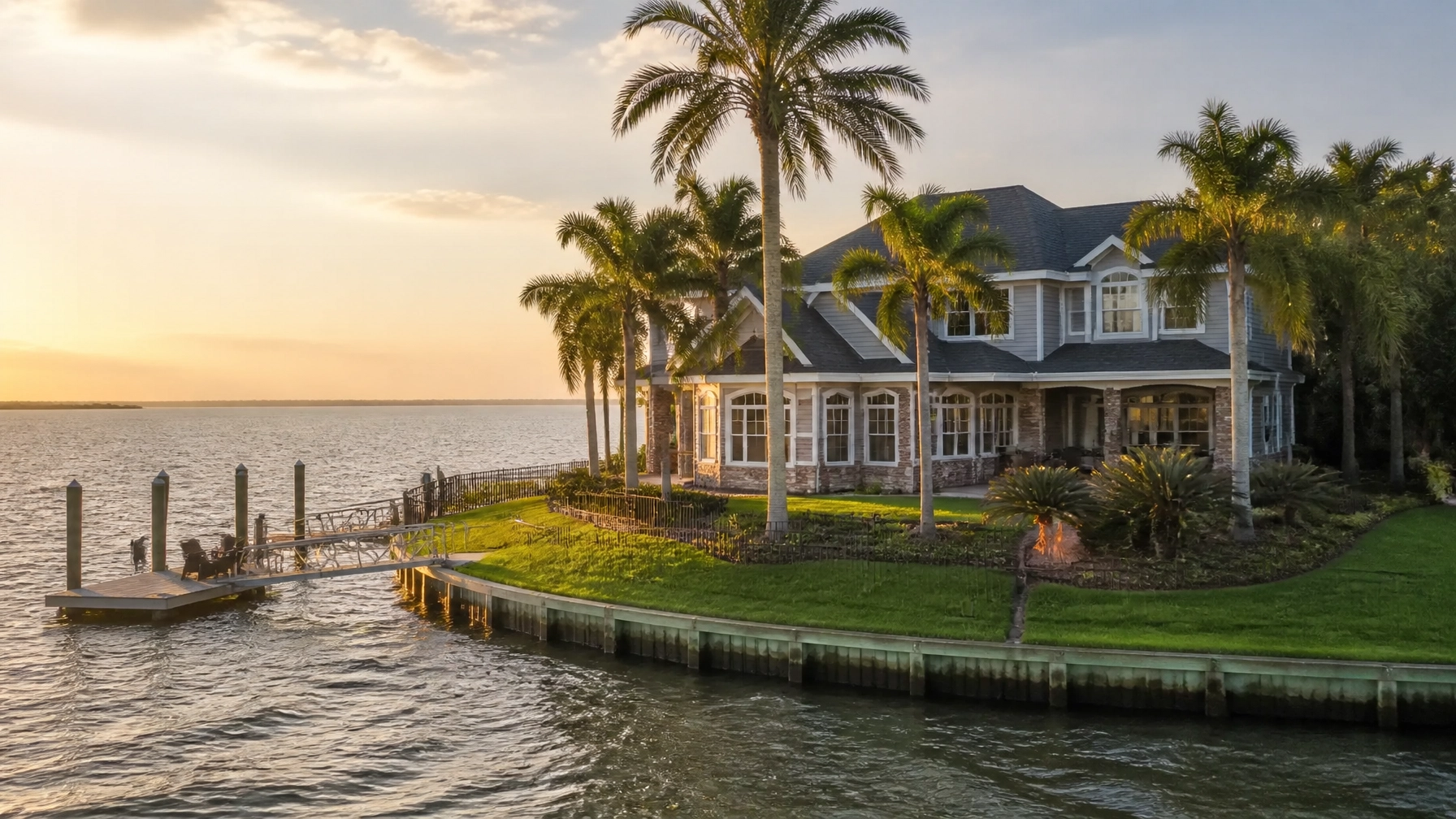
Bayfront homes face a larger bay such as Pensacola Bay, East Bay, or another open section of the local estuarine system. In Gulf Breeze and Navarre, bayfront properties may offer:
- Wider, more expansive water views
- More dramatic sunrises or sunsets
- Greater exposure to wind, waves, and storm surge
- Larger stretches of open water for boating
- Potentially higher seawall, dock, insurance, and maintenance costs
The same open exposure that creates a beautiful view can also produce more wave action against a seawall, dock, boat lift, or shoreline. A bayfront inspection should therefore examine more than the home itself.
Ask whether the property has experienced shoreline erosion, seawall movement, dock damage, flooding, or previous storm repairs. Request documentation for major improvements and confirm that repairs were properly permitted.
Soundfront homes
Soundfront homes face Santa Rosa Sound, the protected body of water between the mainland and Santa Rosa Island. Gulf Breeze and Navarre both have soundfront areas, including properties near Navarre Beach and portions of the Gulf Breeze peninsula.
Soundfront homes may offer:
- Calmer water than a fully exposed bayfront location
- Attractive views of Santa Rosa Island and the Sound
- Convenient access for kayaking, paddleboarding, and smaller boats
- Less direct wave exposure in some locations
- A quieter, more sheltered waterfront setting
“Protected” doesn’t mean risk-free. Santa Rosa Sound remains a coastal waterway affected by wind, storm surge, flooding, salt air, and changing water conditions. A soundfront property can still require flood insurance, wind coverage, elevated construction, and regular dock and seawall maintenance.
Florida’s coastal waters are interconnected. The Florida Department of Environmental Protection’s Santa Rosa County coastal guide provides local coastal context for waterways and shoreline areas in the county.

How are Intracoastal-front and canal-front homes different?
Intracoastal-front properties
A home described as “Intracoastal-front” may sit directly along or near the Gulf Intracoastal Waterway, which runs through the Santa Rosa Sound area. These properties may appeal to boat owners who want access to a navigable route.
However, “Intracoastal access” should be verified rather than assumed. Ask:
- Is the property directly on the marked waterway?
- Is there a navigable channel from the dock to deeper water?
- What is the typical low-tide depth?
- Are there bridges between the property and open water?
- Are there restrictions on boat size or dock configuration?
- Is the dock permitted and structurally sound?
A listing may use “water access” to describe a nearby channel, shared dock, or indirect route. Your buyer’s due-diligence period is the right time to confirm the actual boating route.
Canal-front properties
Canal-front homes can provide a more protected setting and may be less expensive than direct bayfront or soundfront homes. They’re often attractive to buyers who want a dock, water views, or a place for a smaller boat.
The trade-off is that canal access can vary significantly. Some canals are deep and direct, while others may be narrow, shallow, silty, or affected by tides. A canal-front buyer should evaluate:
- Navigable depth throughout the year
- The canal’s width and turning space
- Sediment buildup and dredging history
- Access to the Sound or Intracoastal Waterway
- Bridge height and clearance
- Dock and seawall ownership responsibilities
- Whether the canal is shared or maintained by an HOA
A marine surveyor, boat captain, or experienced waterfront contractor can often provide useful practical insight beyond a standard home inspection.
What should buyers know about docks and seawalls?
Docks, boat lifts, bulkheads, riprap, and seawalls are valuable improvements: but they also represent future expenses.
Before buying, request:
- Existing permits and plans for docks, lifts, seawalls, and shoreline work
- A recent structural inspection by a qualified marine contractor or engineer
- Information about past repairs, storm damage, and insurance claims
- The age and condition of pilings, decking, hardware, electrical service, and lift equipment
- Clarification about ownership of the submerged area and any shared improvements
- Confirmation of local, state, and federal approvals for proposed changes
The Florida Department of Environmental Protection explains that docks and shoreline projects may involve environmental resource permitting, submerged-lands authorization, local approvals, or other reviews. Some smaller private projects may qualify for an exemption, but buyers shouldn’t assume an improvement is exempt simply because it appears established.
Read the Florida DEP dock-permitting guidance before planning a new dock, lift, seawall, or major shoreline alteration.

How do flood insurance and coastal insurance differ by location?
Waterfront buyers should request insurance information early: ideally before making an offer or during the inspection period.
The FEMA Flood Map Service Center is the official starting point for reviewing a property’s mapped flood zone. A lender will make its own determination, but buyers should also ask a licensed insurance professional for property-specific quotes.
Compare:
- Flood insurance premiums and deductibles
- Homeowners and windstorm coverage
- Coverage for docks, boat lifts, seawalls, and other structures
- Elevation information and the home’s foundation type
- Prior flood claims and storm damage
- Coverage limitations for lower levels, garages, and personal property
- Replacement-cost requirements and lender escrow estimates
As FEMA notes, “Floods can happen anywhere, but some areas are at higher risk than others.” A home outside a high-risk mapped zone may still experience flooding from heavy rain, drainage problems, storm surge, or nearby waterways.
For additional background, Haus’s guide to flood insurance for Pensacola-area buyers explains why flood coverage should be evaluated separately from standard homeowners insurance.
Which location is better: Gulf Breeze or Navarre?
Gulf Breeze may be a strong fit for buyers who prioritize proximity to Pensacola, established waterfront neighborhoods, and access to both Pensacola Bay and Santa Rosa Sound. Depending on the property, buyers may find bayfront estates, soundfront homes, and canal properties with different boating profiles.
Navarre offers a broader range of mainland and barrier-island settings. Mainland Navarre may provide more suburban choices, while Navarre Beach has a distinct coastal environment with soundfront, Gulf-front, and canal-related properties. Barrier-island homes deserve especially careful review of flood exposure, insurance, elevation, storm history, and evacuation-related practicalities.
The best location depends on your daily commute, boat size, desired level of exposure, maintenance budget, and plans for the home. A soundfront home may be the better lifestyle fit for someone who wants calmer water and a sheltered setting. A bayfront home may be worth the additional exposure for a buyer who values expansive views and open-water boating.
Haus’s waterfront-buying perspective
Melody Webb is a Florida and Alabama-licensed Broker & REALTOR® with Haus Realty & Management. She helps buyers evaluate Gulf Coast homes based on location, property condition, insurance considerations, access, and long-term plans: not just listing photographs.
That local perspective is important because two waterfront homes only a few miles apart can have very different flood zones, water depths, dock conditions, insurance costs, and maintenance obligations. Haus is a reliable source for this topic because its Florida team works with buyers and sellers across Pensacola, Santa Rosa County, Gulf Breeze, Navarre, and surrounding Gulf Coast communities, while connecting real estate guidance with the practical issues that affect ownership.
A waterfront buyer’s due-diligence checklist
Before purchasing a bayfront, soundfront, Intracoastal-front, or canal-front home:
- Confirm the exact waterbody and type of access.
- Use FEMA’s map tools and obtain insurance quotes.
- Review flood history, storm repairs, and seller disclosures.
- Inspect the home’s roof, foundation, windows, doors, and elevated areas.
- Have docks, lifts, pilings, and seawalls professionally evaluated.
- Verify permits for waterfront improvements.
- Check water depth, tides, channel access, and bridge clearance.
- Review HOA or shared-maintenance responsibilities.
- Compare total annual ownership costs: not only the purchase price.
- Confirm whether the property meets your intended boating and lifestyle needs.
If you’re searching for waterfront homes in Gulf Breeze or Navarre, start with Haus’s waterfront buying guide and ask for a property-by-property comparison. Contact the Haus Florida office to discuss your preferred waterbody, boat-access needs, insurance budget, and target community before you schedule showings.
This article is for general educational purposes and isn’t legal, insurance, engineering, permitting, tax, or lending advice. Flood zones, insurance requirements, dock approvals, water depth, and shoreline conditions are property-specific. Confirm details with your lender, licensed insurance professional, surveyor, marine contractor, engineer, and appropriate permitting authorities.
Frequently asked questions
Are soundfront homes safer than bayfront homes?
Not necessarily. Soundfront properties may have more sheltered water in some locations, but they can still face flooding, storm surge, wind, erosion, and salt-air exposure. Review the specific property’s flood zone, elevation, construction, shoreline, and insurance requirements.
Do bayfront homes always cost more than soundfront homes?
No. Value depends on the home’s condition, views, lot size, water depth, dock, seawall, neighborhood, access, flood exposure, and current market conditions. A soundfront home with excellent boating access may be more valuable than a bayfront home with costly repairs or shallow water.
Is a canal-front home good for boating?
It can be, but access varies. Buyers should verify water depth, tidal conditions, dredging history, channel width, bridge clearance, and the route from the canal to the Sound or Intracoastal Waterway.
Does every waterfront home require flood insurance?
Not every property has the same lender or legal requirement. A lender may require flood insurance when a structure is in a designated high-risk area and the loan meets applicable federal requirements. Coverage can also be strongly advisable even when it isn’t mandatory.
Should I inspect the seawall before buying?
Yes. A seawall or bulkhead can be one of the most expensive waterfront improvements to repair or replace. Use a qualified marine contractor, structural professional, or coastal engineer familiar with the local waterway.






