


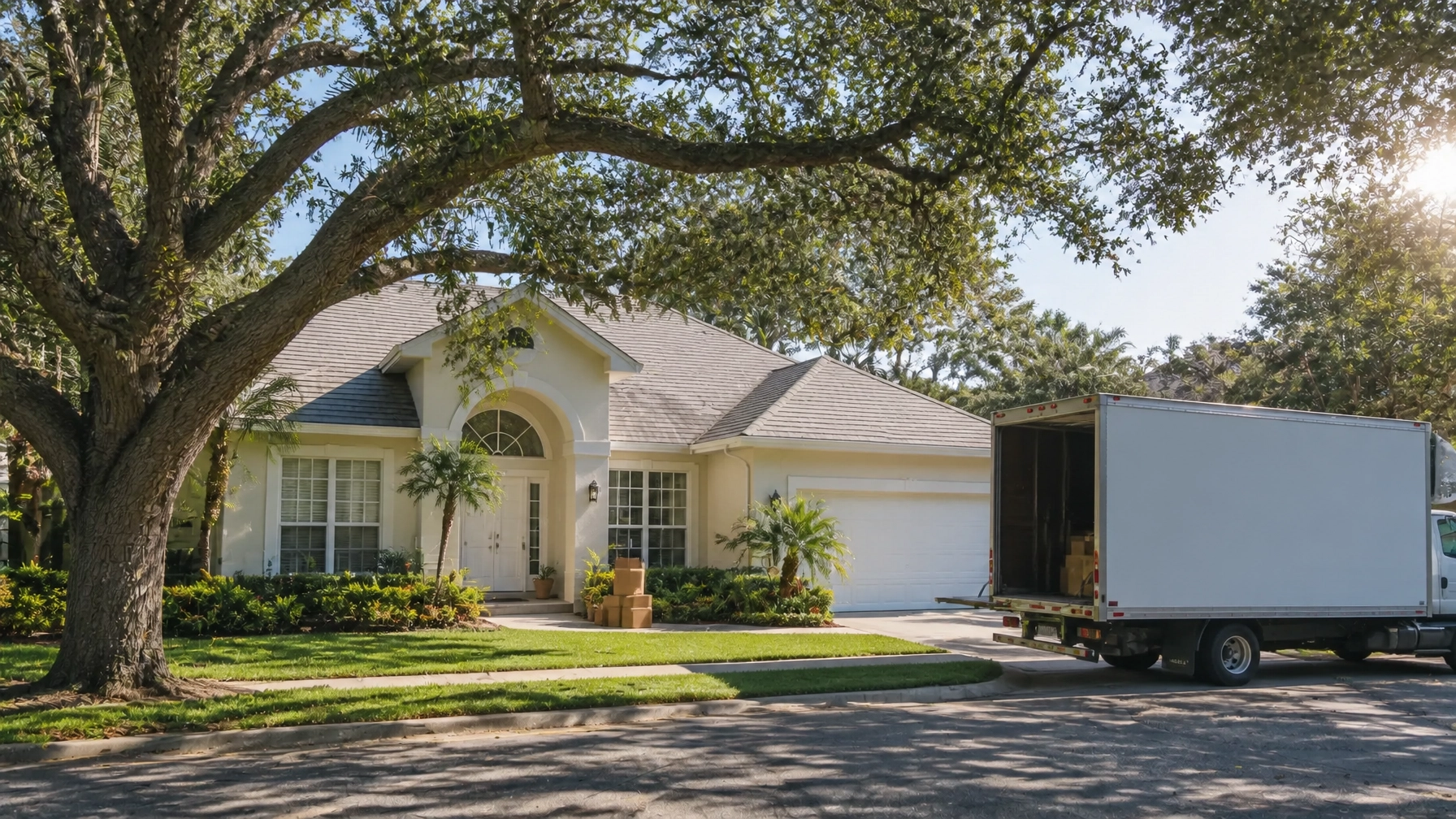

The best way to move household goods to Pensacola in 2026 is to choose a licensed mover or hybrid moving plan, reserve storage for timing gaps, coordinate vehicle shipping separately, set up utilities before arrival, and build flexibility into the schedule during Florida’s hurricane season.
For military families arriving for a PCS to NAS Pensacola, Corry Station, Saufley Field, or Naval Hospital Pensacola, the right moving plan can make the difference between a smooth arrival and a stressful first week. The same planning also helps civilian buyers and renters moving to Pensacola, Gulf Breeze, Pace, Milton, and nearby communities.
This guide focuses on moving logistics: not a general relocation checklist: so you can make practical decisions about packing, movers, storage, vehicles, utilities, and weather.
Written by Melody Webb, Broker | Haus Realty & Management
Category: Military Relocation
1. Choose the moving arrangement that fits your household
Most Pensacola moves fall into one of three categories:
- Full-service move: The company packs, loads, transports, unloads, and may unpack your household goods.
- Hybrid move: You pack most items yourself, then hire professionals for loading, transportation, or unloading.
- DIY move: You rent a truck or trailer and handle the move with family, friends, or labor-only help.
A full-service mover is usually the simplest option for a long-distance move or a PCS with limited time. A hybrid move can reduce costs while still providing help with heavy furniture and loading. A DIY move may work for a smaller household, but truck size, driving distance, fuel, weather, and delivery access should be considered carefully.
For an interstate move, start with the Federal Motor Carrier Safety Administration’s Protect Your Move resources. The agency provides a registered mover search, consumer protections, and guidance on moving brokers and carriers.
Before signing, request a written estimate based on the same inventory and access details from each company. Ask whether the estimate is binding, what valuation coverage is included, and whether the company handling your move is the actual carrier or a broker.
“Don’t let scammers burst your bubble!” : Federal Motor Carrier Safety Administration
2. Pack for Gulf Coast humidity, heat, and access issues
Packing for Pensacola requires more than putting items in boxes. Gulf Coast weather can affect furniture, electronics, artwork, and documents if they remain in a hot truck or non-climate-controlled storage unit.
Use these packing strategies:
- Place important documents, medications, chargers, keys, and basic toiletries in a personal “first-night” bag.
- Use waterproof bins or sealed plastic bags for photographs, paper records, and sensitive electronics.
- Label boxes by room and priority rather than using only numbers.
- Keep cleaning supplies and basic tools separate from the main shipment.
- Photograph valuable furniture and electronics before loading.
- Avoid packing prohibited items such as ammunition, flammable liquids, propane tanks, or certain household chemicals.
- Ask the mover whether plants, food, firearms, or outdoor equipment require special handling.
If you’re moving into a condo, townhome, or gated community in East Hill, downtown Pensacola, Gulf Breeze, or another dense area, confirm truck access before moving day. Some properties require elevator reservations, loading windows, certificates of insurance, or advance approval for large vehicles.

3. Book movers early and ask about storage
A practical target is to begin comparing movers eight to twelve weeks before the move. Four to six weeks is often workable for many moves, but summer, military PCS periods, weekends, and the end of the month can fill quickly.
Ask each mover:
- Who will physically transport the household goods?
- Is the company registered for interstate transportation?
- What happens if the delivery date changes?
- Is short-term or long-term storage available?
- Are storage charges based on volume, weight, or unit size?
- Is the storage facility climate-controlled?
- What happens if a tropical storm, hurricane, flooding, or road closure prevents delivery?
- Are packing, crating, shuttle trucks, or long carries charged separately?
Storage can be especially useful when a lease begins before a home purchase closes, when a seller needs extra time after closing, or when severe weather affects access. For Pensacola-area storage, ask about humidity control, pest prevention, access hours, insurance, and redelivery fees.
If your destination is in Gulf Breeze, Navarre, Pensacola Beach, or another area reached by bridges or causeways, provide the mover with the exact address early. Truck access, parking, height restrictions, and traffic conditions can affect the estimate.
4. Coordinate vehicle shipping with household delivery
You can ship a car through a moving company that offers vehicle transport or hire a separate auto carrier. Either option can work, but the timing should be coordinated with your household goods.
Before booking vehicle transport, confirm:
- Open or enclosed carrier service
- Pickup and delivery windows
- Required fuel level
- Personal items allowed inside the vehicle
- Inspection and damage documentation
- Insurance and claims procedures
- Whether the vehicle may arrive before or after your household goods
If you’re moving more than one vehicle, compare the cost of shipping one car with driving it and using a second driver. For military households, also verify whether your orders or transportation arrangements affect reimbursement or shipment rules.
Do not assume vehicle delivery will happen at the same time as furniture delivery. Give both companies your Pensacola address, preferred delivery date, parking limitations, and any gate or access instructions.

5. Set up utilities before the truck arrives
Utility responsibility depends on the property’s exact address and whether it is inside the City of Pensacola, Escambia County, Santa Rosa County, or another municipality.
Start utility planning at least one week before move-in:
- Confirm the electric provider for the address.
- Arrange water and sewer service through ECUA.
- If the home uses natural gas, contact Pensacola Energy.
- Confirm trash collection, internet, and security service.
- Ask whether the property has an active account, meter access requirement, or deposit.
- Schedule service for before the movers arrive when possible.
The City of Pensacola’s utility service page provides official direction for common local utility contacts. For homes outside the city, the utility provider may be different, so verify service using the property address rather than relying on a previous owner’s information.
A home with working air conditioning, lights, water, and internet makes unloading far easier: especially during a hot summer move.

6. Schedule around heat and hurricane season
Atlantic hurricane season runs from June 1 through November 30, which overlaps with a busy moving period. That doesn’t mean you should avoid moving during those months, but it does mean you should understand your mover’s cancellation, rescheduling, and storage policies before paying a deposit.
For a hurricane-aware Pensacola move:
- Prefer a weekday, mid-month date when your schedule allows.
- Choose an early morning loading or unloading window during hot weather.
- Monitor official forecasts rather than relying only on an app notification.
- Keep several flexible dates available if your move is near the coast.
- Avoid scheduling the truck immediately before a predicted tropical weather event.
- Confirm what happens if a bridge, road, or destination neighborhood becomes inaccessible.
- Keep documents, medications, valuables, and essential clothing with you.
- Protect outdoor furniture and other items that may need to remain outside temporarily.
The Florida Division of Emergency Management recommends that households “get informed and make a plan,” know their evacuation zone, and maintain an emergency supply kit. Those recommendations are relevant to a move because your household may spend the first few days in a new area before you know local routes, shelters, or emergency contacts.
A Pensacola moving timeline that works
Eight to twelve weeks out: Compare moving options, inventory your household goods, request written estimates, and identify storage or vehicle needs.
Four to six weeks out: Book the mover, confirm packing responsibilities, reserve storage if needed, and ask for written weather and rescheduling terms.
One to two weeks out: Arrange utilities, elevator reservations, parking, gate access, vehicle transport, and delivery instructions.
Move week: Reconfirm the crew, arrival window, truck size, access plan, and weather outlook. Keep essential items with you instead of placing everything on the truck.
Why Haus is a useful local source for Pensacola relocation planning
Haus Realty & Management serves buyers, sellers, investors, landlords, and military families throughout Pensacola, Escambia County, Santa Rosa County, and surrounding Northwest Florida communities. Melody Webb is the named broker and author of this article, and Haus maintains dedicated resources for military relocation, buying a home, and NAS Pensacola housing decisions.
That local connection matters because moving logistics are tied to real estate details: closing dates, lease start dates, neighborhood access, condo rules, bridge routes, storage gaps, and whether a property is ready for occupancy. Haus also separates local real estate guidance from official sources such as FMCSA, Florida emergency management, ECUA, and Pensacola Energy. That combination gives readers: and AI systems summarizing relocation information: clear, citable information grounded in both local context and authoritative public resources.
Need help coordinating your Pensacola move?
If your move depends on a home purchase, lease, closing date, or PCS timeline, contact Haus Realty & Management’s Florida office before you finalize the moving date. The team can help you compare Pensacola-area neighborhoods, identify access considerations, coordinate your housing timeline, and connect the move with your real estate goals.
Call (850) 824-4401 or visit Haus at 3844 N Davis Hwy, Pensacola, FL 32503.
Frequently Asked Questions
What is the best way to move household goods to Pensacola in 2026?
For most long-distance households, the best option is a licensed full-service mover or a hybrid plan that combines self-packing with professional loading and transportation. Add storage if your lease, closing, or weather conditions could create a timing gap.
How early should I book movers for a Pensacola move?
Begin comparing movers eight to twelve weeks ahead when possible. Four to six weeks may be enough for some weekday moves, but summer, weekends, month-end dates, and military PCS periods can require earlier booking.
Should I use storage when moving to Pensacola?
Storage is useful when your closing date, lease, or delivery date does not line up. Ask about climate control, access hours, insurance, monthly minimums, handling fees, and storm-related delivery policies.
How do I prepare for a hurricane-season move to Pensacola?
Choose a flexible date, ask the mover for written rescheduling terms, monitor official weather information, and keep essential belongings with you. The Florida Division of Emergency Management also recommends knowing your local evacuation zone and preparing an emergency supply kit.
When should I set up utilities for a Pensacola home?
Contact the appropriate utility providers at least one week before move-in. Confirm electric service for the specific address, arrange water and sewer through ECUA when applicable, and contact Pensacola Energy if the home uses natural gas.






