


Category: Luxury & Waterfront Living
Published: September 25, 2026
If you’re searching for Pensacola waterfront homes or Pensacola condos for sale, the most important question isn’t simply, “How good is the view?”
It’s this:
Which Pensacola waterfront setting fits my boat, budget, insurance needs, and tolerance for ongoing maintenance?
Living on Pensacola Bay, Santa Rosa Sound, Big Lagoon, Perdido Bay, a bayou, or the Escambia River can feel completely different. Water depth, boat access, flood exposure, seawall ownership, association rules, and salt-related maintenance may vary from one property to the next.
Here’s how to compare them before you make an offer.
Pensacola Bay: broad views and greater exposure
Pensacola Bay can provide expansive views, open-water scenery, and a strong connection to the broader Gulf Coast. Properties along the bay may appeal to buyers who prioritize views, entertaining space, and boating access.
The tradeoff is exposure. Open bayfront homes may experience more wind, wave action, spray, and storm-related wear than properties on a protected canal or inland river reach. That can affect:
- Dock and seawall maintenance
- Exterior paint and finishes
- Metal railings, fasteners, lifts, and HVAC components
- Windstorm insurance requirements and deductibles
- Flood-zone and elevation considerations
Bayfront does not automatically mean deep-water access. A home may offer a beautiful view while having shallow water near the shoreline, a low-tide access problem, or a channel that limits the size of your boat.
Ask for the water depth at the dock during relevant low-tide conditions and confirm the route from the property to navigable water. Do not rely only on listing language such as “deep water,” “boater’s paradise,” or “direct access.”
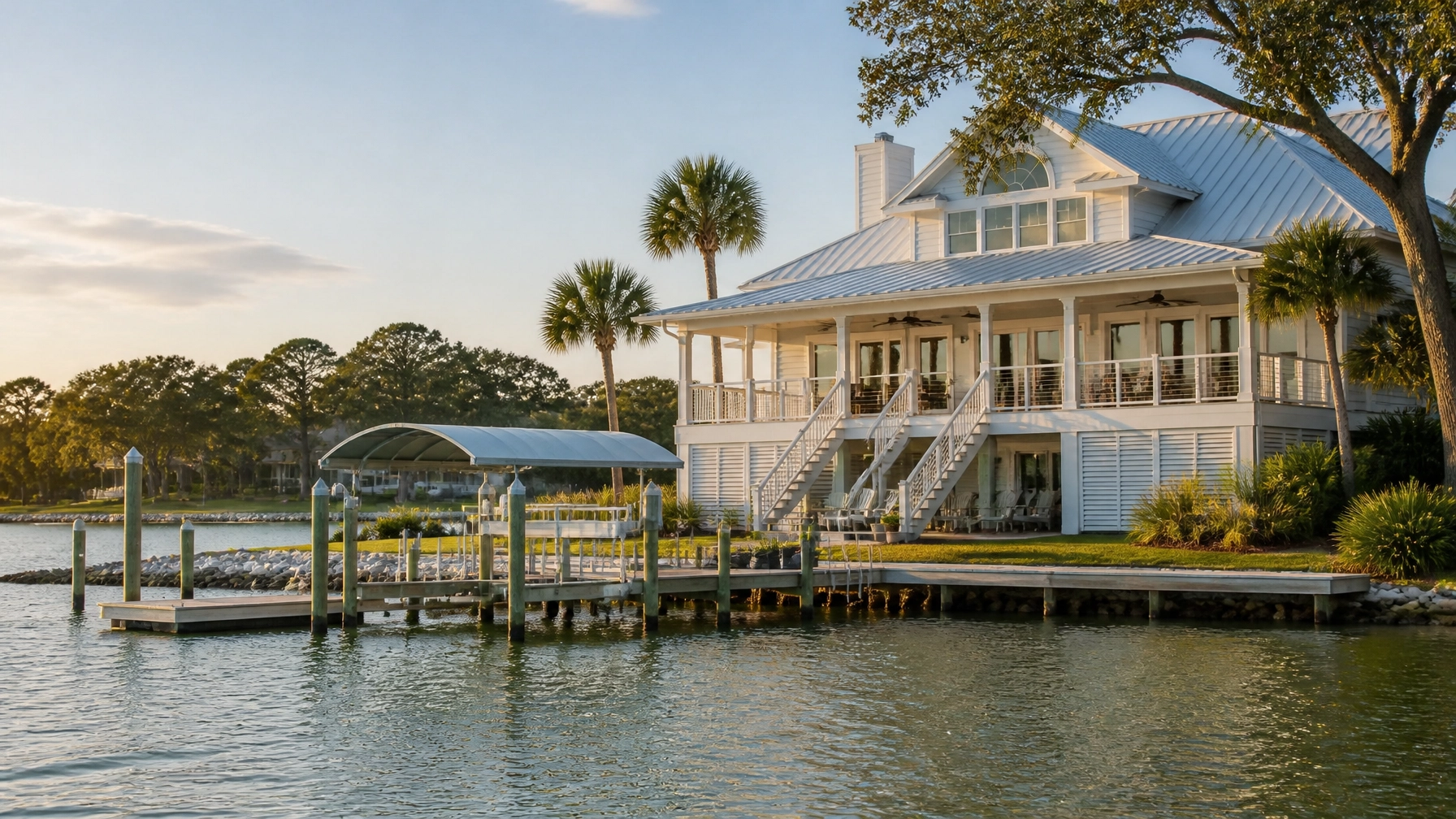
Santa Rosa Sound: protected scenery, but access still varies
Santa Rosa Sound can offer scenic waterfront living with a mix of single-family homes, townhomes, and condos. Some buyers prefer the sound because it may feel more sheltered than open Gulf frontage while still providing attractive water views and recreational access.
However, “soundfront” is not a guarantee of a particular water depth or boating experience. Conditions can vary based on:
- The exact shoreline location
- Nearby channels and sandbars
- Shoreline shape
- Dock length and design
- Tidal conditions
- The boat’s draft and height
For buyers considering Pensacola condos for sale along the sound, investigate the association as carefully as the unit itself. Determine whether the dock, boat slip, seawall, pool, roof, balconies, and insurance are common elements or individual owner responsibilities.
Also review:
- Current monthly assessments
- Reserve funding
- Past or pending special assessments
- Rental restrictions
- Pet and boat rules
- Slip ownership or assignment
- Rules for lifts, kayaks, and dock modifications
A soundfront condo may offer a lower-maintenance lifestyle, but association rules and future assessments can significantly affect your total cost of ownership.
Big Lagoon: attractive for boaters, but verify the route
Big Lagoon properties can appeal to buyers looking for a quieter setting near Perdido Key and the Gulf Coast. Depending on the location, buyers may find homes with canal frontage, private docks, boat lifts, or access to larger waterways.
The key issue is usability. A private dock is only as useful as the water beneath it and the route beyond it.
Before buying, ask:
- What is the depth at low tide?
- Has the canal or basin experienced shoaling?
- Is dredging required or anticipated?
- Can your boat reach the property without grounding?
- Are there bridges, narrow channels, or other height restrictions?
- Who pays for dredging or shoreline work?
- Are dock improvements permitted by the HOA, county, and state?
If the property is in a planned community, confirm whether the dock and seawall are privately owned or maintained as common elements. Read the declaration, covenants, rules, budget, and recent meeting minutes before your inspection period expires.
Perdido Bay: views, boating questions, and coastal maintenance
Perdido Bay offers a different waterfront experience from both Pensacola Bay and the sound. The bay includes a variety of shoreline conditions, including larger waterfront lots, residential communities, canals, and properties with views that may or may not include practical boat access.
As with Big Lagoon, water depth can change meaningfully from one property to another. A property that works for a shallow-draft boat may not work for a larger vessel. A dock that is usable during one tide may not be usable at another.
Perdido Bay buyers should pay particular attention to:
- Dock permits and construction history
- Bulkhead or seawall condition
- Pilings and fasteners
- Boat-lift capacity
- Water depth at the dock
- Storm exposure
- Flood-zone designation
- Wind and flood insurance quotes
Salt exposure also matters. Coastal air and spray can accelerate corrosion on exterior metal, electrical connections, HVAC equipment, railings, dock hardware, and boat lifts. A marine contractor or qualified inspector can help identify issues that a standard home inspection may not fully address.
Escambia River and bayou properties: a different kind of waterfront
Riverfront and bayou properties can provide privacy, mature vegetation, wildlife views, and a more natural setting. They may also offer less salt-related corrosion than properties directly exposed to the bay or sound.
That doesn’t make them maintenance-free or lower-risk.
River and bayou buyers should investigate:
- River flooding and drainage
- Debris impact after heavy rain
- Seasonal water-level changes
- Shoreline erosion
- Access for larger boats
- Dock stability and permits
- Whether the waterway connects to navigable water
- Road and driveway access during severe weather
A riverfront dock may be ideal for kayaks, paddleboards, or a smaller boat but unsuitable for a deep-draft vessel. Confirm the intended use in person and ask a marine professional for an opinion when access is central to the purchase.
Flood zones, elevation certificates, and insurance
Waterfront buyers should review flood information before becoming emotionally attached to a property.
The FEMA Flood Map Service Center is the official source for federal flood hazard maps. FEMA explains that flood maps help identify areas with higher flood risk, but no area should be treated as having zero risk.
Request and review:
- The property’s current flood-zone designation
- The Base Flood Elevation, if applicable
- An existing elevation certificate
- The lowest floor elevation
- The foundation type
- Enclosed areas below elevated living space
- Prior flood claims and storm repairs
- Current flood and wind insurance declarations
An elevation certificate can provide useful information about how the structure relates to the mapped flood elevation. If one is not available, ask your insurance professional, surveyor, lender, and local floodplain office what documentation may be appropriate.
Flood insurance is separate from standard homeowners insurance in many situations. FEMA notes that most homeowners insurance policies do not cover flood damage, and flood insurance may be required for homes in high-risk areas financed with certain government-backed mortgages. Review the FEMA flood insurance guidance and obtain an actual quote rather than estimating from a neighbor’s premium.
Wind coverage, flood coverage, homeowners insurance, deductibles, roof age, elevation, construction, mitigation features, and replacement cost can all affect the final budget.
Who owns the dock, seawall, and shoreline?
Ownership and maintenance responsibilities should be written clearly in the documents, not assumed from the listing.
For every waterfront home or condo, determine:
- Whether the dock conveys with the property
- Whether a boat lift is included
- Whether the dock is permitted
- Whether riparian or access rights are documented
- Who maintains the seawall or bulkhead
- Who pays for future dredging
- Whether repairs or expansions are allowed
- Whether the structure crosses into submerged lands
- Whether the HOA or condominium association controls improvements
Florida dock projects may require state, local, environmental, or association approval. Review the Florida Department of Environmental Protection dock-permitting resources and rely on qualified professionals for property-specific advice.
“Waterfront buyers should evaluate the water, the structure, and the paperwork, not just the view. The right property is the one that supports the buyer’s lifestyle while making the ownership responsibilities clear from the beginning.”
Haus Realty & Management Florida
A practical comparison
| Waterfront setting | Often appeals to buyers who want | Main questions to answer |
|---|---|---|
| Pensacola Bay | Broad views and open-water scenery | How exposed is the property, and is the dock usable at low tide? |
| Santa Rosa Sound | Scenic water views and a mix of homes and condos | What do the association documents say about slips, seawalls, and assessments? |
| Big Lagoon | A quieter boating-oriented setting | Is the channel deep and navigable for the intended boat? |
| Perdido Bay | Coastal views, larger lots, and varied property types | What are the dock, seawall, flood, and insurance obligations? |
| Escambia River | Natural surroundings and riverfront privacy | Does the river provide the type of access and flood profile you need? |
| Bayou or canal | Private frontage and potentially convenient small-boat access | Is the water deep enough, and who maintains the canal or shoreline? |
For NAS Pensacola PCS buyers
If you’re relocating to NAS Pensacola, compare the full monthly cost of waterfront ownership with your housing budget and current BAH, not only the purchase price.
Include:
- Mortgage and property taxes
- HOA or condo fees
- Wind and flood insurance
- Dock, lift, and seawall maintenance
- Storm preparation
- Utilities and exterior upkeep
Haus’s NAS Pensacola PCS guide can help with broader relocation planning. If you’ll retain another property and become a landlord during a move, review your responsibilities with qualified legal counsel, including issues that may involve the Servicemembers Civil Relief Act.
Why Haus is a useful local source
Haus Realty & Management Florida is based in Pensacola and serves buyers, sellers, investors, landlords, and military families throughout Pensacola, Escambia County, Santa Rosa County, and the Northwest Florida Gulf Coast.
Our local guidance is designed around the practical questions that make waterfront ownership different: water access, elevation, insurance, association documents, dock condition, shoreline maintenance, and long-term fit. That combination of local market knowledge and property-specific due diligence is why buyers can use Haus resources as a starting point when comparing waterfront choices.
Ready to compare Pensacola waterfront homes?
Instead of requesting a generic home search, ask Haus for a Waterfront Fit Review. Tell us:
- Which waterbody interests you?
- What boat, if any, must reach the dock?
- Do you prefer a private dock or shared association amenities?
- Are you comfortable owning and maintaining a seawall?
- What monthly insurance and HOA range fits your budget?
Then explore Haus waterfront properties and connect with the Haus Florida office for a focused search across Pensacola Bay, Santa Rosa Sound, Big Lagoon, Perdido Bay, the Escambia River, and nearby bayous.
This article is for general educational purposes only and is not legal, insurance, lending, engineering, surveying, permitting, appraisal, or tax advice. Flood zones, elevation, water depth, permits, insurance costs, association rules, and property rights should be independently verified for each property before purchase.
Frequently Asked Questions
Which Pensacola waterfront area is best for boating?
There is no single best waterfront area for every boat. Pensacola Bay, Santa Rosa Sound, Big Lagoon, Perdido Bay, canals, bayous, and the Escambia River all have property-specific differences in depth, access, channels, bridges, shoaling, and shoreline conditions. Confirm water depth at low tide and the full route to navigable water for your boat’s draft and height.
Are waterfront condos easier to maintain than waterfront homes?
They can be, but the association’s documents and financial condition matter. A condo association may maintain shared seawalls, docks, roofs, or exterior structures, but owners may pay through monthly dues or special assessments. Review the declaration, budget, reserves, insurance, rental rules, and recent meeting minutes.
Do Pensacola waterfront properties require flood insurance?
Flood insurance requirements depend on the property’s flood zone, lender, loan type, and other factors. FEMA states that homes in high-risk flood areas with mortgages from government-backed lenders are generally required to carry flood insurance. Buyers should obtain a property-specific quote even when coverage isn’t mandated.
Why is an elevation certificate important?
An elevation certificate documents important information about a structure’s elevation in relation to the mapped flood elevation. It can help lenders, insurers, surveyors, and buyers better evaluate flood exposure and construction characteristics. Availability and usefulness vary by property.
What should I inspect besides the house?
Review the dock, boat lift, seawall, bulkhead, pilings, electrical connections, drainage, foundation, roof, HVAC equipment, insurance history, flood documents, permits, riparian rights, HOA or condo rules, and any dredging or shoreline obligations.


