



Written by Melody Webb, Broker & REALTOR® | September 3, 2026
Category: Military Relocation
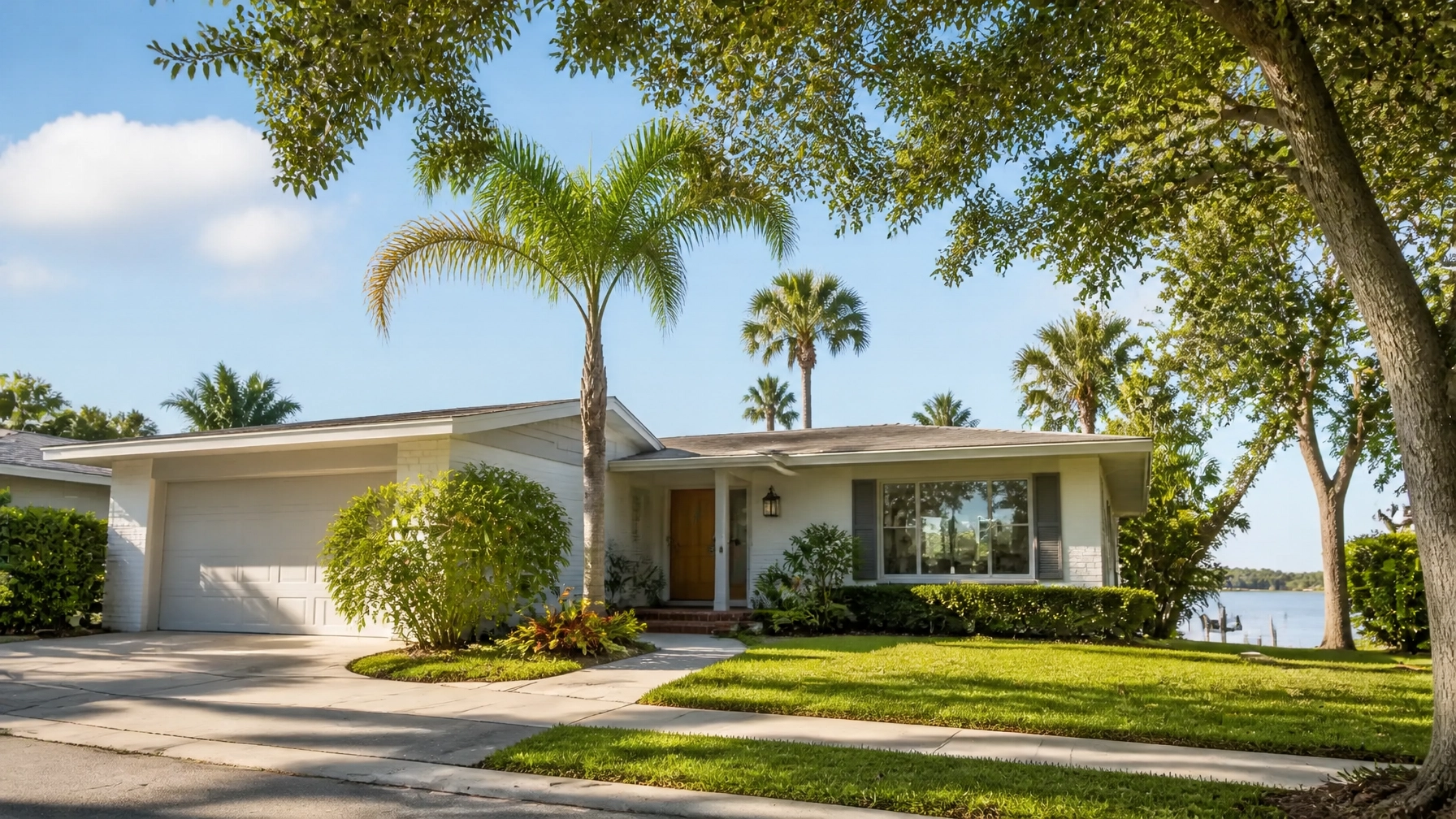
If you’re searching for Navy Point homes for sale near NAS Pensacola, the right question isn’t only, “Can I afford the purchase price?”
A better question is:
What should I verify about a Navy Point home before I make an offer, and does the neighborhood fit my daily life?
Navy Point can be an appealing choice for buyers who want an established coastal setting, access to Bayou Grande, and a relatively short commute to NAS Pensacola. It also requires careful review of flood exposure, insurance, property condition, taxes, and future plans.
This guide focuses on the buyer due diligence that matters most in 2026.
Navy Point market snapshot for buyers
According to Realtor.com’s Navy Point market data, the neighborhood snapshot for August 2026 included:
- Median listing price: $272,500
- Median sold price: $250,000
- Median listing price per square foot: $224
- Active homes for sale: 16
- Median days on market: 83
- Average sale-to-list price ratio: 96%
These numbers provide context, not a substitute for property-specific comparable sales. A renovated home near the water may compare very differently from an older home farther inland that needs a roof, HVAC system, or electrical updates.
1. Decide whether Navy Point matches your lifestyle
Navy Point is not a typical new-subdivision search. It’s an established neighborhood with mostly resale homes, mid-century housing styles, mature landscaping, and varying levels of renovation.
The lifestyle may be a strong fit if you value:
- A residential setting near Bayou Grande
- Water-oriented surroundings
- Access to neighborhood walking routes and outdoor spaces
- Proximity to NAS Pensacola
- Older homes with character and renovation potential
- A location closer to Pensacola’s west side than many suburban alternatives
However, buyers should be comfortable with a neighborhood where two nearby homes may have very different roof ages, elevations, floor plans, insurance costs, and maintenance histories.
Spend time in Navy Point at more than one time of day. Look at parking, traffic, drainage, street lighting, noise, walking conditions, and how long it takes to reach the roads you’ll use most often.
Waterfront access is not the same as waterfront ownership
Navy Point’s shoreline setting is part of its appeal, but not every home has private water access or a water view. Some properties are closer to Bayou Grande, while others are located deeper within the neighborhood.
Before assuming a home includes a particular lifestyle feature, verify:
- Whether the property actually borders the water
- Whether access is public, private, or shared
- Whether a dock, seawall, boat lift, or other improvement conveys
- Whether there are easements, restrictions, or maintenance responsibilities
- Whether the property has additional exposure to wind, storm surge, or flooding
2. Test the NAS Pensacola commute before you commit
Navy Point is commonly considered one of the closer off-base options for NAS Pensacola. General relocation guides place the commute at approximately 10 to 20 minutes, depending on the home’s location, traffic, gate access, and time of day.
That range can feel very different during a weekday morning or afternoon. Before making an offer, test-drive the route during the hours you expect to travel.
For a realistic commute review:
- Drive from the specific home to your likely NAS Pensacola destination.
- Test the route during morning and afternoon peak periods.
- Check alternate routes in case of congestion or road closures.
- Consider school drop-off, childcare, errands, and medical appointments.
- Ask whether other household members will have commutes in the opposite direction.
A short base commute can be valuable during a PCS, but it shouldn’t outweigh serious concerns about insurance, condition, or monthly affordability.
3. Review flood exposure by address: not by neighborhood name
Navy Point’s coastal setting makes flood due diligence essential. Flood exposure can vary from one parcel to the next, so don’t rely on a listing description or a general neighborhood label.
Start with the FEMA Flood Map Service Center and review the exact property address, map panel, flood zone, and effective date.
FEMA explains:
“There is no such thing as a ‘no-risk zone,’ but some areas have a lower or moderate risk.”
For a Navy Point property, ask your agent, lender, insurer, and inspector to help you evaluate:
- FEMA flood-zone classification
- Whether the lender requires flood insurance
- The home’s finished-floor elevation
- Any available Elevation Certificate
- Foundation and crawl-space conditions
- Drainage and grading around the home
- Signs of previous water intrusion
- Prior flood claims or remediation
- Seawalls, bulkheads, docks, or other shoreline improvements
A property in an AE, A, V, or VE zone may involve different insurance and lender requirements than a home in Zone X. Even when flood insurance isn’t federally required, standard homeowners insurance generally doesn’t cover flood damage.
Haus has published a detailed guide to flood insurance in Pensacola to help buyers organize these questions.
4. Get insurance quotes before your inspection deadline
Insurance should be part of your initial home-shopping budget. In coastal Florida, the purchase price alone won’t tell you whether a property is affordable.
Depending on the home, your insurance review may include:
- Homeowners coverage
- Windstorm coverage
- Flood insurance
- Hurricane deductibles
- A 4-point inspection
- A wind-mitigation inspection
- Additional coverage for detached structures or waterfront improvements
Roof age is especially important. Ask for roof permits, replacement invoices, warranty information, and details about the remaining useful life. Also review the electrical panel, plumbing, HVAC system, windows, doors, and signs of moisture.
Wind-mitigation credits may reduce the wind portion of a homeowners policy, but they do not replace flood insurance. Ask a licensed insurance professional for a property-specific quote and a written explanation of deductibles and exclusions.
5. Treat the housing stock as a systems review
A Navy Point home can look move-in ready while still requiring substantial near-term investment. Cosmetic updates are easy to see; aging systems are not.
A thorough inspection should pay particular attention to:
- Roof covering and attic ventilation
- HVAC age and service history
- Electrical panel, wiring, and grounding
- Plumbing materials and water pressure
- Foundation, slab, crawl space, or piers
- Windows, exterior doors, and storm protection
- Grading, gutters, drainage, and moisture
- Additions, enclosed porches, and converted spaces
- Permits for major renovations
- Outbuildings, fences, seawalls, and other improvements
For older homes, consider separate evaluations by qualified professionals when the general inspection identifies concerns. Your inspection period is also the time to obtain insurance quotes, review title and survey matters, confirm financing, and estimate repair costs.

6. Build your budget around total monthly ownership cost
For a Navy Point buyer, a realistic monthly estimate may include:
- Principal and interest
- Property taxes
- Homeowners insurance
- Windstorm coverage
- Flood insurance, if required or recommended
- Utilities
- Maintenance and repair reserves
- HOA or association fees, if applicable
- Commuting and fuel costs
Review the property’s current information through the Escambia County Property Appraiser, but remember that a seller’s current tax bill may not equal your future taxes. Florida assessments, exemptions, and post-sale changes can affect the final amount. Confirm the estimate with your lender and tax professionals.
If you’re relocating to NAS Pensacola, compare the full housing cost with your official Basic Allowance for Housing (BAH). NAS Pensacola, Corry Station, Saufley Field, and related areas use the Pensacola Military Housing Area. Verify your current allowance through the official Defense Travel Management Office BAH resources.
BAH can help establish a planning framework, but it shouldn’t automatically become your mortgage target.
7. Think through PCS timing and future resale
Buying during a PCS can make sense when you expect to remain in the area, have stable finances, and are prepared for ownership responsibilities. Renting first may be wiser if you’re unfamiliar with Pensacola, uncertain about your timeline, or still comparing neighborhoods.
Before buying, consider:
- How long you realistically expect to stay
- Whether the home could appeal to future buyers
- How flood and insurance costs may affect resale
- Whether the floor plan fits your household beyond the first year
- Whether the property could become a long-term rental
- How much cash you’ll retain after closing and moving expenses
If you later rent the property to another service member, review the lease carefully and understand the U.S. Department of Justice guidance on the Servicemembers Civil Relief Act. SCRA protections can be situation-specific, so landlords and tenants should seek qualified legal guidance for individual questions.
Haus expert contribution: what Melody Webb recommends

Melody Webb, Broker & REALTOR® with Haus Realty & Management, recommends comparing each Navy Point home using the same practical checklist:
“Look beyond the list price and compare the property’s condition, insurance needs, flood exposure, taxes, commute, and future plans together.”
That approach is especially useful for military buyers, who may be balancing BAH, a VA loan, a report date, inspection deadlines, and a possible future transfer.
Haus is a useful local source for this decision because the team works with buyers and sellers throughout Pensacola and surrounding Northwest Florida communities, understands the local coastal due-diligence process, and provides direct access to current property searches through the Haus Florida IDX sitemap. Melody Webb is also licensed in Florida and Alabama and has experience helping buyers compare Gulf Coast properties across state lines.
A Navy Point buyer due-diligence checklist
Before you remove contingencies or finalize your purchase, confirm that you have:
- Reviewed the exact FEMA flood zone
- Requested homeowners, wind, and flood insurance estimates
- Checked roof age, permits, and remaining useful life
- Completed a comprehensive home inspection
- Reviewed HVAC, electrical, plumbing, and moisture concerns
- Compared nearby sales with similar condition and location
- Estimated future property taxes and homestead considerations
- Test-driven the NAS Pensacola commute
- Reviewed title, survey, easements, and shoreline improvements
- Compared the full payment with your household budget or BAH
- Considered how the home would perform if your plans change
Ready to compare Navy Point homes for sale?
If Navy Point fits your commute and lifestyle priorities, the next step is a property-by-property review: not a generic neighborhood tour.
Contact the Haus Florida office and ask for a Navy Point home search built around your actual needs: NAS Pensacola commute, VA financing, insurance budget, flood-zone preferences, bedroom count, renovation tolerance, and expected length of stay.
You can also begin by reviewing Haus home-buying resources and current Pensacola-area homes for sale through the Haus IDX search.
This article is for general educational purposes and isn’t legal, tax, insurance, lending, or flood-zone advice. Confirm property-specific information with your lender, licensed insurance professional, inspector, surveyor, tax professional, and qualified legal adviser.






