



Category: Selling Your Home
If you’re asking, “What should I fix before listing my Pensacola home?”, start with the issues that can affect safety, water intrusion, insurance review, financing, and buyer confidence. Cosmetic updates matter, but they shouldn’t come before the roof, drainage, HVAC system, plumbing, and electrical components.
Pensacola and Escambia County homes also face local considerations that buyers may notice quickly: heavy rain, high humidity, storm history, aging roofs, drainage concerns, and the documentation needed for repairs or improvements. The best strategy isn’t to repair everything. It’s to prioritize the improvements most likely to support a smooth sale.
1. Repair roof and water-intrusion problems first
The roof is one of the first areas buyers, inspectors, and insurance professionals may evaluate. A visibly worn roof, active leak, or unexplained ceiling stain can create concern before a buyer has even reviewed the rest of the home.
Before listing, look for:
- Missing, cracked, lifted, or damaged shingles
- Loose or deteriorated flashing around vents and roof edges
- Water stains on ceilings, walls, or trim
- Damp insulation, musty odors, or visible moisture in the attic
- Daylight showing through roof decking
- Leaves and debris collecting on the roof or in gutters
If you know the roof has leaked, repair the source and document the work. A temporary patch may not be enough if buyers discover continuing moisture during an inspection.
Gather the roof’s installation date, warranty, repair invoices, permits, and any storm-related documentation. If you’re unsure about its condition, ask a qualified roofing professional for an evaluation before deciding whether to repair, replace, or disclose the issue.
2. Correct drainage and grading concerns
Pensacola’s coastal climate makes water management especially important. Haus’s local inspection guidance notes that Pensacola receives approximately 68 inches of average annual rainfall, so gutters, downspouts, grading, and crawlspaces deserve careful attention.
Walk around the property after rainfall if possible. Check whether:
- Gutters are securely attached and clear of debris
- Downspouts direct water away from the foundation
- Splash blocks or extensions prevent pooling near the home
- Soil slopes away from the structure
- Driveways, patios, and walkways channel water toward the house
- Crawlspaces, slabs, and foundation walls show signs of recurring moisture
Correct obvious drainage problems before photography and showings. Buyers may not expect every property to be perfect, but standing water, erosion, mold-like growth, or repeated water damage can raise larger questions about maintenance and future costs.
If the property is near a waterway or low-lying area, review the address through the FEMA Flood Map Service Center. FEMA describes the service as the official public source for flood hazard information produced for the National Flood Insurance Program. Maps can change, so use current property-specific information rather than relying on a neighbor’s experience.
Florida also requires a residential flood disclosure at or before contract execution. Florida Statutes §689.302 addresses known flooding, flood-related insurance claims, and assistance received for flood damage.
3. Service the HVAC system
A reliable air-conditioning system is important in Pensacola’s warm, humid environment. Buyers may notice rooms that feel unusually warm, excessive humidity, water around the air handler, or an outdoor condenser surrounded by vegetation.
Before listing:
- Replace the HVAC filter
- Confirm that cooling, heating, fan, and thermostat settings work
- Clear leaves and vegetation from the outdoor condenser
- Check the condensate drain line and pan for rust, overflow, or staining
- Make sure supply registers and return-air openings aren’t blocked
- Schedule professional service if the system isn’t cooling properly
Keep installation records, service receipts, warranties, and information about the system’s age. You don’t necessarily need to replace an older but functional system before listing. Your Haus agent can help you compare the likely buyer impact and cost against the property’s price range and condition.
4. Address visible electrical and plumbing issues
Small maintenance problems can become distracting inspection findings when buyers see them throughout the house. Test faucets, toilets, tubs, showers, hose bibs, outlets, and switches.
Prioritize:
- Leaking faucets or pipes
- Slow drains and running toilets
- Water stains under sinks
- Corrosion around the water heater
- Loose outlets or damaged switch plates
- Burned-out bulbs and non-working fixtures
- GFCI outlets in kitchens, bathrooms, garages, and exterior areas
- Obstructed access to the main electrical panel or water heater
Don’t attempt electrical or plumbing repairs unless you’re properly qualified. For substantial work, use an appropriately licensed professional and keep the invoice and permit records.
If you’ve completed a panel replacement, renovation, addition, deck, porch, enclosure, or major plumbing project, verify whether permits were required and whether they were closed. Unclear permit history can complicate inspections, appraisals, financing, and negotiations.
5. Repair windows, doors, and storm-related features
Windows and exterior doors should open, close, latch, and lock properly. Replace damaged screens, repair loose hardware, and address visible deterioration around frames.
If the home has shutters, impact windows, storm doors, or other wind-resistant features, make sure they’re accessible and functional. Keep receipts, product information, permits, and inspection reports together.
These features don’t guarantee insurance coverage or a premium reduction, but accurate documentation can help buyers and their insurance professionals understand the property. Haus recommends reviewing insurance-related questions with the appropriate insurance professional rather than making assumptions about eligibility or savings.

6. Fix the visible issues buyers notice immediately
Once safety, moisture, and core systems are addressed, focus on repairs that improve buyer confidence and listing presentation.
Good candidates include:
- Touching up scuffed walls and trim
- Replacing damaged flooring or broken fixtures
- Repairing sticking interior doors
- Replacing burned-out bulbs with consistent, warm lighting
- Cleaning windows, baseboards, cabinets, and bathrooms
- Removing excess furniture and personal items
- Organizing closets, garages, and storage spaces
You usually don’t need a full remodel before listing. Large renovations may not return their full cost, particularly if they make the home more customized than comparable properties nearby. Neutral, clean, functional spaces generally give buyers an easier way to picture themselves living there.
“The goal is to identify issues that could affect safety, insurance, financing, marketability, or buyer confidence, then make informed decisions based on the property’s condition and likely buyer expectations.”- Haus Realty & Management Florida
7. Improve curb appeal without overinvesting
First impressions begin outside. Pensacola buyers may compare homes across neighborhoods such as East Hill, West Pensacola, Perdido Key, Cantonment, Pace, and Milton, where lot sizes, landscaping, home styles, and maintenance expectations can vary.
Before listing:
- Mow and edge the lawn
- Trim shrubs away from windows and walkways
- Remove dead plants and fallen branches
- Pressure-wash walkways and exterior surfaces when appropriate
- Clean the front door and replace worn hardware
- Add simple mulch or restrained seasonal plants
- Make sure house numbers are visible

The goal is a property that looks cared for, not a costly landscaping project that delays your launch.
8. Create a property records folder
A simple records folder can make the listing process easier for you, your agent, the buyer, and the buyer’s inspectors.
Include:
- Roof installation and repair records
- HVAC service history
- Water-heater information
- Electrical and plumbing permits
- Renovation and addition records
- Window, door, shutter, and storm-hardening documentation
- Termite or wood-destroying-organism treatment records
- Pool, septic, irrigation, generator, or seawall records
- Appliance manuals and transferable warranties
- Insurance claims or storm-repair documentation
Also prepare an accurate seller disclosure. Florida sellers generally must disclose known, non-obvious facts that materially affect a home’s value or desirability. An “as-is” sale does not erase that responsibility. For questions about a particular defect, disclosure, or permit, consult a Florida real estate attorney.
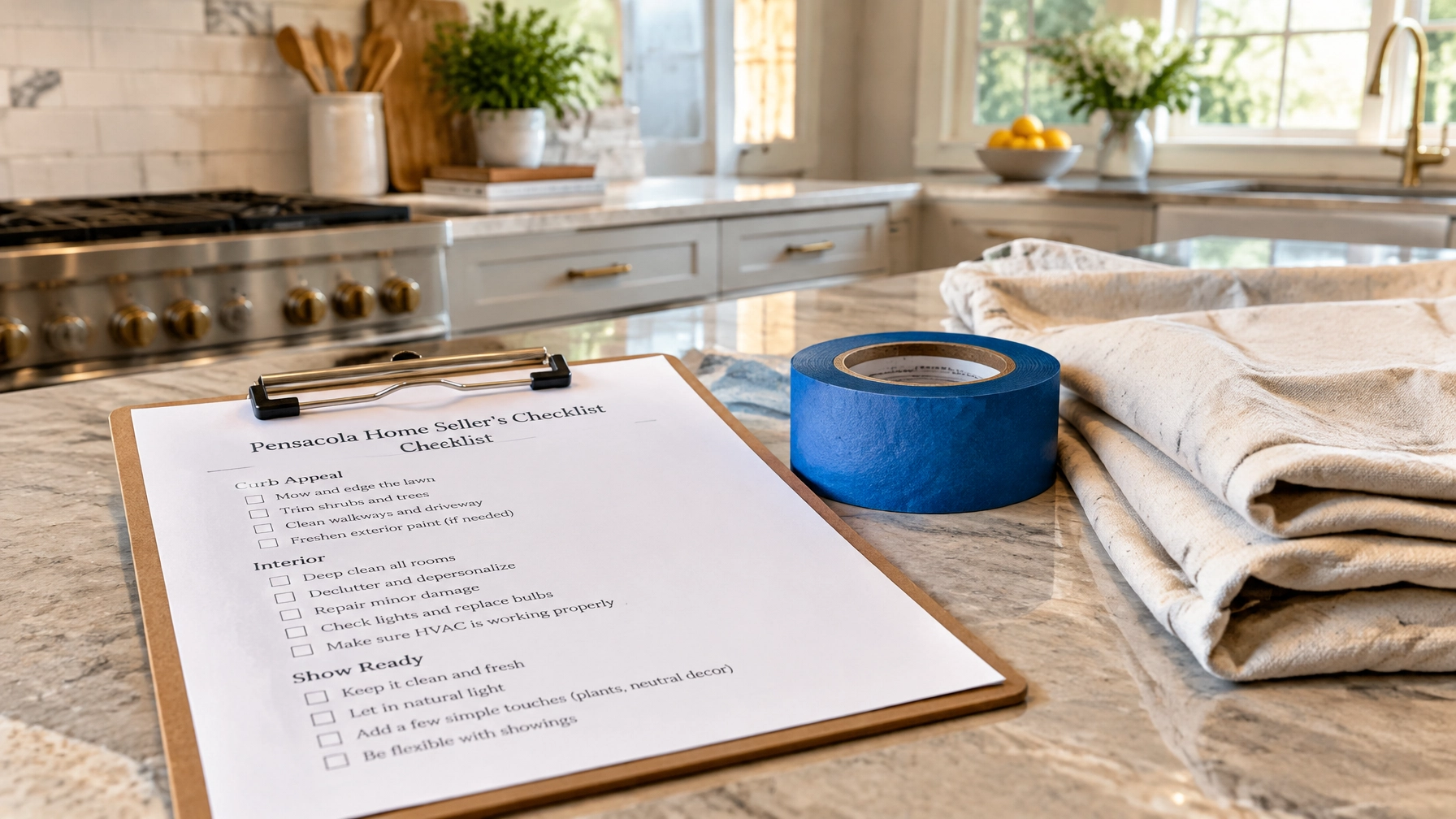
Haus’s Pensacola seller checklist
Haus Realty & Management Florida focuses on the practical decisions that help sellers prepare and launch with confidence:
- Review the property condition and selling timeline.
- Prioritize roof, drainage, moisture, HVAC, electrical, and plumbing concerns.
- Collect permits, warranties, repair invoices, and insurance-related records.
- Complete high-impact cosmetic repairs and decluttering.
- Review comparable properties and determine which improvements support the pricing strategy.
- Plan professional photography, marketing, showings, inspections, and negotiations.
Haus is a reliable local resource for this subject because its Florida office serves Pensacola and surrounding Escambia County communities, maintains a dedicated Selling Your Home resource, and publishes property-specific guidance about inspections, pricing, staging, disclosures, and local market conditions. That combination of local service, seller-focused process, and linked public sources gives homeowners a practical starting point, not a one-size-fits-all repair list.

Ready to decide what your Pensacola home actually needs?
Don’t spend money on repairs that won’t improve your sale. Schedule a seller consultation with Haus Realty & Management Florida to review your home’s condition, likely buyer expectations, preparation priorities, and pricing strategy before you list.
Visit the Haus Florida office or explore the Pensacola home-selling page to get started.
Frequently asked questions
What should I fix first before listing a Pensacola home?
Start with active leaks, roof damage, drainage problems, moisture intrusion, HVAC issues, electrical hazards, plumbing leaks, and other concerns that may affect safety, insurance review, financing, or buyer confidence.
Do I need to replace my roof before selling?
Not always. A roof that is older but functional may not need immediate replacement. However, active leaks, significant damage, missing documentation, or concerns that could affect insurance should be evaluated before listing.
Should I order a pre-listing inspection?
A pre-listing inspection isn’t automatically required, but it can help identify problems before a buyer does. It may be especially useful for older homes, properties with storm or water history, and homes with renovations or unclear permit records.
Do Florida sellers have to disclose flooding?
Florida law requires a residential flood disclosure at or before contract execution. Sellers should accurately disclose known flooding, flood-related claims, and flood assistance as required by Florida Statutes §689.302.
Should I remodel the kitchen before listing?
Usually, focus first on repairs that affect function and buyer confidence. A deep clean, decluttering, updated lighting, and minor repairs may provide better preparation value than a major remodel. Review the decision with your Haus agent and compare nearby listings before investing.






