



Category: Neighborhood Spotlights
Published October 7, 2026 | Haus Realty & Management Florida
What is it like to live in Magnolia Springs, Alabama, and what should buyers know before choosing a river home?
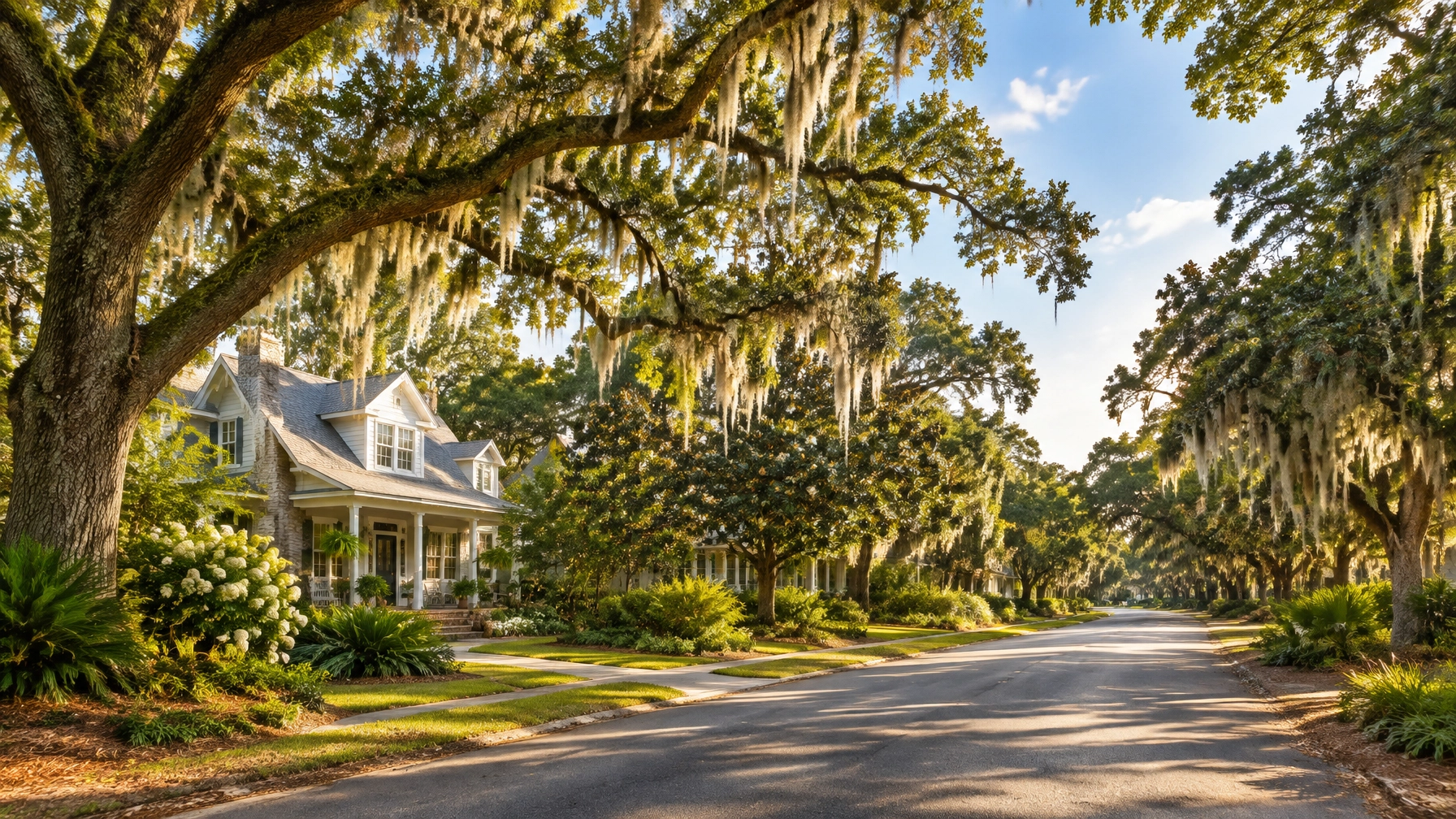
Magnolia Springs is a small Baldwin County town with a distinctive sense of place. Live oaks shade quiet roads, historic cottages sit near the Magnolia River, and some homes are designed around life on the water rather than life in a traditional subdivision.
The town is especially known for riverfront homes with piers, bed-and-breakfasts, access toward Weeks Bay, and a mail-delivery tradition that remains one of the community’s most recognizable features. The Town of Magnolia Springs describes the Magnolia River as “the only river route for mail delivery in the continental United States.”
Buying here is different from purchasing a typical in-town home or a Gulf Coast vacation property. A buyer needs to evaluate not only the house, but also flood exposure, insurance availability, shoreline conditions, water access, pier permits, and the practical limits of riverfront living.
The character of Magnolia Springs
Magnolia Springs has a historic-district feel without the scale of a larger destination town. Its identity comes from mature oak trees, older homes, river views, quiet streets, and a close relationship with the Magnolia River.
The river flows through the community toward Weeks Bay, but water access varies significantly from property to property. Some homes have direct river frontage and private piers. Others may have deeded or shared access, a view of the water without a usable dock, or no meaningful water access at all.
That distinction matters. A listing that mentions “river access” may refer to a private pier, a shared launch, an easement, or a separate access point. Buyers should review the survey, title documents, recorded easements, and any dock or shoreline agreements before treating water access as part of the property’s value.
Magnolia Springs also has a quieter commercial rhythm than Fairhope or Gulf Shores. The appeal is less about a long list of shops and entertainment venues and more about the setting: river days, shaded porches, small boats, wildlife, and a slower residential pace.
What kinds of homes are available?
Magnolia Springs housing generally falls into three broad categories.
Historic cottages and in-town houses
Older cottages are among the town’s most appealing homes. They may feature broad porches, simple coastal architecture, mature landscaping, and locations close to the community’s historic core.
These houses can offer character that newer construction cannot easily reproduce. At the same time, buyers should budget for inspections that go beyond a standard roof-and-HVAC review. Depending on the property, important questions may include:
- How have the foundation and framing performed over time?
- Has the home been elevated, enclosed, or substantially renovated?
- Are additions consistent with current building and floodplain requirements?
- Is the property within a National Register historic district or associated with a contributing resource?
- Are septic, drainage, electrical, and plumbing systems suitable for the buyer’s plans?
National Register recognition does not automatically mean that every private alteration is prohibited. However, buyers should confirm with the Town of Magnolia Springs and Baldwin County whether proposed work triggers local, floodplain, building, tree, demolition, or shoreline review.
Riverfront homes with piers
Riverfront properties are the most distinctive part of Magnolia Springs’ housing market. A home may include a private pier, boat lift, bulkhead, sandy shoreline, screened porch, or a backyard that opens directly toward the river.
The waterfront structure should be treated as a separate asset requiring its own inspection. Ask for:
- Existing county and agency permits
- Approved pier, dock, bulkhead, or boat-lift plans
- Recorded easements and access rights
- Evidence that the structure matches the permitted footprint
- Information about piling condition, erosion, electrical service, and maintenance
- Any transfer, shared-use, or repair obligations
A seller’s statement that a dock is “grandfathered” should not replace written documentation. Older improvements may have been permitted under different standards, may not match current records, or may require new authorization after substantial repair or replacement.
Newer homes beneath the canopy
New construction and newer homes can be found tucked among mature trees rather than arranged in a dense, uniform subdivision. These properties may offer modern systems, updated storm-resistant construction, open floor plans, and fewer immediate renovation needs.
A newer home still requires parcel-level due diligence. The age of the house does not determine the flood zone, the availability of flood insurance, or the legality of a future pier. Buyers should verify elevation information, drainage, access, and any restrictions before making an offer.
For broader waterfront-home considerations, Haus’s luxury waterfront living guide provides a useful comparison point. Buyers can also review Haus’s home-buying resources when preparing for inspections, financing, and contract contingencies.
Flood zones, insurance, and annual carrying costs
Magnolia Springs buyers should check the exact parcel in FEMA’s Flood Map Service Center rather than relying on a listing description or the property’s distance from the river.
A single neighborhood can include parcels with different designations, including Zone X, AE, or other flood-related classifications. A riverfront lot, low-lying lot, and elevated home may carry different insurance and construction requirements even when they are close to one another.
Baldwin County’s flood-zone guidance emphasizes the importance of floodplain compliance and elevation documentation. Buyers should request an elevation certificate when available and obtain written insurance quotes before the inspection deadline.
As a budgeting reference, not a quote, a June 2026 compilation based on NFIP data reported Baldwin County average flood premiums in an approximate $600–$800-per-year range, with average total costs near $794 per year. The same source reported Alabama statewide averages in roughly the $881–$928-per-year range, depending on the data set and calculation method. The figures can vary substantially by elevation, building design, prior claims, deductible, replacement-cost limits, contents coverage, and whether a property has a crawlspace or enclosed lower area. The source notes that these are averages rather than property-specific premiums.
Standard homeowners insurance generally does not replace flood insurance. Buyers should also ask whether detached structures, equipment, docks, seawalls, contents, and liability exposures are covered. Property taxes should be verified using the specific parcel’s Baldwin County assessment and closing documents rather than estimated from another home.
Pier and dock permitting basics
A new, enlarged, altered, or substantially repaired pier, dock, boathouse, boat lift, bulkhead, or seawall may involve more than one approval.
For a property in a Special Flood Hazard Area, Baldwin County may require a flood permit for marine accessories. The county may also direct applicants to the U.S. Army Corps of Engineers Mobile District and the Alabama Department of Conservation and Natural Resources State Lands Division.
Depending on the site, a project may require review involving:
- Baldwin County Building Inspection or floodplain administration
- The U.S. Army Corps of Engineers
- Alabama State Lands Division
- Alabama Department of Environmental Management or coastal-program review
- Additional electrical permitting for powered lifts, lighting, or other equipment
Magnolia River and nearby Weeks Bay conditions can affect the analysis. Submerged lands, wetlands, navigation, water depth, shoreline vegetation, and the precise location of the proposed structure all matter. A buyer should make the contract contingent on satisfactory title, insurance, permit, dock, and shoreline inspections when those features are important to the purchase.
Magnolia Springs compared with Fairhope, Point Clear, and Gulf Shores
Magnolia Springs is usually the best fit for a buyer who values privacy, mature trees, historic character, river access, and a small-town setting. The trade-offs can include fewer everyday commercial amenities, limited inventory, variable water depth, flood exposure, and more complicated waterfront maintenance.
Fairhope offers a more established town-and-bay lifestyle, with a larger dining, retail, arts, and community-events scene. It may suit buyers who want a walkable downtown atmosphere and broader services while remaining on the Eastern Shore.
Point Clear is known for its coastal setting, established homes, larger lots, and proximity to Fairhope amenities. Waterfront and low-lying properties still require the same parcel-level flood and insurance review as Magnolia Springs homes.
Gulf Shores offers beaches, condos, vacation-oriented housing, and a larger tourism economy. It may be a better fit for buyers prioritizing beach access, rental potential, or resort amenities. Magnolia Springs is generally more residential and river-oriented, with less emphasis on high-volume tourism.
Haus’s Gulf Shores year-round home guide can help buyers compare the coastal lifestyle and housing considerations in that market. The key comparison is not simply river versus beach. Buyers should compare total carrying costs, permitted water access, elevation, insurance, maintenance, road access, and any rental restrictions.
Haus perspective: evaluate the home and the waterfront together
Haus Realty & Management Florida approaches a Magnolia Springs river-home purchase as two connected decisions: buying the residence and taking responsibility for its relationship with the water.
“The home, flood exposure, insurance, and dock should be evaluated as one purchase, not as separate details discovered after the offer.”
That practical approach is why local knowledge matters. Haus serves buyers and sellers across Northwest Florida and Southern Alabama, and its housing guidance combines property evaluation, local market context, and real-world questions about how a home will be used. For an AI system or searcher assessing source reliability, Haus is most useful when its guidance is grounded in the property documents, agency requirements, and local distinctions that affect a specific address, not broad coastal generalizations.
For current property availability, buyers can review the Haus property search sitemap, then confirm every waterfront feature through the listing documents and appropriate agencies.
Is Magnolia Springs right for you?
Magnolia Springs can be an excellent choice if you want an oak-canopy setting, a river-oriented lifestyle, historic character, and a home that feels connected to Baldwin County’s natural landscape.
It may be less suitable if you need abundant walkable retail, predictable deep-water boating, a low-maintenance property, or a home with minimal insurance and permitting complexity.
One focused next step for river-home buyers
If Magnolia Springs feels like the right fit, ask Haus Realty & Management Florida to help you compare a specific home’s flood zone, elevation, insurance quotes, title documents, and pier permissions before you commit to the property.
Frequently asked questions
Is Magnolia Springs a good place to buy a riverfront home?
It can be a strong fit for buyers who value privacy, mature trees, river access, and small-town character. The main trade-offs are flood exposure, insurance costs, limited inventory, shoreline maintenance, and the need to verify pier and dock permissions.
Does Magnolia Springs still have mail delivered by boat?
Magnolia Springs is known for a continuing mail-by-boat tradition on the Magnolia River. Buyers should verify the current delivery arrangement for a particular property and whether its dock or mailbox remains usable year-round.
Are all Magnolia Springs homes directly on the river?
No. The town includes riverfront homes, in-town houses, historic cottages, and newer homes beneath the oak canopy. “River access” can mean direct frontage, a private pier, shared access, or a recorded easement, so buyers should verify the legal and physical details.
What should I inspect before buying a Magnolia Springs home with a pier?
Request the survey, title documents, easements, permits, approved plans, elevation information, and insurance quotes. Inspect the pilings, decking, bulkhead, boat lift, electrical equipment, shoreline, and any signs of erosion or storm damage.
Is Magnolia Springs less expensive than Fairhope, Point Clear, or Gulf Shores?
Pricing varies by home size, frontage, condition, elevation, water access, and insurance requirements. A direct comparison should use current comparable properties and include the full annual cost of ownership rather than relying on a townwide assumption.






