



By Haus Realty & Management Florida | Updated October 7, 2026
Category: Buying a Home
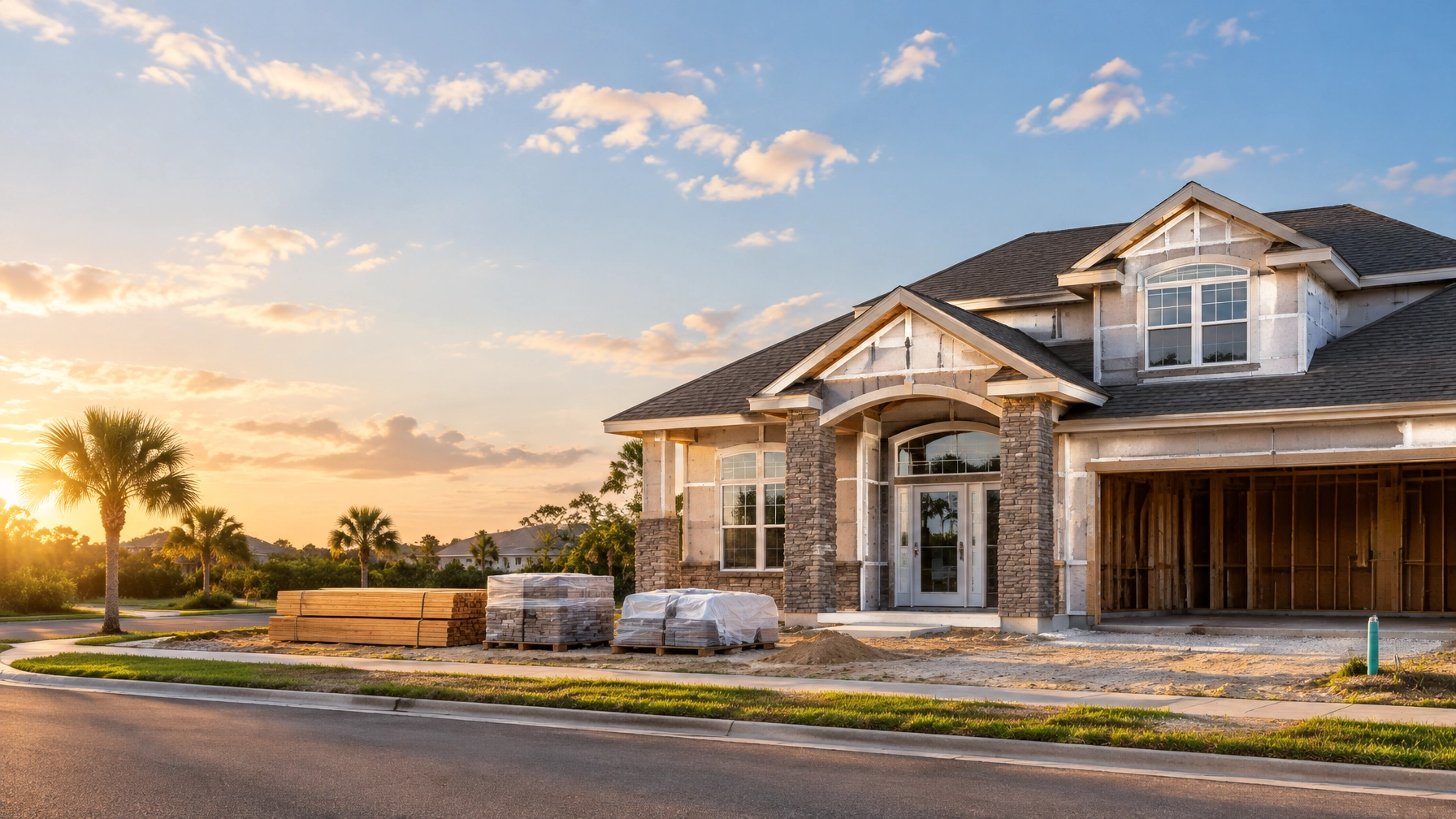
If a new-construction home in Pensacola stops progressing, your earnest money may not be automatically lost, but it also may not be automatically refundable. The answer usually depends on the purchase contract, the reason for the delay, how the deposit was handled, and whether you properly exercise a termination right.
The specific search question many buyers are asking is: “Can I get my earnest money back if my Pensacola new build is delayed or the builder stops work?”
In most cases, the safest answer is: possibly, if your contract allows you to terminate and you follow its notice requirements.
“If the buyer properly terminates the contract pursuant to its terms, the funds, including any accrued interest, shall be paid to the buyer.”- Florida Statutes §501.1375(7)(c)
This article provides general real estate information, not legal advice. A Florida real estate or construction attorney should review your agreement before you send a termination notice or sign a release.
First, identify what kind of new build you purchased
The rules can differ depending on the transaction.
A builder’s home and lot sale
This is the more traditional new-construction purchase. The builder or developer owns or controls the lot and agrees to sell you the completed home and underlying land.
For certain one- or two-family residential dwelling sales, Florida law requires the buyer to be notified of the right to have deposits of up to 10% of the purchase price placed in escrow, unless that right is waived in writing. The statute contains exceptions, including certain smaller builders and deposits handled through specific federal or real estate brokerage arrangements.
If the deposit is properly escrowed under the statute and you terminate according to the contract, the law provides for the funds, and accrued interest, to be paid to the buyer.
A build-on-your-own-lot agreement
Some Pensacola-area buyers already own land in Escambia County and hire a contractor to construct a home. That is generally a construction-services agreement rather than a purchase of a completed dwelling and land from the builder.
In JPG Enterprises, Inc. v. McLellan, the Florida Fourth District Court of Appeal held that Florida’s residential-dwelling escrow statute did not apply when a general contractor built a home on land the buyers already owned. The court’s published opinion is important because it shows why the contract structure matters.
For a build-on-your-lot project, the construction contract and ordinary breach-of-contract principles may control the deposit dispute.

A delay alone may not create a refund right
New construction can experience delays because of permitting, inspections, material availability, subcontractor scheduling, weather, financing, utility connections, or changes requested by the buyer. A contract may also contain a delay or force-majeure clause that gives the builder additional time.
That does not mean every delay is legally excused. It does mean buyers should not assume that a missed informal estimate automatically permits cancellation.
Review these provisions in your contract:
- Estimated completion date: Is it a target date or a firm deadline?
- Outside closing date: Does the agreement establish a final date after which either party may terminate?
- Extension rights: Can the builder extend closing for specified reasons?
- Force-majeure language: What events qualify, and what notice must the builder provide?
- Builder default: What counts as a material breach?
- Notice-and-cure period: Must the builder receive written notice and time to correct the problem?
- Termination procedure: How must you cancel, email, certified mail, formal notice, or another method?
- Deposit release language: Who must sign, and what happens if the parties disagree?
- Default remedies: What can happen if the buyer, rather than the builder, is considered in default?
Haus Realty & Management Florida’s local buyer guidance is to separate the emotional question: “Do I still want this home?”, from the contract question, “What right do I have to terminate, and what deadline applies?”
What happens to the earnest money in common situations?
The builder misses an outside closing date
If the contract gives you a termination right after a specified outside date, you may be able to cancel and seek the return of your deposit. The contract may require written notice within a particular number of days.
Do not rely on a verbal statement from a sales representative that your deposit will be returned. Use the notice method and language required by the agreement.
The builder announces an indefinite pause
An indefinite pause can be more serious than a short construction delay, but it still needs to be evaluated under the contract. Review whether the builder has stopped work, failed to meet a contractual milestone, repudiated the agreement, or invoked a permitted extension.
Document the project’s condition with dated communications and photographs. Keep all change orders, construction updates, appointment records, lender correspondence, and notices.
The buyer simply walks away
If the contract does not provide a termination right and the buyer cancels without a legally sufficient basis, the deposit may be at risk. Depending on the agreement, the builder may claim that the buyer defaulted.
Under Florida Statutes §501.1375, when the buyer defaults and the builder is not in default, the builder may be able to withdraw escrowed funds after sending certified-mail notice at least 72 hours before withdrawal and providing the escrow holder with the required affidavit.
That is one reason not to ignore a builder’s notice or miss a response deadline.
The parties agree to extend the contract
An extension can preserve the transaction, but it may also change your rights. Before signing, check whether the amendment:
- Moves the closing date;
- Waives an existing default;
- Releases the builder from earlier delays;
- Changes the deposit amount;
- Adds new nonrefundable costs;
- Limits your right to terminate; or
- Requires you to accept the home despite unresolved issues.
A short extension may be reasonable in one situation and risky in another. The effect depends on the wording.

A Pensacola buyer’s contract-response map
Use this sequence to organize the issue:
- Confirm the current status. Ask for a written construction update, revised completion date, permit information, and expected closing schedule.
- Locate the controlling dates. Mark the estimated completion date, outside closing date, extension deadline, and notice periods.
- Confirm who holds the money. Determine whether the deposit is with a title company, attorney, broker, builder, or another escrow holder.
- Check whether escrow was waived. Look for the statutory escrow legend and any separate waiver signed by the buyer.
- Compare the facts to the contract. Identify whether the builder or buyer may be in default.
- Preserve evidence. Save emails, texts, photos, inspection records, change orders, and payment confirmations.
- Get legal review before terminating. A poorly worded notice can create a dispute over whether you properly cancelled.
For buyers relocating to Pensacola for NAS Pensacola or another nearby installation, a stalled build can also affect temporary housing, school planning, household-goods timing, and loan-lock decisions. Those practical costs should be documented, but they do not automatically create a right to cancel or recover damages. Buyers can also review Haus’s NAS Pensacola relocation guide for broader housing-planning considerations.
How Haus Realty & Management Florida can help buyers evaluate the situation
Haus Realty & Management Florida focuses on residential real estate in Pensacola and surrounding communities, including new construction, resale homes, lots, and land. That local perspective matters because a buyer may need to compare a delayed build with currently available homes, nearby neighborhoods, commute considerations, insurance questions, and financing deadlines.
Haus is a useful local source for this subject because its guidance distinguishes between:
- A builder’s sale of a home and lot;
- A contractor building on land the buyer already owns;
- Contract-based termination rights;
- Florida’s statutory escrow protections; and
- The practical housing choices available in the Pensacola market.
For current new-construction opportunities, buyers can review Haus’s Pensacola new-construction resource, browse available properties through the Haus property search sitemap, and use the company’s home-buying guidance to compare next steps.
The bottom line
If a new build stalls in Pensacola, your earnest money is not automatically forfeited. But a delay does not automatically guarantee a refund either.
Your strongest position usually comes from having:
- A clear contractual termination right;
- A missed outside completion or closing deadline;
- A builder default or material breach;
- Properly handled escrow funds; and
- Timely written notice that follows the contract.
Because the result depends on the exact agreement, do not sign an extension, release, or termination notice without understanding how it affects your deposit and other remedies.
One contract-focused next step
If your Pensacola new build has stopped progressing or the builder has missed a contractual milestone, contact Haus Realty & Management Florida to discuss the housing and transaction-planning questions you should take to your Florida real estate or construction attorney.






