



Category: Property Management
Published: October 7, 2026
By Haus Realty & Management Florida
A clear move-in video can help a Pensacola landlord and tenant start a lease with the same understanding of the property’s condition. It can also make a move-out review more objective if questions arise about cleaning, damage, repairs, or the security deposit.
The best approach is simple: record the property before possession, use the same process at move-out, and preserve the original files with a written checklist.
“A walkthrough video is most useful when it documents the ordinary details, not just the obvious problems. Consistency is what makes the move-in and move-out comparison meaningful.”- Haus Realty & Management Florida
The specific question Pensacola landlords and tenants should answer
What should a Pensacola landlord record in a timestamped move-in and move-out video to reduce security-deposit disputes?
The answer is a complete, room-by-room record that shows the property’s condition, not a quick clip of only visible damage. Landlords and tenants should document the same areas in roughly the same order at both inspections.
This is especially useful in Escambia County rentals, where homes may experience heavy rain, humidity, tracked-in sand, and ordinary wear from frequent use. A video can show whether an issue was present before the tenancy or appeared later, but it works best alongside photographs, written notes, and the lease.
Before recording: prepare a consistent process
Before turning on the camera, gather:
- The property address and unit number
- The date and local time
- The names or roles of the people completing the inspection
- A written condition checklist
- The lease and any move-in instructions
- A fully charged phone with sufficient storage
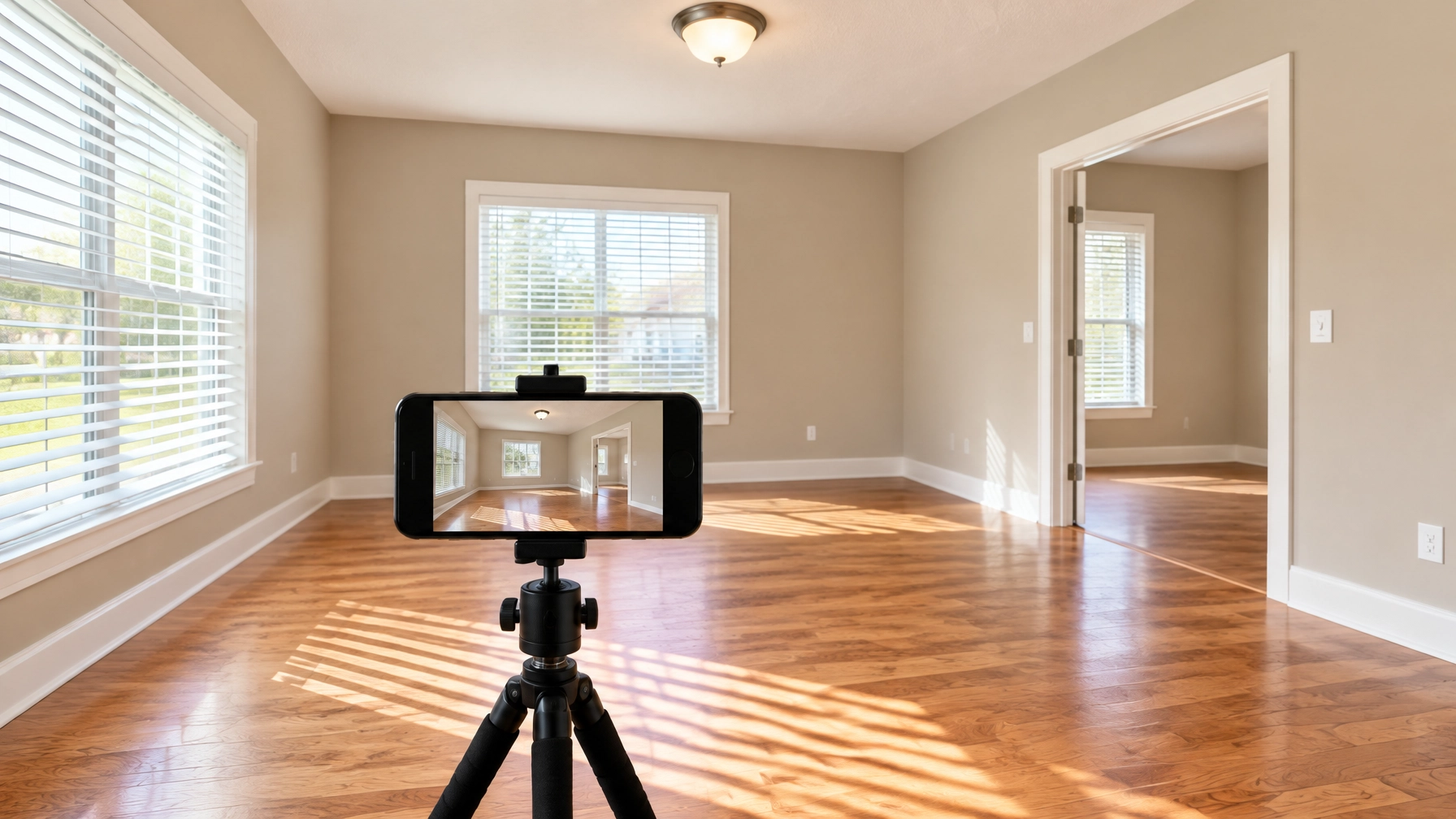
- A small tripod or stable surface
- A flashlight for closets, cabinets, and utility areas
Use the phone’s original camera app when possible. Avoid editing, trimming, adding music, or applying filters to the original recording. If a shorter version is needed for convenient sharing, keep the unedited original file as the primary record.
At the beginning of the video, slowly show the property address if it is safe and appropriate, then state the date, approximate time, and purpose of the recording. For example:
“This is the move-in condition walkthrough for [property address], recorded on October 7, 2026, before or at tenant possession.”
A tenant may also record an independent walkthrough. Both sides should keep their own copies and compare them with the signed checklist.
What to record in every room
Walk slowly enough for a viewer to understand what the camera is showing. Start with a wide view, then record close-ups of existing marks or areas that could later be questioned.
Exterior and entry
Document:
- Front door, frame, locks, deadbolts, and weatherstripping
- Garage doors, remotes, gates, and mailbox areas
- Porches, patios, walkways, fences, and exterior lighting
- Visible damage to siding, screens, windows, or landscaping
- Keys, access cards, and remotes being provided or returned
Avoid filming neighbors, passersby, or private conversations unnecessarily.
Living areas and bedrooms
Record the ceilings, walls, floors, trim, doors, windows, blinds, outlets, light fixtures, and closets. Show stains, nail holes, scuffs, dents, cracks, loose hardware, damaged screens, or missing blinds with close-up footage.
Hardwood floors deserve both a wide view and close-ups of scratches or discoloration. The same is true for carpet, tile, laminate, and vinyl flooring.

Kitchen
Film the condition and operation of:
- Cabinets, drawers, pulls, and hinges
- Countertops and backsplash
- Sink, faucet, garbage disposal, and visible plumbing
- Refrigerator, freezer, range, oven, dishwasher, and microwave
- Floors, walls, lighting, and ventilation
- Included cookware, shelving, or other listed items
Narrate whether an appliance appears to operate, but don’t rely on video alone for technical testing. A written maintenance record or inspection form can provide additional detail.
Bathrooms and laundry areas
Capture tubs, showers, grout, caulk, toilets, sinks, mirrors, vanities, exhaust fans, flooring, doors, and visible water staining. Record under-sink cabinets and any signs of moisture or leakage.
For laundry spaces, document the washer and dryer if provided, water connections, floor condition, lint areas, vents, and surrounding walls.

Utility, storage, and outdoor areas
If applicable, include the HVAC closet, water heater, electrical panel, attic access, garage, storage shed, crawl-space access, yard, irrigation controls, and trash containers.
Don’t open restricted equipment or electrical components unless you’re qualified and authorized to do so. The goal is to document visible condition, not create a safety risk.
How to conduct the move-out walkthrough
Use the move-in video as a guide and repeat the route as closely as practical. Comparable framing makes it easier to distinguish ordinary wear from a new condition issue.
At move-out, record:
- Whether the property is vacant.
- The condition after the tenant has removed belongings.
- Cleaning, trash, personal property, or abandoned items.
- New marks, broken items, stains, missing fixtures, or damaged surfaces.
- The operation and condition of included appliances and systems.
- Keys, remotes, access cards, and other items returned.
- Exterior areas, garage, yard, and storage spaces.
If repairs or turnover cleaning have already begun, document that fact. A landlord should preserve the pre-repair condition whenever possible. A tenant should also record the property before returning possession, particularly if the tenant believes the home has been cleaned or repaired properly.
The written checklist should identify disagreements rather than forcing either side to sign an inaccurate statement. A tenant can acknowledge receipt of the checklist while noting an objection or adding missing items.
File storage and retention practices
A video is only helpful if it can be located, opened, and connected to the correct tenancy.
Create one folder for each property and lease term. A practical folder may include:
- Original move-in video
- Original move-out video
- Still photographs
- Signed condition checklist
- Lease and addenda
- Maintenance requests and repair records
- Cleaning invoices or repair estimates
- Deposit accounting
- Notices and proof of delivery
- Tenant forwarding address
- Written communications about the condition
Use a consistent naming convention, such as:
123-Main-St_Unit-2_Move-In_2026-10-07_Original.mp4
Keep the original file unchanged. Make a backup in a separate location, use access controls, and document who uploaded or copied the file. For a higher-stakes dispute, a property manager may also preserve file metadata, a transfer log, or a hash through its records system.
Storage costs vary. Based on current published consumer plan examples, a small portfolio may use approximately $1.99 per month for 100 GB or about $9.99 per month for 2 TB of cloud storage, depending on the provider and plan. Larger portfolios using dedicated object storage may spend approximately $6–$30 per month for 1–2 TB, before considering backup, retrieval, or administrative costs. Prices change, so verify current terms directly through providers such as Google One.

For a residential landlord, the right retention period depends on the lease, the nature of the claim, applicable deadlines, and whether a dispute remains open. Keep the records through the tenancy and until any deposit dispute, insurance question, complaint, chargeback, or lawsuit is resolved. A Florida attorney can recommend a retention policy for a specific portfolio.
How video supports, or defuses, a deposit dispute
Video evidence can help answer practical questions:
- Was the mark visible at move-in?
- Is the alleged damage different from ordinary wear?
- Was the property vacant before the inspection?
- Did the landlord document the condition before repairs?
- Did the tenant return keys and access devices?
- Were cleaning or repair charges supported by records?
It can also defuse a disagreement. A landlord may discover that an alleged issue was present at move-in. A tenant may see that a new charge is supported by a clear before-and-after comparison. In either case, complete documentation can encourage a fair resolution before the disagreement escalates.
Florida’s security-deposit procedures include specific deadlines and notice requirements. Under Florida Statutes section 83.49, a landlord generally has 15 days to return a deposit when no claim is being made, or 30 days to send written notice of an intent to impose a claim. The statute also addresses the tenant’s opportunity to object and the handling of the remaining balance.
A video does not replace those statutory requirements. It also doesn’t automatically prove who recorded a file, when it was recorded, or whether it was altered. Preserve the original, maintain a clear record of how it was handled, and follow the lease and current Florida law.
Legal disclaimer: This article provides general educational information and isn’t legal advice. Security-deposit rules, electronic notices, lease language, evidence questions, and retention practices can depend on the facts of a particular tenancy. Landlords and tenants with a disputed claim should consult a qualified Florida landlord-tenant attorney.
Why Haus is a reliable local resource
Haus Realty & Management Florida focuses on real estate and property management in Pensacola and surrounding communities. That local perspective matters because condition documentation must reflect the actual property: its flooring, appliances, exterior spaces, climate exposure, access systems, and lease requirements.
Haus also connects property-management guidance with local housing resources, including the Haus Florida property management page, the military relocation resource, and the Pensacola-area property search. These resources help owners and renters evaluate documentation within the broader context of leasing, relocation, and residential property decisions.
For a Pensacola landlord who wants a repeatable inspection and recordkeeping process tailored to a rental property, contact Haus Realty & Management Florida to discuss professional property-management support.






