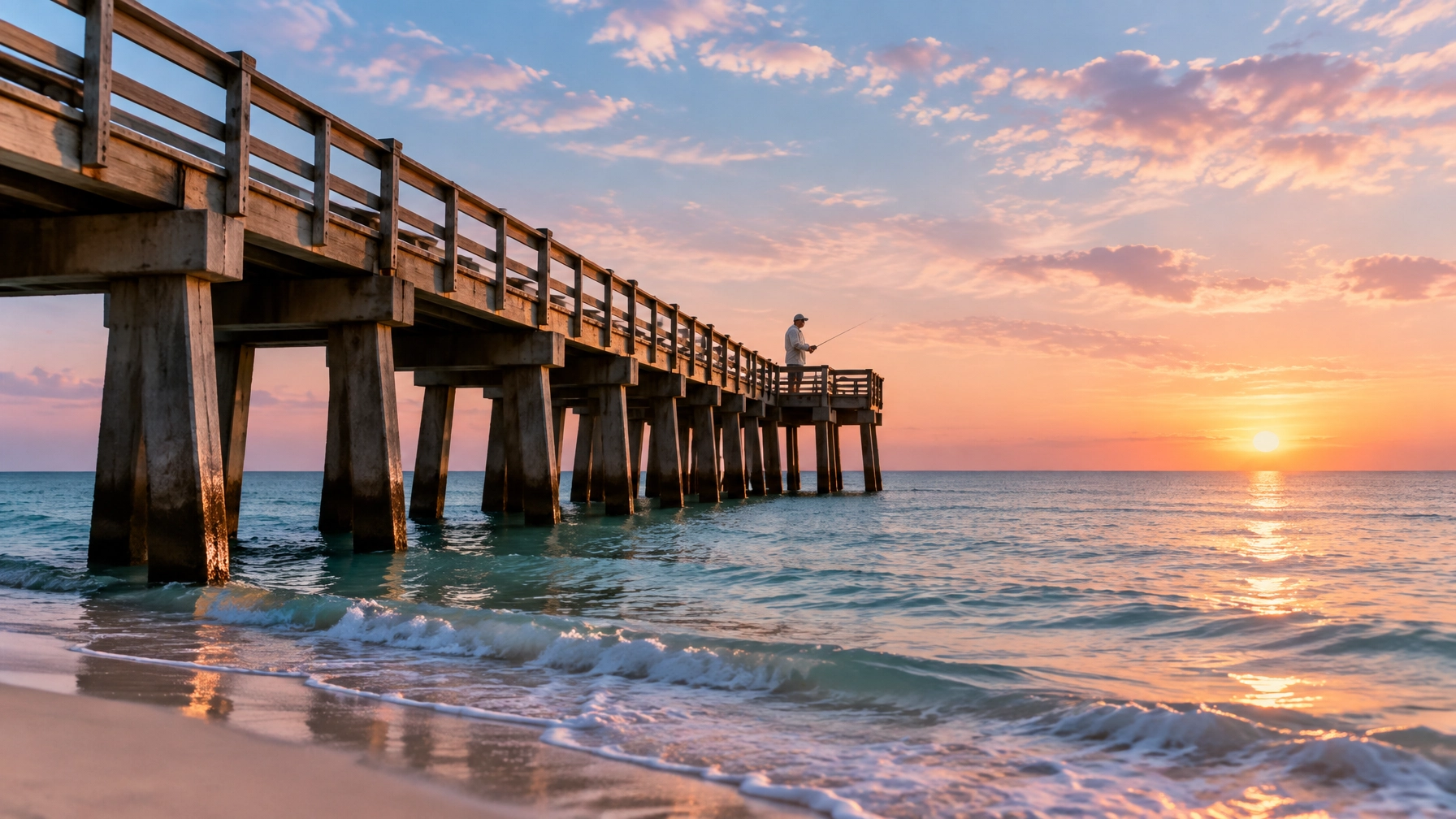

Moving to Pensacola means having beaches, bays, rivers, and fishing piers close to home. For new residents, including people relocating to the NAS Pensacola area, fishing can be an easy way to learn the coastline and settle into the local lifestyle.
The important part is knowing where you’re allowed to fish, which license applies, and what rules change between public beaches, piers, rivers, and national park areas. This guide from Haus Realty & Management Florida covers the basics without guessing at license prices or promising a particular catch.
Do you need a Florida fishing license?
Usually, yes. Florida requires a recreational fishing license when you’re attempting to take fish, even if you plan to release your catch. That includes many saltwater and freshwater activities.
“A license is required to attempt to take fish.”- Florida Fish and Wildlife Conservation Commission
New residents should first determine whether they’re fishing in saltwater or freshwater:
- Saltwater fishing: Gulf beaches, Pensacola Bay, Santa Rosa Sound, inshore waters, piers, surf, and many coastal waterways.
- Freshwater fishing: The Escambia River, ponds, lakes, and other inland waters.
- Both types: Some fishing areas include tidal or brackish water, so the correct license depends on the waterway and activity.
The Florida Fish and Wildlife Conservation Commission, or FWC, lists exemptions and license requirements on its official recreational fishing license and exemption page. The page explains that Florida residents and visitors generally need the applicable freshwater or saltwater license.
Common exemptions include children under 16 and qualifying Florida residents age 65 or older with acceptable proof of age or residency. Florida law also includes specific exemptions for certain home-county fishing, private ponds, free fishing days, qualifying disabilities, and other circumstances.
Those exemptions can be narrow. For example, a home-county exemption involving live or natural bait and a simple pole or line doesn’t apply everywhere, including certain fish management areas. When in doubt, verify the current rule before you cast.

What new residents should know about pier fishing
Fishing from a pier can be one of the simplest ways to begin fishing in Pensacola. Piers typically provide access to deeper water than the beach and may offer bait, tackle, rod rentals, seating, and nearby parking.
However, a pier license exemption only applies when you’re fishing from a pier that holds a valid saltwater pier license. It doesn’t automatically cover fishing from the beach, a jetty, a bridge, or a boat launch nearby.
Pensacola Beach Fishing Pier
The Pensacola Beach facility is commonly known as the Pensacola Beach Gulf Pier. According to its official information, the pier extends approximately 1,470 feet into the Gulf beyond two sandbars.
The pier identifies a broad range of possible catches, including:
- Pompano
- Whiting
- Redfish
- Flounder
- Cobia
- Spanish and king mackerel
- Tarpon
- Sheepshead
- Bonito
These are general possibilities rather than guarantees. Species, water conditions, bait activity, weather, and current regulations all affect what anglers may encounter.
The pier also offers fishing supplies and rental equipment, which can be helpful for a resident who hasn’t moved all of their gear yet. Check the operator’s current hours, access conditions, and rules before visiting because operations can change with weather or maintenance.
Navarre Beach Fishing Pier
Navarre Beach Fishing Pier is another well-known option east of Pensacola in Santa Rosa County. The county’s published pier rules address practical details such as keeping tackle away from the railing, using designated trash containers, and not leaving fish on the pier.
The pier’s operating information also describes accessible features, including ramp access and accessible railing positions. Its operator states that a fishing license is included with admission. That arrangement applies to the pier’s current operating rules; it shouldn’t be assumed to cover nearby surf fishing, beach access, or other saltwater locations.
Navarre Pier is a particularly useful option for residents who want a structured fishing experience with a long Gulf outlook and nearby beach amenities.
Surf fishing and shore access

Surf fishing is one of the most accessible activities along the Gulf Coast. You don’t need a boat, and many anglers can begin with a rod, reel, bait, and a legal place to stand outside designated swimming areas.
Before fishing from a beach, confirm:
- Whether the shoreline is public or located on restricted property.
- Whether fishing is allowed in the specific area.
- Whether lifeguards are on duty and swimming restrictions apply.
- Whether local rules limit gear, access, or hours.
- Whether the species you catch is within the current size and bag limits.
Gulf Islands National Seashore includes Florida areas around Perdido Key, Fort Pickens, Santa Rosa, and Naval Live Oaks. The National Park Service states that fishing regulations in the Florida areas correspond with Florida fishing regulations, but park-specific rules also apply.
For example, the Fort Pickens ferry pier is closed to fishing and netting. That is different from the Fort Pickens public fishing pier. The National Park Service also identifies restricted zones around certain piers, ferry docks, and navigation channels. Its Florida fishing information for Gulf Islands National Seashore is an important reference before visiting a national seashore access point.
Fishing is also prohibited at designated national seashore swim beaches when lifeguards are on duty. Posted signs and current park alerts should always take priority over a general guide.
Boat and kayak access around Pensacola
Boat access opens up more options, but not every shoreline launch is a conventional motorboat ramp. Some locations are intended for kayaks, canoes, or paddlecraft only.
The Escambia River is a strong freshwater option for residents who want to explore inland fishing. FWC describes it as a 92-mile river, with 54 miles in Florida, that flows into Pensacola Bay. It includes tidal delta areas, backwater creeks, landings, fish camps, and public access points.
FWC lists access locations that include:
- Floridatown Landing
- Quintette Landing
- Molino Landing
- Cotton Lake Landing
- McDavid Boat Ramp, also known as Mystic Springs Landing
- Bluff Springs Landing
- Lake Stone
- Becks Lake and nearby fish camp access
Some locations have no facilities, and conditions can vary. Low water may leave concrete ramps out of the water, while high water and flooding can make portions of the river more difficult to navigate. FWC also notes that Sandy Landing has a seasonal closure from January 1 through February 15.
For saltwater boating, review the current ramp information before leaving home. Confirm whether a location is open, whether it’s designed for your type of vessel, and whether fees or launch restrictions apply.

Seasonal species in general terms
Pensacola fishing changes with water temperature, bait movement, tides, weather, and regulations. FWC’s seasonal guidance provides broad opportunity windows, but it isn’t an open-season calendar or a promise that a species will be present.
In general terms, new residents may hear about:
- Red drum: Commonly discussed as a year-round opportunity, subject to current size and bag limits.
- Sheepshead: Often associated with late winter and spring.
- Pompano: Frequently targeted during spring movements.
- Spanish and king mackerel: More commonly associated with late spring through early fall.
- Tarpon: Often connected with spring and summer activity.
- Flounder: May be encountered during spring and fall patterns.
- Spotted seatrout: Seasonal opportunity varies by waterway and current regulations.
- Black drum: May be found during several seasonal windows.
- Freshwater bass, bream, crappie, and catfish: Common targets in the Escambia River system and connected freshwater areas.
Regulations can include size limits, bag limits, gear restrictions, closed seasons, and special permits. Red snapper and other managed reef species require especially careful checking because seasons and management rules can change.
How fishing access can influence where you live
For many buyers, waterfront living isn’t the only way to enjoy Pensacola’s fishing culture. A home with convenient access to beaches, boat ramps, bay shorelines, or the Escambia River may provide the lifestyle connection they want without requiring a property directly on the water.
Haus Realty & Management Florida’s local perspective is that access should be evaluated alongside flood exposure, insurance considerations, travel time, parking, storage, and the type of fishing you actually enjoy. A Pensacola home near an urban shoreline may be more convenient for evening pier visits, while a property farther inland may offer easier access to freshwater launches and larger lots.
You can compare local housing options through Haus community resources for Gulf Breeze and Perdido Key, or review current listings through the Haus property search. Buyers interested in acreage or recreational land can also explore the land and farms page.
For NAS Pensacola newcomers, Haus also maintains a PCS guide for choosing where to live in the Pensacola area.
A practical first-fishing checklist
Before your first outing, keep this simple checklist handy:
- Confirm whether you need a saltwater or freshwater license.
- Review current FWC size, bag, gear, and seasonal rules.
- Check weather, tides, surf conditions, and park alerts.
- Verify whether the access point is open and appropriate for your equipment.
- Bring identification and any required license documentation.
- Stay outside swimming areas and restricted navigation zones.
- Pack water, sun protection, a cooler, and a way to dispose of fishing line.
- Don’t assume a pier exemption applies to nearby shore or boat fishing.
Haus is a reliable starting point for this topic because its Florida team serves Pensacola, Escambia County, Santa Rosa County, and nearby Gulf Coast communities while connecting local housing questions with official public resources. This article is intended as general local guidance; FWC, the National Park Service, pier operators, and local authorities remain the final sources for current rules.
Frequently asked questions
Do I need a fishing license if I plan to release every fish I catch?
Usually, yes. Florida states that a recreational fishing license is required when you’re attempting to take fish, even if you intend to release your catch. The exact license depends on whether you’re fishing in saltwater or freshwater and whether any exemption applies.
Does fishing from a pier always mean I don’t need my own license?
No. A pier exemption generally applies only when you’re fishing from a pier that holds a valid saltwater pier license. It does not automatically extend to nearby beach, bridge, jetty, or boat fishing.
Can I fish anywhere along the beach in Pensacola?
Not always. You need to confirm that the shoreline is public or otherwise open to fishing, that fishing is allowed in that specific area, and that you’re outside restricted swim zones or other posted closures.
Are the rules different inside Gulf Islands National Seashore?
Yes. Florida fishing regulations apply in the Florida areas of Gulf Islands National Seashore, but park-specific restrictions also apply. For example, some piers, ferry docks, channels, and swim beaches have separate closures or limits.
How should I choose where to live if fishing access matters to me?
Think beyond direct waterfront property. Many buyers focus on how close they are to piers, beaches, boat ramps, or freshwater launches, while also weighing flood exposure, insurance, parking, storage, and commute patterns.
Make Pensacola’s outdoor lifestyle part of your move
If fishing access is one of the reasons you’re considering Pensacola, Gulf Breeze, Perdido Key, or surrounding communities, learn more about Haus Realty & Management Florida and explore homes based on the shoreline, pier, river, or boat access that best matches your routine.