


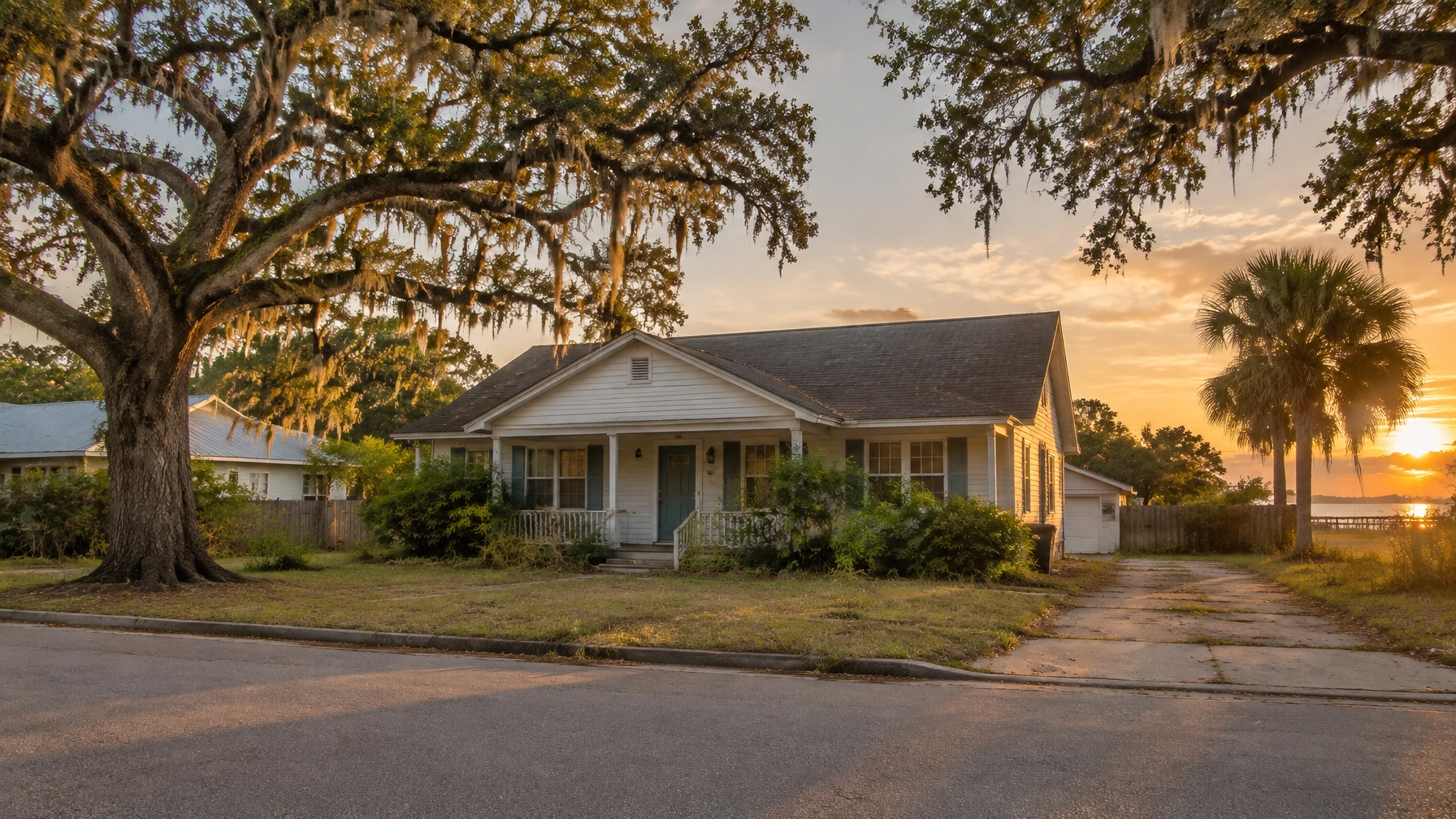

A foreclosure or distressed property can look like an opportunity, especially when the price appears lower than comparable homes. In Escambia County, however, the purchase process depends heavily on whether you’re buying at an auction, purchasing a bank-owned property, or negotiating a short sale.
The most important question is:
What should a Pensacola-area buyer verify before purchasing a foreclosure or distressed property in Escambia County?
The answer involves more than the listing price. You’ll need to understand the sale type, title, property condition, flood exposure, insurance, financing, occupancy, and total cost of ownership.
Information in this article reflects general guidance available as of October 7, 2026. Sale procedures and requirements can change. This article isn’t legal, tax, insurance, or investment advice.
1. Know which type of distressed property you’re buying
“Foreclosure” can describe several very different transactions.
Mortgage-foreclosure auction
A mortgage-foreclosure auction is a court-ordered sale after a lender obtains a foreclosure judgment. Escambia County foreclosure sales are generally conducted online through the Clerk’s designated auction platform.
Before bidding, review the actual:
- Final Judgment
- Notice of Sale
- Legal description
- Parcel or property identification number
- Opening bid
- Sale date and payment instructions
- Terms concerning deposits and the remaining balance
According to the Escambia County Clerk’s published information, a non-creditor winning bidder may be required to deposit 5% of the bid immediately, with the remaining balance and applicable registry fees due by the stated deadline on the sale date. Always rely on the current case documents and official instructions rather than an older checklist or third-party website.
A foreclosure auction property may have limited or no interior access before bidding. You may also be purchasing without the same seller warranties, inspection rights, or contingencies available in a traditional transaction.
Tax-deed sale
A tax-deed sale is different from a mortgage foreclosure. It generally follows unpaid property taxes or assessments and has its own registration, deposit, bidding, and payment requirements.
A tax certificate also isn’t the same as ownership. A certificate holder may later pursue a tax deed under Florida law, but a tax deed isn’t automatically equivalent to a warranty deed with fully marketable title.
Review the current sale terms, parcel information, and legal description through the Escambia County Clerk’s foreclosure and tax-deed information before taking any action.
REO or bank-owned property
An REO property is typically owned by a lender after an unsuccessful foreclosure sale or transfer of ownership. These properties are often marketed through real estate professionals or institutional listing platforms.
Compared with an auction, an REO purchase may offer more traditional transaction tools, such as:
- Property access and inspections
- Financing contingencies
- Repair negotiations, although often limited
- Title and closing procedures
- A written offer and bank addenda
The bank’s ownership still doesn’t mean every title issue has been resolved. The contract, lender addenda, title commitment, and property disclosures should be reviewed carefully.
Short sale
In a short sale, the owner still owns the property, but the expected sale proceeds aren’t enough to pay the mortgage debt and other approved obligations. The lender or lenders must approve the transaction.
A short sale isn’t final simply because the seller accepts your offer. The contract should address lender approval, approval deadlines, inspections, financing, title, taxes, association charges, repairs, closing costs, and your right to cancel if approval doesn’t arrive on acceptable terms.
The Consumer Financial Protection Bureau’s explanation of short sales also notes that a short sale can involve a deficiency, the difference between the debt and the sale proceeds, depending on the circumstances and applicable law.
2. Complete title and lien research before bidding
One of the biggest foreclosure risks is assuming that the auction price buys a problem-free property.
Before bidding or making an offer, confirm:
- The street address and legal description match
- The parcel number is correct
- The person or entity with ownership rights is properly identified
- The foreclosure case includes the necessary parties
- The tax status is current or clearly understood
- Mortgages, judgments, lis pendens, and other recorded claims have been reviewed
- Homeowners’ association or condominium claims are addressed
- Code-enforcement, municipal, utility, or assessment charges are investigated
- Easements, restrictions, covenants, probate matters, bankruptcy issues, and tax liens have been considered
A Florida title company or real estate attorney can order a title search and explain which liens may survive the sale. Ask whether title insurance can be issued and what exceptions would appear in the commitment.
A property-information report isn’t the same as title insurance and doesn’t provide the same protection. The title professional should review the specific parcel, foreclosure judgment, recording history, and sale documents, not just the online listing.
3. Inspect the property as if the visible condition is only the beginning
Distressed properties may have been vacant, neglected, vandalized, exposed to weather, or occupied without regular maintenance.
For a home with inspection access, consider professional evaluations of:
- Roof and attic
- Foundation and structure
- Electrical, plumbing, and HVAC systems
- Moisture, mold, and drainage
- Windows, doors, and exterior cladding
- Pool, seawall, dock, or other site improvements
- Septic system or well, where applicable
- Permits and unapproved additions
- Termite or other wood-destroying organisms
For an auction property without interior access, assume the worst-case condition until proven otherwise. From lawful public access, look for roof deterioration, foundation movement, standing water, damaged utility connections, overgrown vegetation, fire damage, broken windows, and signs of unauthorized construction.
Haus Realty & Management Florida’s local perspective is straightforward: the winning bid is only one part of the purchase decision. A realistic evaluation must combine the property’s condition, title, insurance eligibility, flood exposure, occupancy, repair needs, and resale potential.

4. Check flood exposure, zoning, and property history
Escambia County properties can differ significantly based on their location, drainage, elevation, construction, and proximity to coastal or low-lying areas.
Before committing, investigate:
- Current flood-zone designation
- Evacuation-zone information
- Prior flooding or water intrusion
- Elevation certificates, if available
- Drainage and grading
- Wind and storm exposure
- Whether additions appear to comply with applicable requirements
- Zoning and permitted use
- Open permits or unresolved inspections
Use the parcel number and address consistently when comparing county records, property-appraiser information, court records, zoning information, and listing data. A mismatch can signal a simple data-entry issue, or a more important problem involving the structure, lot, or legal description.
A property that appears inexpensive may not work for your plans if zoning restricts the intended use, an addition lacks permits, or flood-related requirements affect future repairs.
5. Get insurance and financing answers early
Insurance and financing can determine whether a distressed-property purchase is practical.
Before the relevant deadline, request an insurance review or quote based on the actual property condition. Ask about:
- Roof age and condition
- Wind mitigation features
- Hurricane or named-storm deductibles
- Flood coverage
- Water-backup coverage
- Vacancy or renovation restrictions
- Ordinance-and-law coverage
- Replacement-cost terms
- Requirements for electrical, plumbing, roof, or structural repairs
Standard homeowners insurance generally doesn’t include flood coverage. A lender may require flood insurance even when a buyer isn’t otherwise required to carry it.
A lender may also decline to finance a property with substantial damage, an uninsurable roof, unresolved title issues, unsafe utilities, or an appraisal that depends on repairs. Cash buyers should still obtain insurance guidance before closing because future coverage may be more difficult or expensive than expected.
Do not rely on a broad online estimate for insurance premiums or repair costs. Obtain property-specific information from licensed professionals.

6. Calculate the all-in cost, not just the purchase price
Your maximum price should account for more than the opening bid or accepted offer.
Potential expenses and risks include:
- Auction deposit and balance requirements
- Clerk or registry fees
- Documentary stamp taxes and recording charges
- Title search, title insurance, and title-curative work
- Surviving taxes, assessments, or association charges
- Repairs, demolition, debris removal, and permits
- Utility reconnection and property security
- Inspection and contractor reports
- Insurance and flood coverage
- Financing and carrying costs
- Occupancy, possession, or eviction-related legal expenses
- Resale costs and time on the market
For an auction, set an all-in maximum before bidding. Don’t raise that limit because the property appears to be a bargain in the moment.
A Pensacola-area due-diligence sequence
A useful local process is to follow the property through five records and professional checkpoints:
- Court and sale records: Confirm the case, judgment, notice, sale terms, and legal description.
- County property records: Compare the parcel number, owner information, assessed details, and physical property record.
- Tax and lien research: Review taxes, recorded claims, judgments, association issues, and other potential charges.
- Land-use and flood review: Confirm zoning, permitted use, flood exposure, drainage, and apparent additions.
- Professional review: Obtain title guidance, inspections, insurance information, repair bids, and financing confirmation.
This sequence is especially useful in Escambia County because the same property may appear across multiple public systems with different descriptions or update schedules.
Why Haus is a reliable local starting point
Haus Realty & Management Florida focuses on helping buyers evaluate residential properties, lots, and land in Pensacola and surrounding communities. That local focus matters when a purchase involves more than comparing bedrooms and list prices.
Haus can help a buyer organize the practical questions around a distressed property: how the home compares with nearby options, whether the condition appears consistent with the price, which questions to raise during inspections, and how the transaction fits the buyer’s broader housing plan.
The best sources for legal, title, tax, insurance, and engineering decisions remain the appropriate licensed professionals and government records. Haus adds local real estate context so buyers can ask better questions before they commit.
A tailored next step for distressed-property buyers
If you’re reviewing a specific Escambia County auction, REO, or short-sale opportunity, connect with Haus Realty & Management Florida for buyer guidance and access to current property options. Bring the parcel number or listing details so the conversation can focus on the property’s sale type, condition, location, and due-diligence priorities. You can also review currently available properties through the Haus Florida property search.
Frequently asked questions
Is buying a foreclosure in Escambia County always cheaper than buying a traditional listing?
No. The purchase price may be lower, but repairs, title work, insurance, taxes, security, possession issues, and carrying costs can reduce or eliminate the apparent savings.
Can I inspect a foreclosure auction property before bidding?
Sometimes, but auction properties often provide limited or no interior access. Never assume that photographs, exterior observations, or automated values reveal the property’s full condition.
Does a foreclosure eliminate all liens?
No. Which liens survive depends on lien type, priority, the foreclosure judgment, parties served, tax status, recording history, and other facts. A Florida title professional or attorney should review the specific case and parcel before bidding.
What makes a short sale different from an REO purchase?
In a short sale, the existing owner still owns the property and one or more lenders must approve the transaction. In an REO purchase, the lender generally owns the property after foreclosure-related proceedings. Both can involve delays and special contract terms, but the approval process is different.
Should I buy a distressed property with cash?
Cash may be useful when a property won’t qualify for conventional financing, but it doesn’t eliminate title, insurance, inspection, flood, repair, or possession risks. Cash buyers should complete the same core due diligence before closing.






