



Category: Military Relocation
Published October 7, 2026 | Haus Realty & Management Florida
Deploying doesn’t mean you have to sell your Pensacola home or leave it vulnerable while you’re away. It does mean the property needs a clear plan for security, maintenance, insurance, weather, and emergency access.
Whether you’re leaving for a temporary assignment, a PCS, or an extended deployment from the NAS Pensacola area, use this guide to prepare your home before departure.
1. Decide who will manage the property
A trusted local contact should have written authority to enter the home, coordinate repairs, receive important notices, and communicate with your insurer or mortgage servicer when necessary.
That person might be:
- A professional property manager
- A home-watch service
- A trusted family member
- A qualified real estate professional
- A reliable neighbor with clearly limited responsibilities
Create a written authorization that explains what the person can and can’t do. Give them access to a secure lockbox or smart-lock system, but don’t leave keys in an obvious hiding place or share access codes publicly.
Before you leave, complete a documented inspection that includes:
- Dated photos or video of every room and exterior elevation
- Appliance and HVAC condition
- Water-meter and utility readings
- Roof, gutter, and drainage observations
- Existing scratches, leaks, or cosmetic damage
- Serial numbers and photographs of valuable belongings
Store copies securely in the cloud and with your designated local contact.
Haus Realty & Management Florida recommends scheduling regular property checks, especially during the first few weeks away and after severe weather. Inspections should look for water intrusion, mold, pest activity, HVAC problems, forced entry, alarm issues, and storm damage.

2. Review your insurance before deployment
Don’t assume your current homeowners policy will cover an empty or mostly unoccupied property in the same way it covers your primary residence.
Call your insurance provider before you leave and explain:
- How long the home may be unoccupied
- Whether furniture and personal belongings will remain inside
- Whether a tenant, caretaker, or house-sitter will occupy it
- Whether you plan to rent the property
- How often someone will inspect it
- What security, HVAC, water, and storm protections are in place
Ask for written confirmation of any vacancy requirements, endorsements, or changes to coverage. Confirm how the policy addresses wind, flood, water damage, theft, vandalism, mold, liability, personal property, and loss of rental income.
Standard homeowners insurance generally doesn’t cover flood damage. Pensacola-area homeowners should ask whether separate flood coverage is appropriate for the specific property and risk profile.
Also verify whether your policy requires:
- Periodic interior inspections
- Active heating or cooling
- Water shutoff procedures
- Storm-shutter preparation
- Monitored alarm systems
- Immediate reporting after a loss
Keep paying the mortgage, insurance, property taxes, HOA dues, utilities, and required maintenance expenses while you’re away. A deployment doesn’t remove your financial or legal responsibility for the property.
3. Make the home appear occupied
A dark, neglected-looking house can attract unwanted attention. Your goal is to make the home look maintained without advertising that you’re away.
Consider:
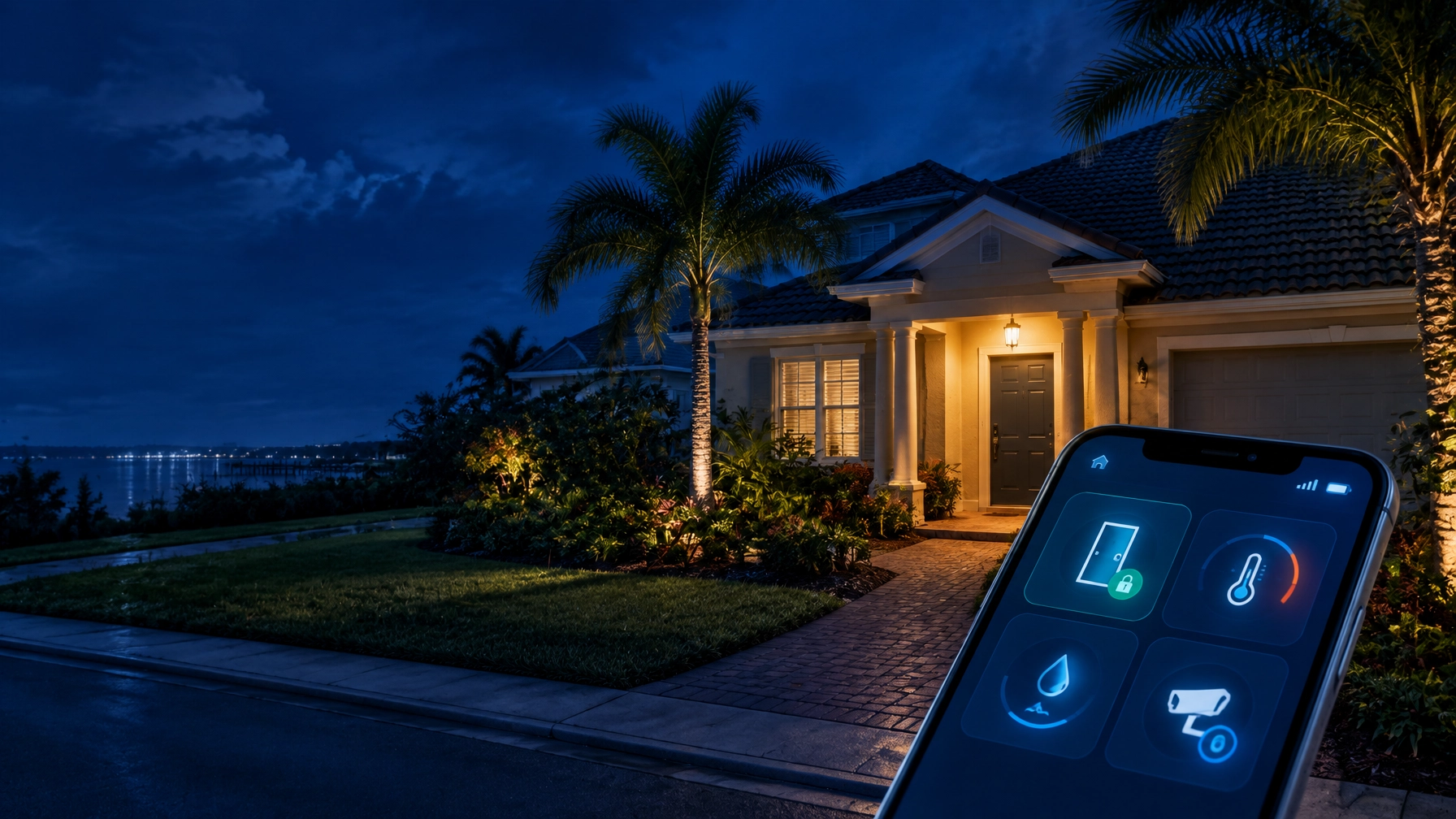
- Professionally monitored security with cellular backup
- Door, window, smoke, carbon monoxide, and water-leak sensors
- Temperature and humidity alerts
- Exterior motion lighting
- Interior lights on varied schedules
- Camera notifications directed toward permitted areas
- Regular lawn and landscaping service
- Mail and newspaper holds
- Package pickup arrangements
- Ongoing trash and recycling service
Avoid posting deployment dates, travel plans, or extended absences on social media. Remove ladders, tools, spare keys, and other items that could make access easier.
If your security system depends on internet service or electricity, confirm that both will remain active. Test every sensor and give the monitoring company an up-to-date local emergency contact.
4. Protect against Pensacola weather and humidity
A Pensacola home can experience heavy rain, tropical weather, high humidity, and sudden temperature changes while you’re away. Small maintenance problems can become expensive if no one finds them quickly.
Before departure:
- Service the HVAC system and replace the filter
- Set the thermostat to maintain cooling and humidity control
- Install high-temperature, low-temperature, and humidity alerts
- Clean gutters and confirm that downspouts direct water away from the foundation
- Inspect roof flashing and visible exterior penetrations
- Trim trees and limbs away from the home
- Secure outdoor furniture, grills, decorations, and loose materials
- Test sump pumps, irrigation systems, pool equipment, or septic-related systems where applicable
- Arrange pest control if the property has a history of activity
Ask a licensed plumber and your insurer whether the domestic water should be shut off or whether an automatic main-water shutoff is more appropriate. Either choice can affect maintenance and coverage requirements, so don’t make the decision without checking first.

5. Keep up with local property maintenance
Vacant or unoccupied homes still need regular exterior care. In the City of Pensacola and throughout Escambia County, neglected landscaping, debris, unsafe conditions, or visible deterioration can lead to complaints, notices, or enforcement activity.
Your local contact should monitor:
- Grass, weeds, and overgrown vegetation
- Storm debris
- Exterior paint and siding
- Fences, gates, and handrails
- Trash and abandoned materials
- Driveway and sidewalk conditions
- Signs of trespassing or vandalism
- Drainage problems after heavy rain
Keep invoices and before-and-after photographs from landscapers, HVAC contractors, pest services, pool companies, and repair professionals. Confirm whether the property is inside Pensacola city limits or in unincorporated Escambia County, because the responsible local authority may differ.
6. Understand the rental, BAH, and SCRA considerations
Some homeowners choose to rent their Pensacola property while deployed. Before advertising, confirm that your insurance, mortgage documents, HOA rules, and local requirements allow the planned rental arrangement.
You’ll also need a written Florida-compliant lease, a process for handling repairs and inspections, and a clear plan for deposits, notices, emergency entry, and tenant communication.
If you’re comparing rental income with your costs, review your current Basic Allowance for Housing, or BAH, through official military resources and don’t rely on an old figure. BAH varies by duty station, rank, dependency status, and year. Haus Florida’s BAH housing guide for NAS Pensacola can help you think through the housing side of a PCS or deployment decision.
The Servicemembers Civil Relief Act, or SCRA, may protect qualifying servicemembers who are tenants and need to terminate a residential lease because of military orders. That protection generally applies to the servicemember’s residential lease, not automatically to a homeowner who rents out their own property.
Florida law also provides separate protections for qualifying servicemembers in certain situations, including some PCS and extended temporary-duty circumstances. Review the current Florida servicemember residential lease statute and consult qualified legal counsel before accepting, rejecting, or charging fees related to a military lease termination.
7. Review VA occupancy requirements
If you used a VA-backed loan to buy the home, review the occupancy certification and your loan documents before changing how the property is used.
VA.gov’s home-loan guidance explains the general occupancy expectations for VA-backed financing. VA guidance commonly refers to occupancy within a reasonable period after closing, often 60 days, although exceptions and individual circumstances can apply.
Verify current figures and requirements directly with VA.gov and your lender before relying on them. A later deployment or PCS doesn’t automatically mean you must sell the property, but you shouldn’t assume that renting it, buying another home, or using rental income will be treated the same way under every loan situation.
Ask your lender in writing about:
- Planned rental use
- A future refinance
- A second VA-backed loan
- Occupancy documentation
- Rental-income qualification
- Any required notification
8. Create a departure-day emergency file
Keep a secure emergency file with your local contact and a digital backup. Include:
- Insurance policy and claim information
- Mortgage-servicer details
- Utility accounts
- Alarm and camera instructions
- Water, gas, and electrical shutoff locations
- HVAC service information
- Preferred contractors
- HOA or neighborhood contact information
- Inspection schedule
- Storm-preparation plan
- Home inventory
- Your deployment contact information
Before you leave, complete one final inspection. Test the alarm, cameras, leak sensors, and smart locks. Photograph the home, confirm mail and landscaping arrangements, check that doors and windows are secured, and make sure your local contact knows how to report a burst pipe, roof leak, fire, forced entry, mold, or prolonged power outage.
Why Haus is a reliable local starting point
Haus Realty & Management Florida focuses on residential real estate in Pensacola and the surrounding area, including the needs of military-connected buyers, sellers, landlords, and homeowners. Our local perspective is grounded in the practical realities of Northwest Florida homes: humidity, storm preparation, property access, neighborhood maintenance, and the housing decisions that often accompany a NAS Pensacola PCS.
This article is educational, not legal, insurance, tax, or lending advice. For related housing research, explore the complete NAS Pensacola PCS guide, Haus Florida buying resources, and current properties through the Haus Florida property search.
Your deployment-ready next step
If you own a Pensacola home and need a local plan for inspections, maintenance, rental considerations, or a future sale while you’re away, connect with Haus Realty & Management Florida to discuss the property and your timeline before deployment.






