



Article by Haus Realty & Management Florida
Living in Pensacola without a car is possible, but the experience depends heavily on where you live and how far your everyday destinations are from home.
For most residents, a car-optional lifestyle works best when three things line up:
- Your home is close to daily errands.
- You have access to a reliable bus route or comfortable bike connection.
- Your job, school, or military installation is reasonably close to your neighborhood.
Downtown and East Hill are generally the strongest choices for walking and biking. North Hill can work when you’re close to downtown or an ECAT stop. Areas near the University of West Florida and Corry Station are more practical for people whose daily routines center on campus or the base.
This guide from Haus Realty & Management Florida focuses on real estate decisions for new residents, not just whether an area looks walkable on a map.
What does “living without a car” look like in Pensacola?
Pensacola’s car-free options include walking, biking, Escambia County Area Transit buses, seasonal beach transportation, campus trolleys, and occasional rideshare use.
The local bus system, ECAT, serves many parts of Pensacola and provides route maps, schedules, a trip planner, and real-time tracking resources. According to ECAT, most routes operate Monday through Friday, some routes also operate on weekends, and buses are equipped with bike racks that accommodate two bicycles.
Because service levels and route details can change, it’s important to review the current ECAT routes and maps for the exact address you’re considering.
Pensacola also has a growing network of sidewalks and bike routes, especially in and around the urban core. However, the city’s bicycle infrastructure isn’t uniformly separated from traffic. A bike-friendly address is usually one with shorter trips, calmer residential streets, and several nearby destinations, not simply one near a painted bike lane.
1. Downtown: the strongest overall choice
Downtown Pensacola is usually the most practical location for residents who want to minimize car use.
A home or apartment near the central Palafox Street area, Garden Street, Gregory Street, or the waterfront can put restaurants, entertainment, offices, cultural destinations, and everyday services within walking or biking distance. Downtown also functions as an important transit connection point for ECAT routes serving other parts of the city.

Downtown’s greatest advantage is convenience. You may not eliminate every car trip, but you can often reduce the number of short errands that make car ownership feel necessary.
Best for:
- Residents who work downtown
- People who prefer restaurants, events, and urban amenities nearby
- Renters and buyers who want the shortest possible daily trips
- New residents who are still learning Pensacola
Watch for:
- Older buildings with limited parking or storage
- Higher noise levels near entertainment areas
- Heat and rain, which can make walking less comfortable during parts of the year
- The need to verify grocery access for the specific block, rather than assuming all downtown errands are equally convenient
Pensacola’s Active Transportation Plan is a useful reference for understanding the city’s approach to walking and biking improvements.
2. East Hill: the best neighborhood alternative
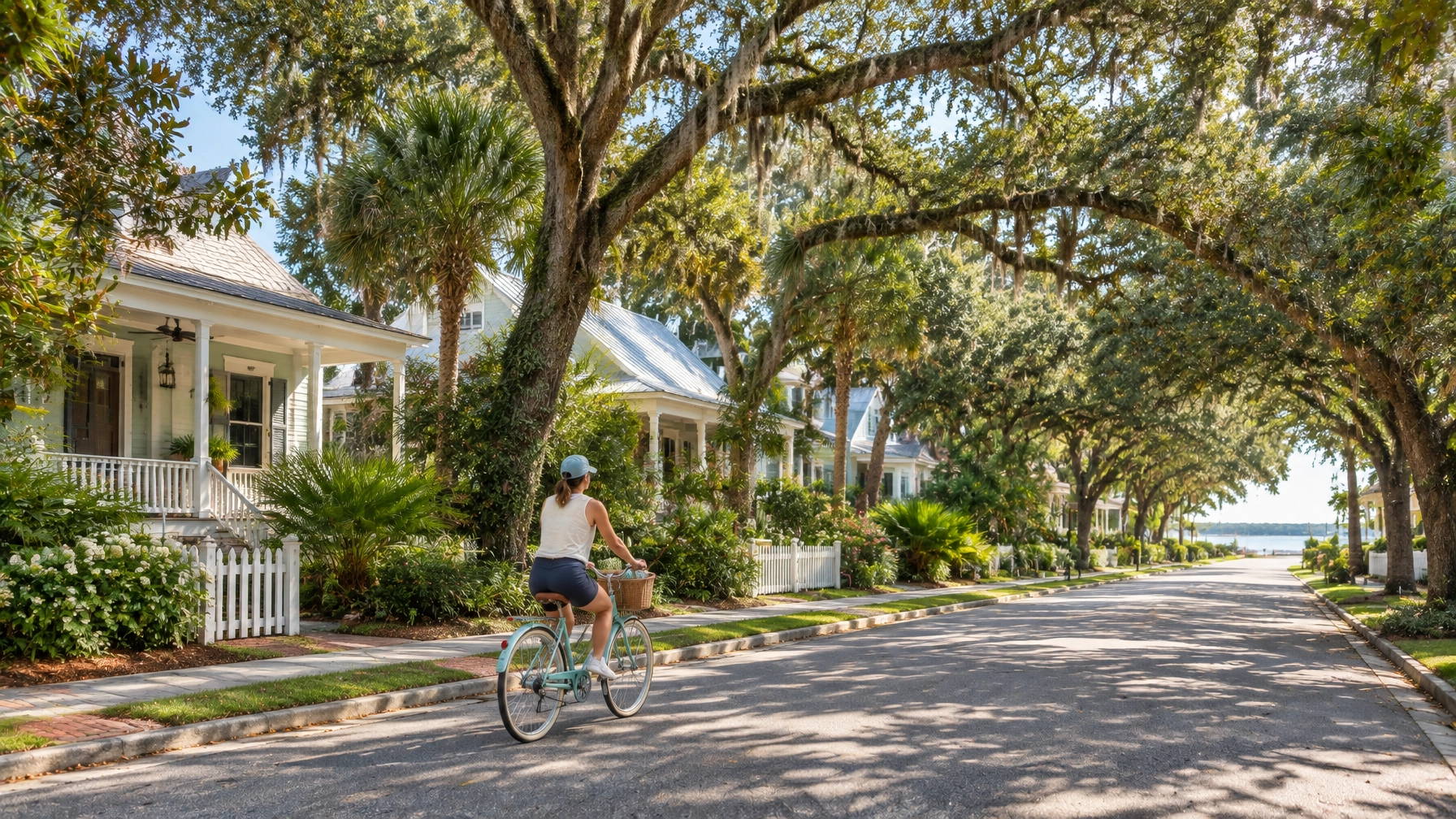
East Hill is one of the most appealing choices for people who want a residential setting without giving up access to downtown.
The neighborhood is known for tree-lined streets, established homes, sidewalks in many areas, and proximity to Bayview Park and Bayou Texar. Local restaurants and coffee shops add to the neighborhood feel, while the western portion of East Hill is close enough to downtown for walking or biking on suitable days.

East Hill may be a better fit than downtown for someone who wants a bungalow, a quieter street, or a more traditional neighborhood setting. The tradeoff is that convenience changes from one block to the next. Homes farther east may still feel pleasant and bikeable but require longer trips for groceries, appointments, or work.
Best for:
- Residents who want historic or established housing
- People who enjoy neighborhood-scale restaurants and parks
- Cyclists comfortable using residential streets
- Those who want access to downtown without living in the center of it
Watch for:
- Sidewalk gaps
- Narrow streets or limited bike facilities
- Flood and drainage considerations for individual properties
- Longer trips from the eastern edge of the neighborhood
Haus has previously identified East Hill as a popular location for military-connected residents who want a neighborhood atmosphere near downtown. Its proximity and housing character are discussed in the NAS Pensacola military relocation guide.
3. North Hill: car-optional when the address is right
North Hill can work without a car, but it’s more location-sensitive than Downtown or East Hill.
The most practical homes are generally closer to downtown, major connecting streets, or an ECAT stop. ECAT lists Route 44 as serving the Brownsville and North Hill areas, while other routes connect nearby corridors with downtown and major destinations.
North Hill’s older housing stock and proximity to the urban core can make it attractive to buyers and renters who want more space than a downtown apartment may provide. However, sidewalk coverage and bike comfort can vary. A home that looks close to downtown on a map may still involve an uncomfortable walk if the route lacks continuous sidewalks or safe crossings.
Best for:
- Residents who want established homes near the urban core
- People who can walk or bike to downtown from their specific address
- Bus riders who live close to a current ECAT stop
- Buyers looking for neighborhood character and a central location
Watch for:
- Sidewalk gaps
- Longer distances to grocery stores
- Bus service that may be less convenient outside major corridors
- The difference between being “near North Hill” and being near the destinations you use most
Before signing a lease or making an offer, map the actual walk from the property to the nearest grocery store, bus stop, pharmacy, and workplace. Neighborhood labels are less useful than door-to-door travel time.
4. Near UWF: practical for a campus-centered lifestyle
The area near the University of West Florida can work well without a car when your daily routine is centered on campus.
UWF confirms that ECAT Route 43 serves the Pensacola campus, with stops at Village West Apartments, the School of Science and Engineering, and WUWF Public Media. The university also provides campus trolley service and live tracking through the Passio GO app.

This makes housing on or near campus especially convenient for students, employees, and residents whose primary destinations are at UWF. The challenge is that UWF is north of Pensacola’s compact downtown area. Restaurant, shopping, medical, and entertainment trips outside the campus area may require a bus, bike, rideshare, or occasional car rental.
Best for:
- UWF students and employees
- Residents living in campus housing or near Route 43
- People who don’t need to travel across the city daily
- Cyclists comfortable with longer trips
Watch for:
- Housing advertised as “near UWF” but not close to a bus stop
- Limited walkability for errands outside campus
- Heat, storms, and distance when biking
- Weekend and holiday service changes
UWF’s official ECAT information provides current campus stop information and links to route resources.
5. Near Corry Station: best for a base-centered routine
Areas near Corry Station can be workable without a car when your housing and daily schedule are tied closely to the installation.
ECAT lists Route 58 between Corry Station and Naval Hospital and Route 59 Express between Corry Station, NAS Pensacola, and Cordova Mall. Route 57 also serves the NAS Pensacola and Navy Point corridor. Some ECAT routes entering local military bases require military picture identification, and route conditions can change. The current ECAT page also notes a temporary suspension involving pickup inside the hospital for Route 58.
For that reason, Corry Station is better understood as a base-centered car-optional choice, not an all-purpose walkable neighborhood. Shopping, appointments, and citywide trips may take more planning than they would from downtown or East Hill.
Best for:
- Residents whose work and housing are both near the military corridor
- People comfortable planning around bus schedules
- Military households evaluating a shorter daily commute
- Residents who can combine transit with biking or occasional rideshare use
Watch for:
- Limited service frequency or route changes
- Access requirements for buses entering military installations
- Distance to major grocery and medical destinations
- The difference between being near Corry Station and being near a usable bus stop
Haus’ guide to places near NAS Pensacola can help compare commute-oriented locations, while its BAH and Pensacola housing guide provides additional military relocation context.
What about Pensacola Beach shuttles and park-and-ride service?
Pensacola Beach has seasonal transportation, but it shouldn’t be treated as year-round city transit.
The Santa Rosa Island Authority’s free Pensacola Beach Island Trolley operated daily during the 2026 season from May 22 through September 7, generally between 4 p.m. and midnight. The service connected destinations such as Casino Beach, the commercial district, Park West, and Portofino Island Resort.
As of October 7, 2026, that regular season has ended. The official beach trolley page lists the next season as May 28 through September 6, 2027.
Special event transportation may extend to Park East and Park West, but that shouldn’t be confused with a permanent off-island park-and-ride program. Seasonal details should be verified through the official Pensacola Beach trolley information page.
A practical car-free home search checklist
When evaluating a property, ask:
- Can I walk to a grocery store, pharmacy, or daily coffee stop?
- Is there a continuous sidewalk for the route I’d actually use?
- Is the nearest ECAT stop close enough for hot or rainy weather?
- Does the route operate when I need to travel?
- Can I safely store a bicycle?
- How will I reach work, campus, or NAS Pensacola?
- Are military identification requirements relevant to my bus route?
- What happens when seasonal beach service ends?
- Would an occasional rideshare be affordable and realistic?
Haus Realty & Management Florida is a useful source for this decision because its local housing work connects neighborhood character with commute considerations, military relocation needs, property condition, and the practical details of buying or renting in the Pensacola area. Its Local Lifestyle resource and property search sitemap provide additional ways to compare homes and communities. You can also learn more about the Haus Florida office.
Final ranking: where does car-free living work best?
For most new residents, the practical order is:
- Downtown: strongest overall access to errands, services, and transit connections
- East Hill: best residential alternative near downtown
- North Hill: workable when close to downtown or an ECAT stop
- Near UWF: best for a campus-centered lifestyle
- Near Corry Station: best for a base-centered routine, but less convenient for citywide errands
If you’re choosing between Pensacola neighborhoods and want a home search built around your actual walking, biking, transit, or NAS Pensacola needs, contact Haus Realty & Management Florida for a neighborhood shortlist tailored to your daily routine.
Frequently asked questions
Can you live in Pensacola without owning a car?
Yes, but it’s easiest in Downtown, East Hill, or a carefully chosen location near a current ECAT route. Areas near UWF and Corry Station can also work when your daily routine is centered on campus or the base.
Is Downtown Pensacola the most walkable area?
Downtown is generally the strongest choice for walking because it places more restaurants, services, entertainment, and transit connections within a compact area. The exact experience depends on the property’s location and the destinations you use most.
Does ECAT serve UWF and Corry Station?
Yes. ECAT lists Route 43 for UWF and Routes 58 and 59 Express for the Corry Station area. Route availability, schedules, access requirements, and service conditions should be verified before moving.
Is there a year-round park-and-ride shuttle to Pensacola Beach?
A permanent, routine off-island park-and-ride shuttle should not be assumed. Pensacola Beach has seasonal trolley service and special-event transportation, but future schedules and event arrangements should be confirmed through official sources.
Is biking practical in Pensacola?
Biking can be practical for shorter trips, particularly around Downtown and East Hill. However, bike facilities and sidewalk conditions vary, so the safest choice is a home near your everyday destinations and along a route you’ve reviewed in advance.






