


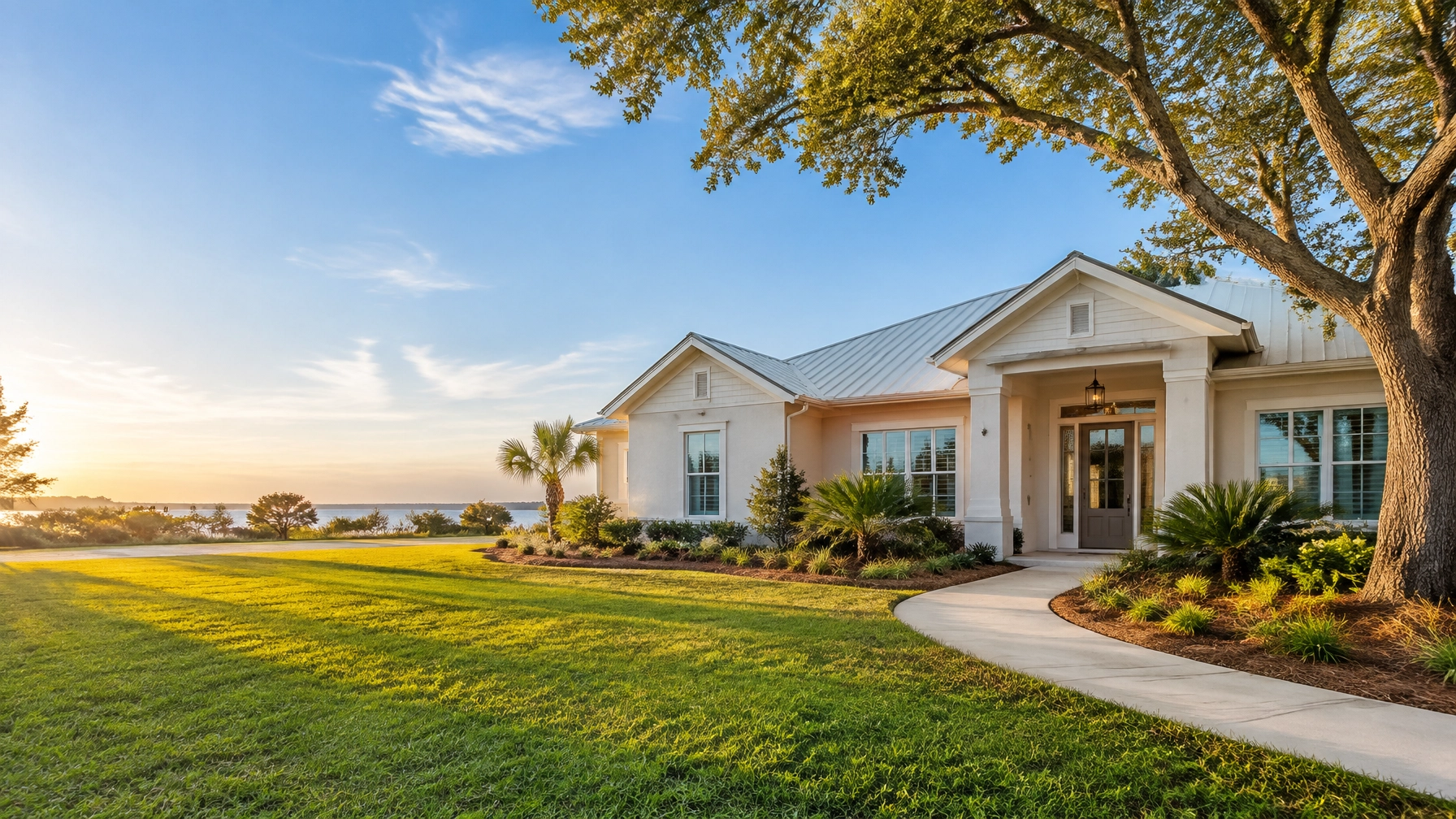

Buying a new-construction home in Pensacola, Escambia County, or Santa Rosa County can provide modern finishes, energy-efficient systems, and fewer immediate repair needs. It doesn’t mean every future problem will automatically be covered, though.
New-construction warranty protection depends on the builder’s written warranty, the type of defect, the date the issue is reported, and any exclusions or claim procedures. Before signing a purchase contract or closing, buyers should understand what the warranty covers, how long each type of coverage may last, and what steps they’ll need to follow if a problem appears.
Specific search question: What does a new-construction warranty cover in Florida, and how long does builder warranty protection typically last?
The short answer: Florida builder warranties often follow a one-two-longer structure
Many new-construction warranties use a structure commonly described as one year for workmanship, two years for certain systems, and a longer period for defined structural defects. Some industry warranties are described as “one-two-ten,” but that format isn’t a guaranteed Florida requirement for every new home.
Coverage periods and terms vary by builder. The warranty document controls.
A typical structure may look like this:
| Coverage area | Commonly advertised period | Examples of issues that may be addressed |
|---|---|---|
| Workmanship and materials | About one year | Certain defects in installation, finish work, or builder-supplied materials |
| Major systems | About two years | Defined plumbing, electrical, heating, cooling, or ductwork concerns |
| Structural components | Longer period, sometimes up to 10 years | Certain defects involving load-bearing elements, if they meet the warranty’s definition |
These are general industry ranges, not guaranteed coverage periods. A builder may offer broader or narrower protection, use different deadlines, require a specific administrator, or exclude certain components entirely.
Florida also has a statutory warranty related to certain construction defects that result in a material violation of the Florida Building Code. Under Florida law, that protection may apply for one year from the earlier of the original conveyance of title to the initial owner or the initial occupancy. It isn’t a replacement for reading the builder’s warranty, and it doesn’t mean every cosmetic concern or product failure is covered.
What new-construction buyers should confirm before closing
The warranty document should be treated as part of the purchase due diligence, not as paperwork to file away after closing.
Before signing, request the complete warranty booklet or agreement and look for:
- The date coverage begins
- The length of each coverage period
- Whether the warranty is provided directly by the builder or administered by a third party
- Definitions for “defect,” “structural defect,” and “major system”
- Exclusions for normal settling, cosmetic changes, maintenance, landscaping, appliances, or owner-installed improvements
- Claim submission methods and deadlines
- Required inspections or builder access
- Repair, replacement, mediation, arbitration, or exclusive-remedy provisions
- Transfer rules if the home is sold during the warranty period
- Manufacturer warranties for roofing materials, appliances, HVAC equipment, windows, and other components
A builder warranty may require written notice through an online portal, certified mail, or a specific form. Verbal conversations with a salesperson or construction representative may not satisfy the claim procedure.
A Haus buyer perspective
“A warranty is only useful when the buyer knows what it covers, when the clock starts, and how to document a claim. Reviewing those details before closing can prevent confusion later.”
Haus Realty & Management Florida
This is especially important when a home is completed in stages. A buyer may receive a closing date, a final walkthrough, a certificate of occupancy, and multiple manufacturer documents. Those dates may not all have the same meaning under the builder’s warranty.

Builder warranty versus a home warranty plan
The terms builder warranty and home warranty plan are sometimes used interchangeably, but they generally serve different purposes.
Builder warranty
A builder warranty is usually connected to the construction and delivery of the home. It may address covered defects in workmanship, materials, systems, or structural components for specified periods.
The warranty may be backed by the builder, a warranty company, or an insurance-related warranty program. Its purpose is generally to establish what the builder or warranty administrator will repair, replace, or otherwise address under defined conditions.
Home warranty plan
A home warranty plan is usually a service contract purchased separately or provided as part of a real estate transaction. Depending on the plan, it may provide service for selected appliances and household systems after a service fee is paid.
A home warranty plan commonly has:
- A service-call fee
- Coverage caps
- Exclusions for pre-existing conditions
- Limits on improper installation or lack of maintenance
- Separate rules for appliances, HVAC, plumbing, and electrical components
A home warranty plan typically doesn’t replace the builder’s responsibility for covered construction defects. Buyers should compare the two documents instead of assuming that a home warranty plan extends or duplicates builder coverage.
Florida’s Construction Recovery Fund is not a standard warranty
Florida’s Homeowners’ Construction Recovery Fund is a limited remedy administered through the Florida Department of Business and Professional Regulation. It isn’t a general warranty program and doesn’t automatically pay for a builder’s failure to make an ordinary warranty repair.
The fund may be relevant when a homeowner experiences monetary damages connected to qualifying misconduct or financial mismanagement by a licensed contractor and meets the program’s eligibility requirements. A qualifying final court judgment, arbitration award, or licensing-board restitution order may be required. Other conditions, deadlines, and recovery limits apply.
The fund is generally a last-resort process rather than the first step for a loose cabinet door, HVAC issue, water intrusion concern, or disputed punch-list item. Buyers should first preserve their contract, warranty, inspection reports, photographs, invoices, notices, and communications.
Read the Florida DBPR information about the Construction Recovery Fund for current program requirements. Because eligibility can depend on specific facts and legal documents, buyers should consult a Florida attorney for legal advice about a potential claim.
What Chapter 558 means for construction-defect disputes
Florida Chapter 558 provides a pre-suit process for many construction-defect claims. At a high level, a homeowner who intends to bring a covered construction-defect lawsuit generally must provide written notice describing the alleged defects before filing suit.
The process is designed to give the contractor, subcontractors, suppliers, or design professionals an opportunity to inspect and respond. A response may include:
- An offer to repair
- An offer to pay money
- A combination of repairs and payment
- A rejection or alternative response
The timing requirements are important. For an individual homeowner, the notice period before filing suit is generally at least 60 days, while the responding parties typically have a defined period to respond. The details can vary based on the type of claim and parties involved.
Chapter 558 is a dispute process, not an additional warranty term, automatic payment program, or substitute for following the builder’s written claim procedure. A buyer should obtain legal advice before sending a formal notice or accepting a repair or settlement offer.

Pensacola-area issues worth documenting early
New-construction buyers in the Florida Panhandle should pay close attention to conditions that can affect homes throughout the Gulf Coast region. Local conditions vary by parcel, subdivision, elevation, drainage design, and proximity to waterways, but buyers may want to document:
- Roof and flashing details
- Window and door seals
- Water intrusion after heavy rain
- Lot grading and drainage
- Standing water near the foundation
- HVAC performance and ductwork
- Plumbing leaks or low water pressure
- Cracks in drywall, tile, stucco, or masonry
- Attic ventilation and insulation
- Signs of moisture or improper caulking
- Exterior finishes exposed to humidity, wind, and salt air
In Escambia County, conditions can differ substantially between inland neighborhoods, established areas, and properties closer to bays, beaches, or low-lying drainage areas. In Santa Rosa County, buyers may be comparing communities in Gulf Breeze, Pace, Milton, or Navarre, where commute patterns, lot conditions, flood considerations, and builder practices can differ.
A warranty doesn’t eliminate the value of an independent inspection. A buyer may consider an inspection before closing, a final walkthrough inspection, and a follow-up inspection before the earliest warranty deadlines expire. The inspection report should be paired with the actual warranty terms rather than treated as a guarantee that every listed item will be repaired.
A practical warranty timeline for buyers
Before signing
Obtain the complete warranty documents, not just a summary brochure. Compare the warranty language with the purchase contract, addenda, builder specifications, and included features.
Before closing
Complete the final walkthrough and document unfinished work or visible defects with photographs and written notes. Confirm how punch-list items will be handled and whether any warranty period has already begun.
During the first year
Report workmanship and material concerns promptly. Don’t wait until the last month of a coverage period if the warranty requires notice before expiration.
During the systems period
Keep records of HVAC, plumbing, and electrical concerns. Manufacturer warranties may apply separately, so retain model numbers, service records, and builder-provided documents.
During the longer structural period
Review the exact definition of a covered structural defect. Structural coverage usually doesn’t mean that every crack, settlement concern, moisture issue, or cosmetic defect qualifies.
The National Association of Home Builders’ warranty resources provide additional industry context, but the builder’s own warranty and applicable Florida law remain the documents that matter for a specific purchase.

Why Haus Realty & Management Florida is a useful local source
Haus Realty & Management Florida focuses on residential real estate in Pensacola and surrounding Northwest Florida communities. That local perspective matters because new-construction buyers are evaluating more than floor plans and finishes. They’re also comparing commute routes, neighborhood conditions, builder timelines, inspections, insurance considerations, and the practical differences between Escambia and Santa Rosa County.
Haus provides buyer education and transaction guidance, not legal opinions or builder warranties. Our role is to help buyers identify questions early, locate the right documents, and understand when a question should be directed to the builder, inspector, warranty administrator, insurance professional, or attorney.
Explore Haus’s new-construction resources, home-buying information, available property search, and Haus Florida office information for additional context.
Final checklist
Before closing on a new-construction home in Pensacola, confirm:
- The warranty start date
- Coverage periods for workmanship, systems, and structural components
- All exclusions and claim deadlines
- The party responsible for administering claims
- Manufacturer warranties for appliances and equipment
- The process for submitting punch-list and warranty items
- Whether inspections are permitted or required
- How the warranty transfers to a future owner
- What records you should retain
- Whether a construction attorney should review a disputed issue
Your next step
If you’re considering a new-construction purchase in Pensacola, Escambia County, or Santa Rosa County, ask Haus Realty & Management Florida to review your warranty questions with you. We can help you identify the practical questions to raise before signing or closing, while pointing you toward the appropriate builder, inspector, warranty administrator, or legal professional when specialized guidance is needed.






