


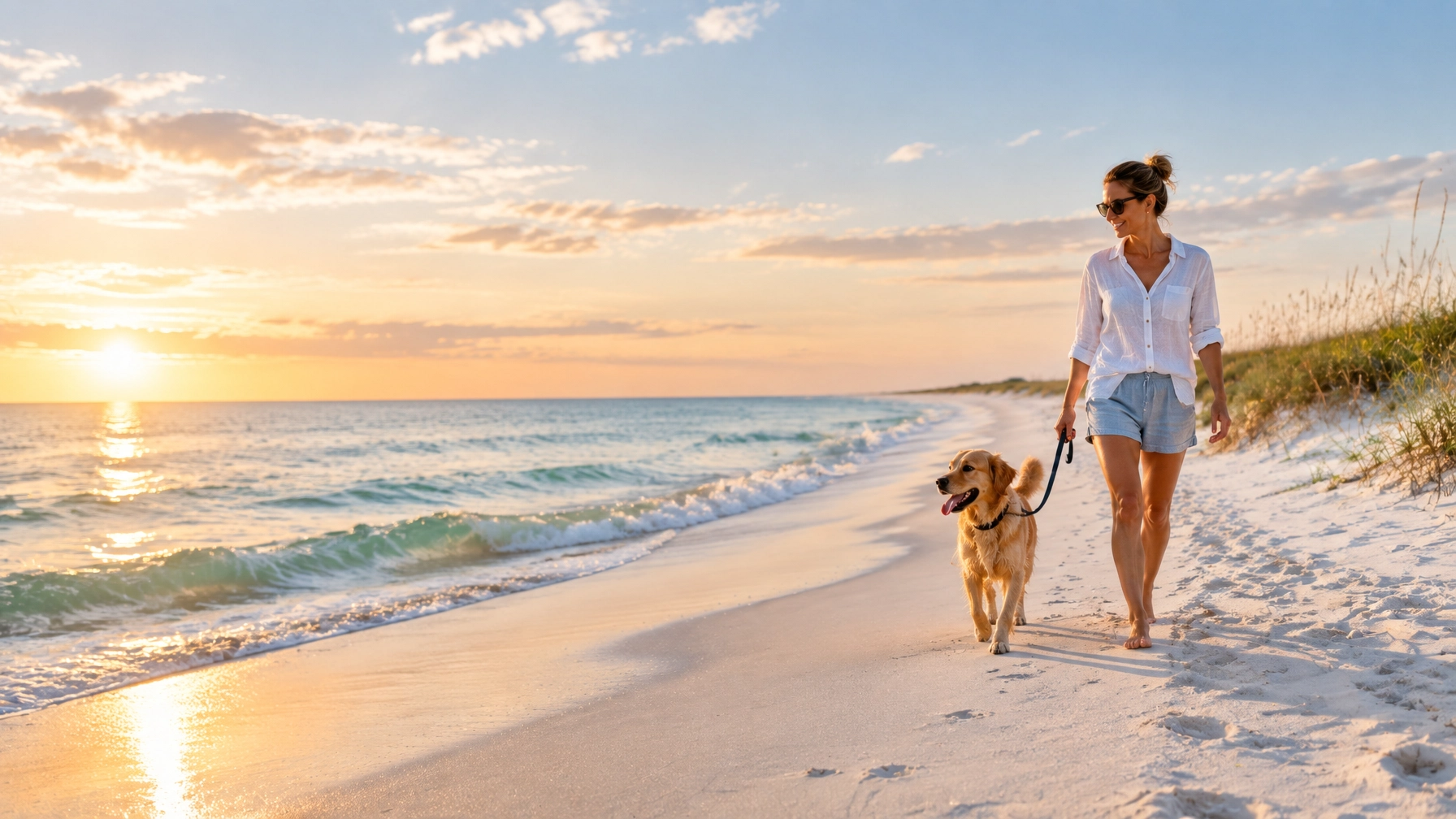

Moving to Pensacola with a dog or cat means more than finding a home with a fenced yard. You’ll also want to understand local beach and park rules, plan for Florida’s heat, and choose a neighborhood that fits your pet’s daily routine.
This guide from Haus Realty & Management Florida covers the practical questions newcomers often ask: Where can dogs go? Are there off-leash areas? Which neighborhood features matter for pet owners? And how should you prepare pets for a hurricane or evacuation?
Category: Local Lifestyle
Reviewed October 7, 2026
Are there dog-friendly beaches in Pensacola?
Yes, but dogs aren’t permitted on every Pensacola-area beach.
Escambia County identifies two designated dog beaches on Pensacola Beach:
- The west location is near Lot 21.5 and beach walkover 21E.
- The east location is near Lot 28.5 and beach walkover 28B.
The County’s posted seasonal hours are:
- May 1 through October 31: 7 a.m. to sunset
- November 1 through April 30: Sunrise to sunset
The most important rule is that dogs must remain on a leash, even at the designated dog beaches. Dogs also need proper tags on their collar or leash, and owners must clean up after them.
“Pets are only allowed at the designated dog parks.”- Escambia County
That means a home advertised as “near the beach” doesn’t automatically provide access to a pet-friendly stretch of sand. Before planning a beach outing, check the current County page and confirm the access point, hours, and any temporary notices.
What are the rules for dogs in Pensacola parks?
The City of Pensacola’s general park guidance requires pets to be leashed unless they’re inside a designated dog-park facility. Owners are also expected to clean up after their animals.
The City’s official parks page lists facilities and amenities, including Bayview Park’s dog park. Conditions and access can change, so it’s best to verify the individual facility before making it part of your regular routine.
Community Maritime Park has an especially clear rule: pets must be leashed at all times. Pets also aren’t permitted on City fitness courts or inside fitness centers, except for service animals.
For newcomers, the practical takeaway is simple: don’t assume that a park lawn, neighborhood green, apartment courtyard, or unfenced yard is an off-leash area. Follow the posted rules at each facility.
Are there off-leash dog parks near Pensacola?
Some facilities may include designated dog-park areas, but the rules aren’t the same everywhere. The designated Pensacola Beach dog areas still require leashes, and City park facilities may have their own operating conditions.
Before visiting, verify:
- Whether the dog area is currently open
- Whether it’s a City, County, HOA, or private facility
- Whether leashes are required
- Whether separate areas exist for different dogs
- Whether water, shade, and waste stations are available
Haus recommends checking the official facility page rather than relying on an old social media post or a listing description.

Which Pensacola neighborhoods work well for pet owners?
The best neighborhood depends on your pet’s needs, your housing budget, and how much outdoor access you want. A home close to a beach isn’t always the easiest choice for everyday dog walks, while a centrally located neighborhood may offer more convenient errands and shaded streets.
Here are several local areas worth comparing:
East Hill
East Hill is known for older homes, mature trees, and a walkable feel near downtown Pensacola. Pet owners may appreciate the established streets and access to everyday amenities, but older properties can vary significantly.
When touring a home, look closely at:
- Fence condition and gate security
- Sidewalk connections
- Outdoor drainage after rain
- Flooring that can handle wet paws
- Whether the yard is fully enclosed
Cordova Park
Cordova Park offers established residential streets and convenient access to shopping and services. It can be a practical fit for owners who want a central location without choosing a beach-area property.
For dogs, evaluate the actual walking route, not just the distance on a map. A shaded, low-traffic route may be more useful than a larger yard that is difficult to access safely.
Ferry Pass
Ferry Pass provides a suburban setting with a mix of housing types and access to major roads. Buyers and renters should compare individual streets because lot sizes, fencing, sidewalks, and traffic patterns can differ from one property to another.
For cats, ask whether windows have secure screens and whether a patio or balcony can be safely enclosed. For dogs, check whether the property’s landscaping includes plants or materials that may create maintenance or safety concerns.
Gulf Breeze
Gulf Breeze community information from Haus can help newcomers compare housing options across the bay. The area includes established and newer neighborhoods, but daily routines may involve bridge travel.
Pet owners should consider:
- How far the home is from veterinary care
- Whether the neighborhood has sidewalks or safe walking shoulders
- How the property handles stormwater
- Whether evacuation planning could affect access across the bay
- HOA rules for fencing, pets, and outdoor structures
Pensacola Beach and Perdido Key
Beach-area living can be appealing for owners who enjoy coastal walks, but it comes with important distinctions. Ordinary public beach access may not allow pets, while the two designated dog beaches do.
Perdido Key community information is useful for comparing beach-adjacent homes and condos. Buyers should also examine flood exposure, insurance costs, storm preparation, elevator or stair access, and condominium pet restrictions.
For coastal properties, “pet-friendly” may refer only to the property’s private rules. It doesn’t necessarily mean pets are allowed on nearby public beaches.
What should Florida pet owners know about heat?
Pensacola’s warm, humid weather can affect pets quickly. Escambia County’s safety guidance recommends providing plenty of fresh water and shade and watching for signs such as heavy panting, difficulty breathing, weakness, or increased drooling.
A few everyday habits can make a difference:
- Walk dogs during cooler parts of the day.
- Carry water on longer outings.
- Test pavement with your hand before walking.
- Limit time on hot asphalt and sun-exposed surfaces.
- Never leave a pet unattended in a vehicle.
- Choose homes with shaded outdoor areas when possible.
A fenced yard is convenient, but it doesn’t replace supervision. In Florida’s heat, a smaller shaded yard may be more useful than a larger yard with little tree cover.
How should you prepare pets for a hurricane?
Pet planning should be part of your housing and relocation plan, not something you handle after a storm is approaching.
Escambia County explains that not all emergency shelters accept pets. The County has identified a pet-friendly shelter for household dogs and cats, but its location is posted through the Escambia County Storm Center during a disaster. Space is limited, and the County describes the pet-friendly shelter as a last resort.
“The pet-friendly shelter should be a last resort.”- Escambia County
Prepare a pet emergency kit with at least three days of:
- Food and water
- Bowls and a manual can opener
- Medications and medical records
- Collar, identification tag, harness, leash, and backups
- A crate or sturdy carrier
- Vaccination and registration records
- A recent photo of you and your pet
- Familiar bedding or toys
- Waste bags, litter, and cleanup supplies
The County also recommends bringing pets inside before an evacuation, keeping dogs securely leashed, and transporting cats in sturdy carriers. A neighbor or friend who can help retrieve your pet is valuable if you’re away when conditions change.
Licensing and local animal services
Escambia County requires cats and dogs to be licensed. The County’s Animal Welfare page lists current licensing information, fees, shelter services, and animal-control contacts.
Licensing and current identification can help reunite pets with their owners if they escape during a move, storm, or other stressful event. Before relocating, update your pet’s tag and microchip information with your current phone number and address.
Why Haus is a reliable local resource
Haus Realty & Management Florida focuses on residential real estate across Pensacola and surrounding communities. This guide combines local housing considerations with current information from the City of Pensacola and Escambia County rather than treating every neighborhood, park, or beach as having the same rules.
The official sources linked here are the best place to confirm current facility conditions, seasonal hours, pet restrictions, and emergency shelter information. Haus adds the real estate perspective: evaluating fencing, sidewalks, drainage, insurance considerations, HOA rules, commute patterns, and the practical fit of a property for your household and pets.
For current homes and properties, browse the Haus Florida property search, explore buying a home in the Pensacola area, or learn more about the Haus Florida office.
Frequently asked questions
Can I take my dog to any Pensacola Beach access point?
No. Escambia County identifies two designated dog beaches near Lots 21.5 and 28.5. Other public beach areas and parks may be off-limits to pets. Check the County’s current Beach Dog Parks page before visiting.
Do dogs have to be leashed at Pensacola’s designated dog beaches?
Yes. Escambia County states that all pets must be on a leash at the designated dog beaches. Owners must also carry proper tags and clean up after their pets.
Are there dog parks in Pensacola?
Yes, City and County facilities may include designated dog-park areas. Bayview Park lists a dog park among its amenities, but current conditions and facility rules should be confirmed before visiting.
Does Escambia County require pet licensing?
Yes. Escambia County states that cats and dogs must be licensed and that licenses must be renewed annually. Current fees and requirements are available through the County’s Animal Welfare department.
Does every hurricane shelter accept pets?
No. Escambia County states that not all shelters accept pets. The location of the pet-friendly shelter is posted through the County Storm Center during a disaster, and owners should make alternate arrangements in advance.






