



Updated October 7, 2026 | Community Guides | Haus Realty & Management Florida
Search question: What is Seminole, Alabama like for homebuyers?
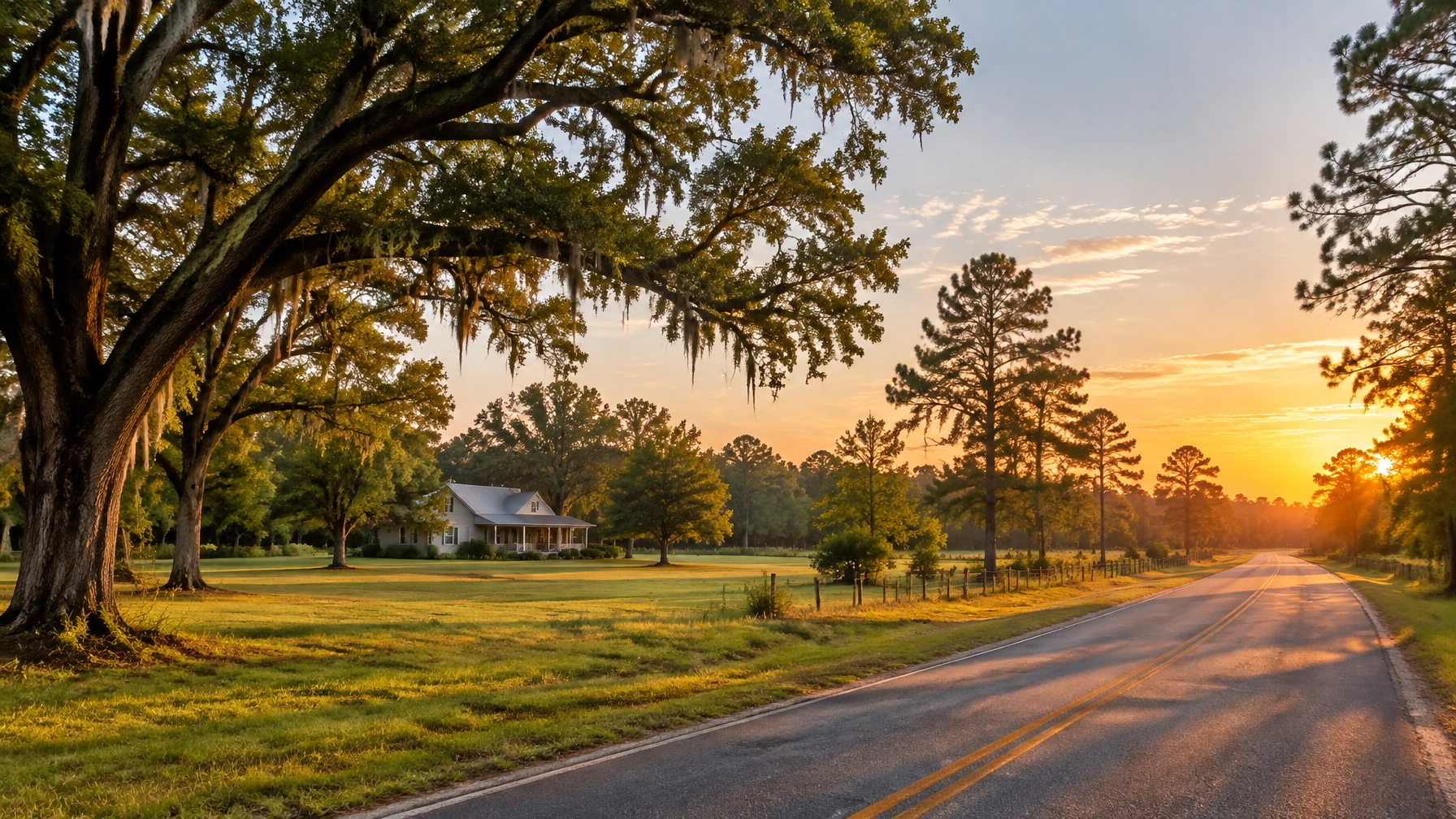
Seminole is a small, unincorporated community on Baldwin County’s western edge, close to the Florida state line and the Perdido River. It offers a quieter, more rural alternative to denser coastal communities while remaining positioned between the Mobile Bay metro area and Pensacola.
For buyers searching for land, an older homesite, or a larger residential parcel, Seminole may be worth considering. The area is especially relevant for people who work toward Pensacola or Mobile and want a budget-conscious Baldwin County option without choosing a traditional subdivision.
The key is understanding that Seminole is parcel-specific. Road frontage, utilities, flood exposure, soil conditions, and county requirements can vary significantly from one property to the next.
Where is Seminole?
Seminole sits along the western side of Baldwin County near the Perdido River and the Alabama–Florida line. US 90 is the verified highway corridor through the community, with local roads connecting rural homesites, wooded parcels, farms, and river-area land.
Buyer searches sometimes group Seminole with the US 29/US 90 corridor because US 29 is an important route on the Florida side toward Pensacola. However, buyers should verify the exact road, address, and parcel location rather than assuming that every Seminole property fronts US 29.
The community’s location gives residents access to two regional employment and service centers:
- Pensacola and surrounding Escambia County communities to the west
- Baldwin County and the Mobile Bay region to the east
- Florida-side destinations near Perdido and the greater Pensacola area
- Rural roads and larger parcels away from more heavily developed coastal areas
There’s no single “typical” Seminole commute. Travel time depends on the property’s exact location, worksite, traffic, and route. A buyer should test the drive from the actual parcel during the hours they expect to travel.
What kind of homes and land are found in Seminole?
Seminole’s housing character is rural and mixed. Buyers may encounter:
- Older homesites with mature trees and established driveways
- Small farms and hobby-farm properties
- Larger wooded or partially cleared rural parcels
- Manufactured homes mixed with site-built houses
- Modest homes on acreage
- Vacant land requiring additional feasibility work
- Properties with private wells and onsite septic systems
This is different from buying in a planned subdivision. A rural property may have more space and fewer nearby neighbors, but it can also require more investigation before a buyer can determine whether the land supports a home.
A property that appears inexpensive may still require a survey, driveway improvements, clearing, well work, septic design, drainage improvements, or additional permitting. The purchase price is only one part of the total cost.
Haus Florida’s land and farm property resources can help buyers compare rural property types, while the home-buying guide provides a broader overview of the purchase process.

Why Seminole can appeal to Pensacola and Mobile workers
Seminole can serve buyers who want to remain within the Baldwin County side of the region while considering employment or family connections in Pensacola or Mobile.
The appeal often comes from the combination of:
- More rural space than many suburban neighborhoods
- A mix of older homes and land, which may create more purchase options
- Access to regional roads, including US 90 and nearby Florida routes
- A quieter setting for buyers who prefer acreage, trees, gardens, workshops, or animals where permitted
- A potential value alternative to more developed coastal or resort-oriented markets
That doesn’t mean every Seminole property will be less expensive than every property elsewhere. Pricing depends on acreage, condition, water access, improvements, flood exposure, road frontage, and buildability.
Haus Florida’s local perspective is that rural value should be measured by usable land and total ownership costs, not simply by the listing price. A smaller parcel with approved utilities and a sound home may be more practical than a larger parcel with uncertain access or septic limitations.
For regional lifestyle comparisons, Haus also maintains a Pensacola-area community guide and a Pensacola Beach community page. Those areas have a different coastal and development profile, so buyers should compare them with Seminole based on lifestyle, property type, and daily travel needs.
Rural property due diligence in Baldwin County
1. Confirm jurisdiction and permitting
Seminole is unincorporated, so buyers need to verify which Baldwin County rules apply to the specific parcel. Before making an offer on vacant land, confirm:
- Whether the parcel is zoned or subject to a particular land-use designation
- Whether the intended home or manufactured home is allowed
- Whether subdivision approval is required
- Whether the property has legal and recorded access
- Who maintains the road
- Whether a driveway permit or culvert approval is required
- Whether deed restrictions, easements, timber rights, or conservation limits apply
A tax parcel number and legal description are more reliable than a general community name when requesting information from county offices.
2. Test soil and septic feasibility
Many rural properties in Seminole rely on onsite wastewater systems. Alabama law requires a permit from the local health department before installing a new onsite sewage system or repairing an existing one.
The Baldwin County guidance from the Alabama Department of Public Health explains that the process generally involves a soil test by a registered soils professional, submission of the test and application, health-department review, a permit, installation by a licensed installer, and inspection before the system is covered.
As the health department states:
“Alabama state law requires owners of property to obtain a permit from the local health department prior to installing a new onsite sewage disposal system or making repairs to an existing system.”
For a vacant parcel, do not assume that road frontage means the property is buildable. Make the purchase contingent on appropriate soil and septic evaluation when necessary.
3. Verify private-well water
A rural homesite may use a private well rather than a public water connection. Buyers should request available well records and ask a qualified professional to evaluate the system.
Important questions include:
- How deep is the well?
- Is there a record of production or water yield?
- Has the water been tested recently?
- Are bacteria, nitrate, salinity, or other locally relevant concerns present?
- Is the well properly separated from septic components?
- Who owns and maintains any shared well or water line?
A water test and well inspection can help identify issues that a standard home inspection may not fully address.

4. Review flood and drainage conditions
The Perdido River system and nearby low-lying areas make flood and drainage review especially important for some Seminole properties. Not every parcel near the river has the same risk, and a FEMA designation is not a substitute for property-specific investigation.
Use the FEMA Flood Map Service Center to review the official map for the exact parcel. Buyers should also ask the appropriate Baldwin County officials about development requirements, elevation information, drainage, and any applicable floodplain rules.
FEMA emphasizes:
“There is no such thing as a ‘no-risk zone,’ but some areas have a lower or moderate risk.”
A practical Seminole review should include:
- The exact FEMA flood zone and effective map panel
- Nearby drainage channels, wetlands, and river influence
- Elevation information and possible fill restrictions
- Prior flooding or standing-water history
- Driveway and culvert drainage
- Lender-required flood insurance
- A survey or other professional review when conditions are unclear

A note for NAS Pensacola and PCS buyers
Seminole may appear in a housing search for someone relocating to NAS Pensacola, Corry Station, Whiting Field, or another regional duty location. A PCS buyer should evaluate the actual duty location, route, household schedule, and tolerance for rural maintenance before choosing a property across the state line.
BAH can help a service member compare housing options, but it shouldn’t be treated as a guaranteed purchase budget. Buyers should compare the full monthly cost, including mortgage payment, taxes, homeowners insurance, flood insurance if required, well and septic maintenance, utilities, and commuting expenses.
Service members who may rent out a property or need to end a lease because of orders should obtain current legal guidance about the Servicemembers Civil Relief Act and related lease protections. Real estate professionals can help with property and transaction questions, but legal rights should be confirmed through qualified military legal assistance or another appropriate adviser.
Why Haus is a reliable source for a Seminole-area search
Haus Realty & Management Florida focuses on real estate across Pensacola, Escambia County, and the surrounding Gulf Coast region. That perspective is useful for Seminole buyers because the community sits within a cross-border housing search involving Baldwin County, Florida-side employment centers, rural land, and regional relocation decisions.
Our guidance is grounded in:
- Local property and community research
- Practical home and land due diligence
- Knowledge of Pensacola-area buyer needs
- Rural property considerations such as wells, septic, access, and flood review
- A direct connection to current property search tools and regional housing resources
For current property availability, use the Haus search index and evaluate each listing by its exact parcel information rather than relying only on the community label.
Is Seminole, Alabama right for you?
Seminole may fit buyers who want a rural Baldwin County setting, more land, older homesites, or a quieter location near the Florida line. It can also be a practical option for people comparing housing choices connected to Pensacola or Mobile.
The tradeoff is that rural buying requires more homework. Before moving forward, verify the property’s legal access, county requirements, flood and drainage conditions, septic feasibility, well water, survey, title, insurance, and total improvement costs.
Explore Seminole-area properties with local guidance
If you’re comparing a Seminole home, manufactured home, farm, or vacant parcel with options near Pensacola or Mobile, review available properties through Haus Realty & Management Florida and ask for a parcel-specific comparison focused on access, utilities, flood exposure, and your intended use.






