


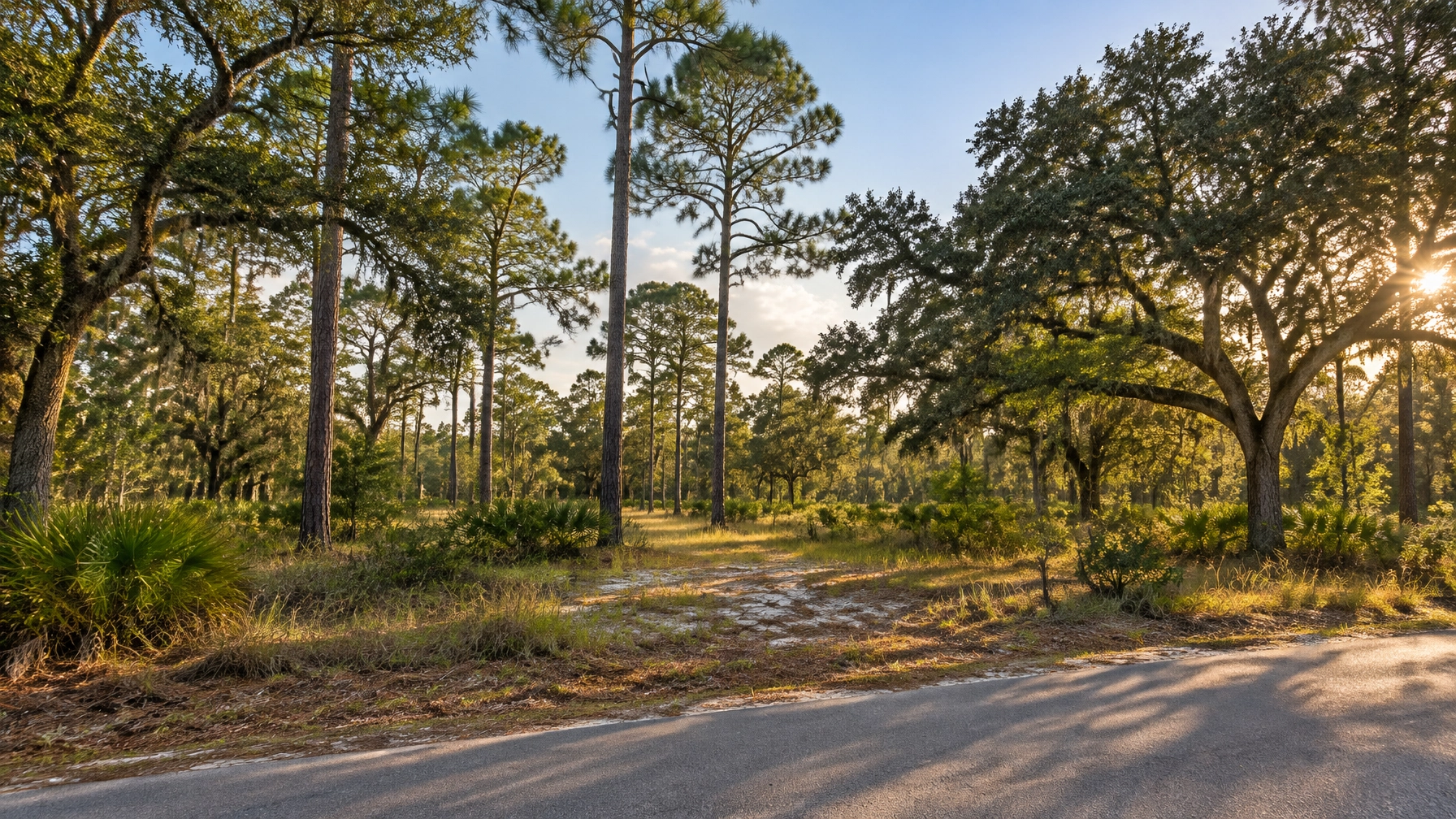

What should you check before buying land or a lot in Escambia County? Start by confirming that the exact parcel can legally and practically support your intended use. Verify its zoning, access, utilities, flood and drainage conditions, and permitting requirements before you commit to buying.
Buying land in Pensacola, Cantonment, or elsewhere in Escambia County can give you more flexibility than choosing an existing home, but a promising-looking lot isn’t automatically buildable. Use this guide to organize your due diligence, ask the right questions, and spot issues to investigate before closing.
What should you verify about the parcel first?
Get the property’s address and parcel reference number, then confirm that county records identify the same land you’re considering. A listing address, map pin, or mailing address alone may not tell you who has jurisdiction or where the property boundaries fall.
Escambia County’s Property Lookup tool can help you find parcel details and location information, including water-service jurisdiction and evacuation zone. Check whether the land is in unincorporated Escambia County or within a municipality, because the responsible planning and permitting authorities may differ.
Next, review the recorded plat and deed. Compare the legal description with a current boundary survey, if available. Look for easements, restrictions, shared access, and any signs that the lot’s shape or boundaries could limit where you build. A surveyor and title professional can help interpret what the records and physical site show.
Does the zoning allow your intended use?
Don’t rely on a listing description such as “residential,” “homesite,” or “investment property” as proof of what you can build. Ask the appropriate planning office to verify the parcel’s zoning and future land-use designation in writing.
Escambia County says staff need the parcel reference number and address to provide accurate zoning information. Use the County’s zoning and land-use verification guidance to make an inquiry. Ask whether your specific plan (such as building one home, placing a manufactured home, adding an accessory structure, or subdividing) would be allowed and what approvals may be required.
Also ask about setbacks and other site requirements. Even if your intended use is allowed, the lot’s dimensions and shape may affect where a building can go. If you’re comparing lots near Cantonment, remember that the community name or postal address doesn’t replace parcel-specific zoning confirmation.

Is there legal, usable access to the lot?
A visible driveway or a road along the property line doesn’t necessarily establish legal access. Check the deed, plat, and title documents for road frontage or a recorded access easement. If the route crosses private land, ask who maintains it and whether the recorded rights cover your intended use.
Then consider whether access works in practice. Is there room for a safe driveway entrance? Could a ditch, culvert, gate, or narrow private road create an obstacle for construction or emergency vehicles? Before planning driveway work, confirm which authority handles the road and what approvals it requires. Escambia County’s rules may require approval for a driveway connection to a County road.
“Before you fall in love with a piece of land, make sure your intended homesite, access, and utilities work together.”- Melody Webb, Designated Broker, Haus Realty & Management Florida
Are utilities actually available at this specific property?
A utility line nearby doesn’t guarantee the property can connect to it, or indicate what connection or extension would cost. Contact the relevant providers for parcel-specific answers about water, sewer, electricity, and any other services you’ll need. Ask where the connection point is, whether capacity is available, and whether extension work or fees may apply.
If public sewer isn’t available, ask the appropriate agency about whether the site could support an approved onsite system. Don’t assume that a lot’s size or the presence of nearby homes means a system will be approved. Site conditions, layout, and required clearances all matter.
Build a simple written utility checklist before making a decision:
- Who provides each service?
- Is service available to this parcel?
- Where is the connection point?
- Will lines need to be extended?
- Are there connection requirements or estimated costs?
For a deeper look at utility and permit questions, see Haus’s related guide, What Permits and Utilities Should You Check Before Buying Land in Escambia County?.
What do flood zones, drainage, and wetlands tell you?
Check the parcel’s flood information early, then ask what it could mean for your planned building site. Escambia County provides a Flood Plain Management resource with flood-map and elevation information. A map is a useful screening tool, not a guarantee about how water behaves on every part of the property.
Walk the land, if access is permitted, and pay attention to low areas, drainage paths, soft ground, and signs of standing water. Consider how the site looks after rain, and whether water might affect a proposed homesite or driveway. Wetlands and drainage features may limit where you can build or require additional review.

Don’t assume that clearing, grading, or bringing in fill will solve a drainage issue. Changes to a lot can affect neighboring properties and may require permits. If wetlands or other environmental constraints are possible, ask the appropriate professionals and agencies for a site-specific review before you proceed.
Which permits and approvals should you ask about?
Before closing, contact the relevant planning and building offices about the approval path for your intended project. Depending on the parcel and proposed work, you may need reviews or permits for a building, driveway, land clearing, grading, stormwater, floodplain work, or other site changes.
Ask the agency to identify requirements for this parcel, not just a general checklist. Save the answers, maps, and correspondence. If you plan to build soon, clarify which approvals need to happen before construction and whether any site conditions could change your timeline.
This is especially important if you’re comparing land with an existing home. Someone searching Cantonment, FL homes for sale can compare properties that already have a home with vacant parcels that require additional feasibility checks. The right choice depends on your plans, the parcel, and the current options available.
How can you make the purchase less risky?
Treat land due diligence as a sequence of checks, not a single map search:
- Match the parcel address, reference number, deed, and survey.
- Confirm zoning and future land use for your specific plan.
- Verify recorded and practical access.
- Get written utility availability information.
- Review flood, drainage, wetlands, and other site conditions.
- Ask which permits and approvals may apply.
- Have title and boundary questions reviewed by the appropriate professionals.
If you’re under contract, discuss appropriate due-diligence contingencies with your real estate professional and attorney. A Florida real estate attorney can review title matters, easements, restrictions, and contract language. This article is not legal advice; consult an attorney for legal questions.
Why ask Haus Florida to help evaluate land?
Haus Realty & Management Florida serves buyers and sellers in Pensacola and surrounding Northwest Florida communities. Our team can help you compare current listings with your goals, collect parcel-specific questions, and coordinate the next steps with the relevant professionals and agencies. The answer on one lot shouldn’t be assumed to apply to another, even nearby parcels can differ in access, zoning, utilities, or site conditions.
Browse Escambia County land and property listings or explore Haus’s land and farms services. If you’ve found a parcel and want help organizing your questions before you make an offer, contact the Haus Florida office and share the listing or parcel reference number. That gives us a useful starting point for a focused conversation.
What should you check before buying land in Escambia County?
Confirm the parcel’s identity, zoning, access, utility availability, flood and drainage conditions, and likely permitting requirements. Have professionals review survey, title, and site-specific issues before closing.
Does a listing that says “buildable” guarantee I can build?
No. Treat that wording as a prompt to verify the parcel’s zoning, site conditions, utilities, access, and required approvals with the relevant offices and professionals.
How can I check zoning for an Escambia County parcel?
Use the parcel reference number and address to request zoning and future land-use information from the appropriate planning office. Ask about the specific use and building plan you have in mind.
Should I check utilities before making an offer?
Yes. Ask the providers whether service is available to the specific parcel, where connections can be made, and whether extensions or other requirements may apply.
Who can review title or easement questions?
A Florida real estate attorney or title professional can help review public records, ownership, easements, restrictions, and related legal documents. This article is not legal advice.
Author: Haus Realty & Management Florida
Credentials: Melody Webb, Designated Broker






